
There are so many incredible places throughout the Emerald Isle, but here are the 8 best cities to visit in Ireland (in my opinion).
As a disclaimer, while I’ve been fortunate to visit Ireland a few different times, I have not had enough time to see it all. This list hardly scratches the surface of all of the things to do in these cities. However, I still wanted to share my thoughts on my personal favorite cities and provide some info on must-see destinations for your trip to Ireland!
Contents
Dublin
Obviously, Dublin has to be on this list. As the country’s capital and it being home to over 1 million people (nearly 25% of the entire country’s population), Dublin is inarguably Ireland’s most well-known city.
Dublin boasts an incredibly dynamic history accompanied by vivid nightlife and beautiful scenery, making it a perfect destination for all types of people.
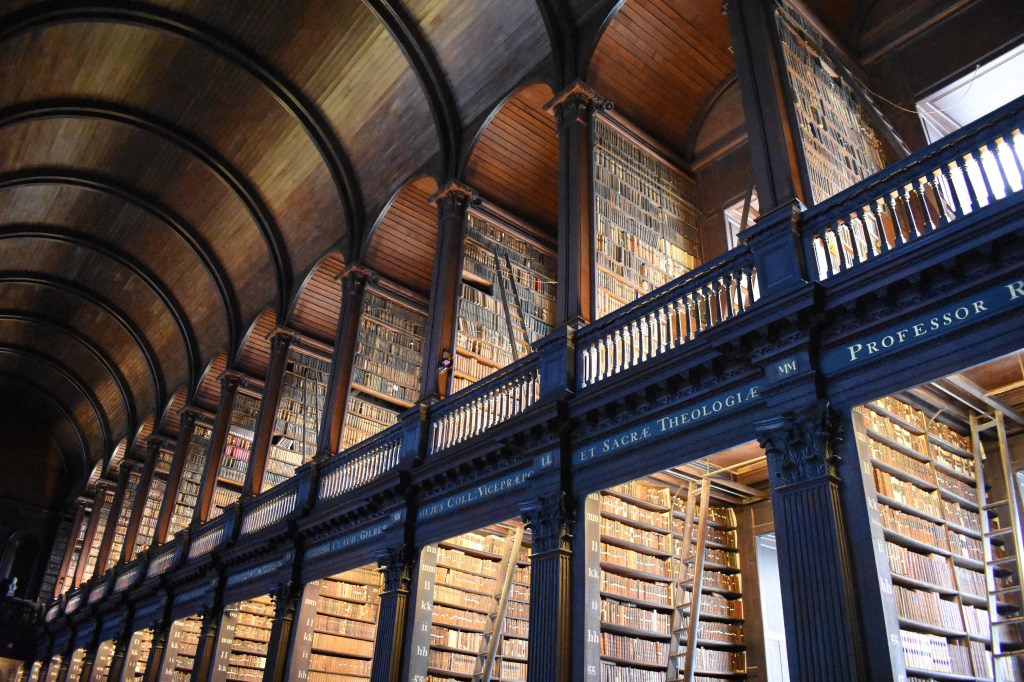
The capital is also home to Trinity College, which is where the Book of Kells and the Long Room (most famously featured as the library in Harry Potter) reside. The famed Guinness Storehouse, and Grafton Street—the lively shopping street lined with buskers in Dublin’s city centre—are other highlights of the city.
With Dublin being Ireland’s theatre hub, be sure to see a show or two at one of Dublin’s many theatres, such as the Abbey, Gaeity, or Gate Theatre. However, if you have to adjust to a drastic time change, I’d suggest waiting to see a show a day or two after your arrival. As much as I love theatre, I can tell you that a dark environment + an exhausted, jet lagged body = sleepy time for your brain. Don’t be like me and miss half the show because you’re exhausted!

I’ve spent a good chunk of my Ireland adventures in the Dublin area, so I have a list of numerous things to do there (coming soon). You need at least 3 days in Dublin to see as much as you can before venturing off to see the rest of this incredible island.
Galway
Located on the complete opposite side of the country on the west coast, Galway is probably the second most well-known city in Ireland. Deemed the European Capital of Culture in 2020, this harbor city has a lot to offer.
Galway is situated at the halfway point of the Wild Atlantic Way along the expansive Galway Bay. The city is known for its various pubs, lively trad music scene, and quaint but vibrant atmosphere. In addition, Galway draws in large crowds for its various festivals throughout the year, making it the festival capital of Ireland. Be sure to check out if there’s a festival happening when you’re there!
The most popular parts of Galway for tourists are Eyre Square and the Latin Quarter. The Latin Quarter is the shopping center of Galway and—similar to Grafton Street in Dublin—the main thoroughfare is filled with buskers. Its cobblestone walkway is also lined with countless shops and cafes.

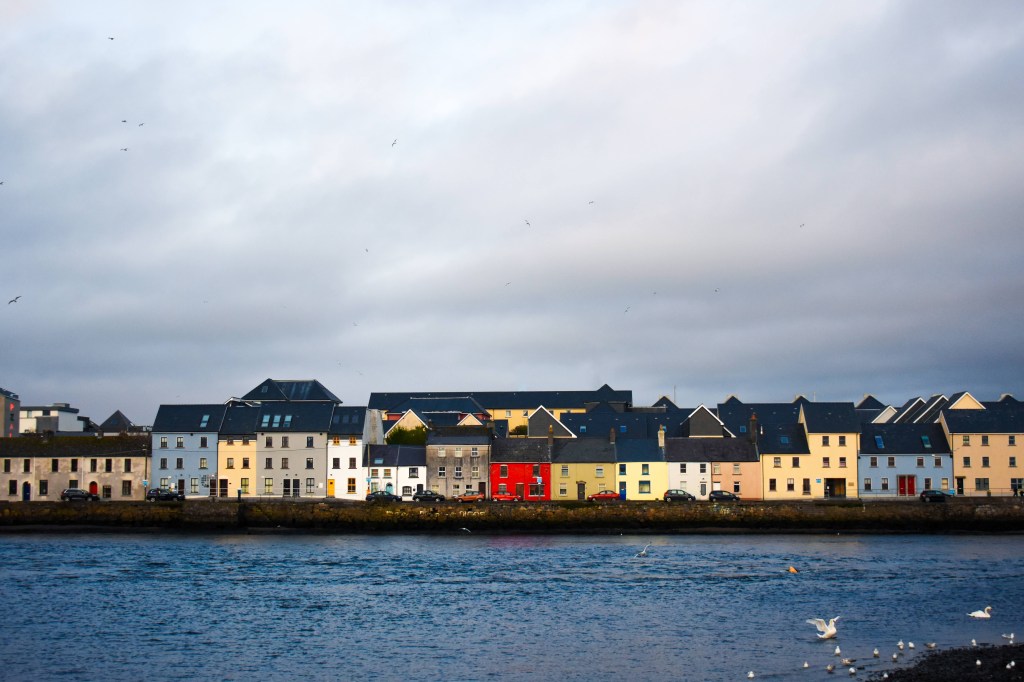
If you walk a little south of there you will find the Spanish Arch and the Long Walk, which is a panoramic view of colorful homes along the River Corrib.
Another popular attraction is the Salthill promenade, which is an expansive, 2.3 mile walk along Galway Bay. If it’s not raining and you’re brave enough to fight the cold, there’s also a beach!
Additionally, the city offers various day tours to places like the Cliffs of Moher and the Aran Islands. Definitely worth it to check those tours out!
Galway is a wonderful place to visit any time of the year. I’ve been there in the spring, summer, and winter and there’s always a lively excitement around. One time I was there a little after Christmas and the streets were filled with lights and chatter—you could feel the joy in the air! Galway is a lovely area, and there’s so much to do in and around the city.
Limerick
Limerick is about an hour drive south of Galway, positioned along the famed River Shannon. The city features some lovely medieval structures, such as St. Mary’s Cathedral and King John’s Castle. You can see both of these buildings as you walk along the river. Also, (at least when I went in 2021) there were a few poems taped to the railing. While they weren’t necessarily limericks, the poems provided nice opportunity to pause and take in the scene.

If you’re up for a stroll, I’d suggest going for a walk in the early evening to see these sites during golden hour. It’s also a great way to relax and watch the sun set over the river.
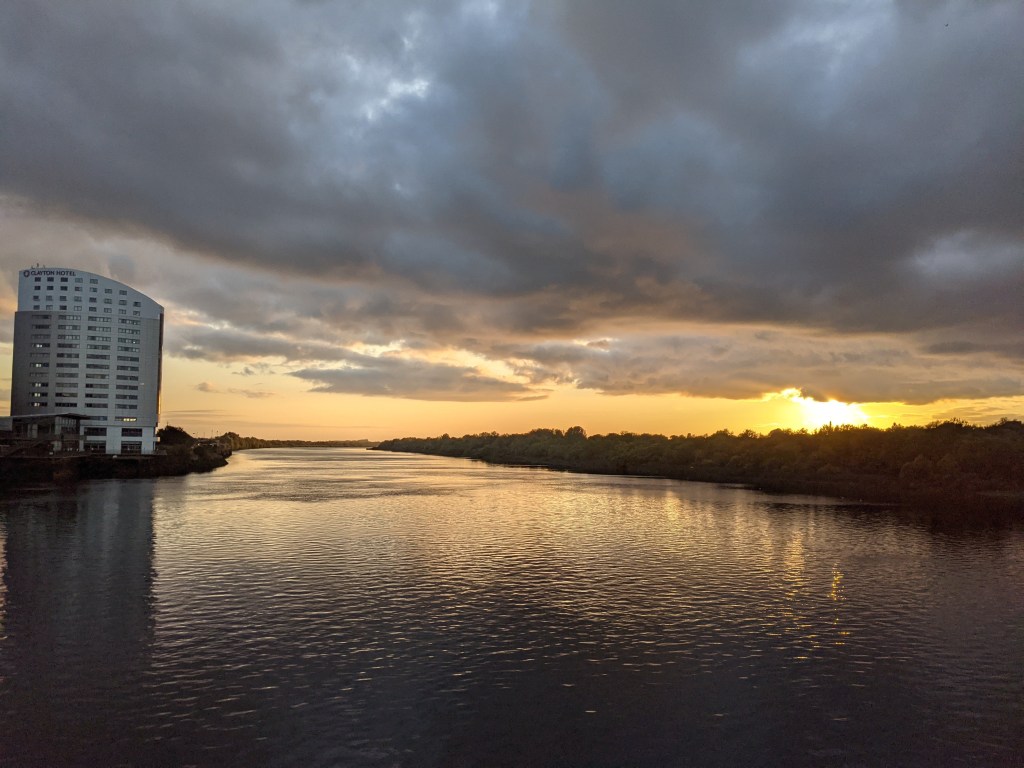
For Limerick being the Republic of Ireland’s third-biggest city by population, it seems so peaceful and serene. The city’s history and old architecture make it a wonderful place to visit for those interested in Ireland’s medieval history.
Killarney
Killarney is filled with an endless amount of fascinating features. From nature and history, to shopping and dining, Killarney has it all.
The area is home to Ireland’s first national park, Killarney National Park. Filled with woodlands, lakes, diverse wildlife, and scenic views, the park covers an impressive 26,000 acres (almost 40 square miles).
You can hike or drive through the park, however I highly recommend splurging on a jaunting car ride. Not only do you get to take in the scenery at a slow pace and make friends with a horse, but you’ll have an amazing guide who can answer any questions about the park. While engulfed in serene nature, you’ll see some medieval castles and maybe even encounter a Red Deer or two!

Killarney is also a great place to stay if you want to take a day trip around the Ring of Kerry. The Ring of Kerry is one of the most picturesque drives in Ireland, featuring dramatic cliffs and various unique scenes. You can even drive through Cahersiveen, the birthplace of one of Ireland’s most famous historical figures, Daniel O’Connell.
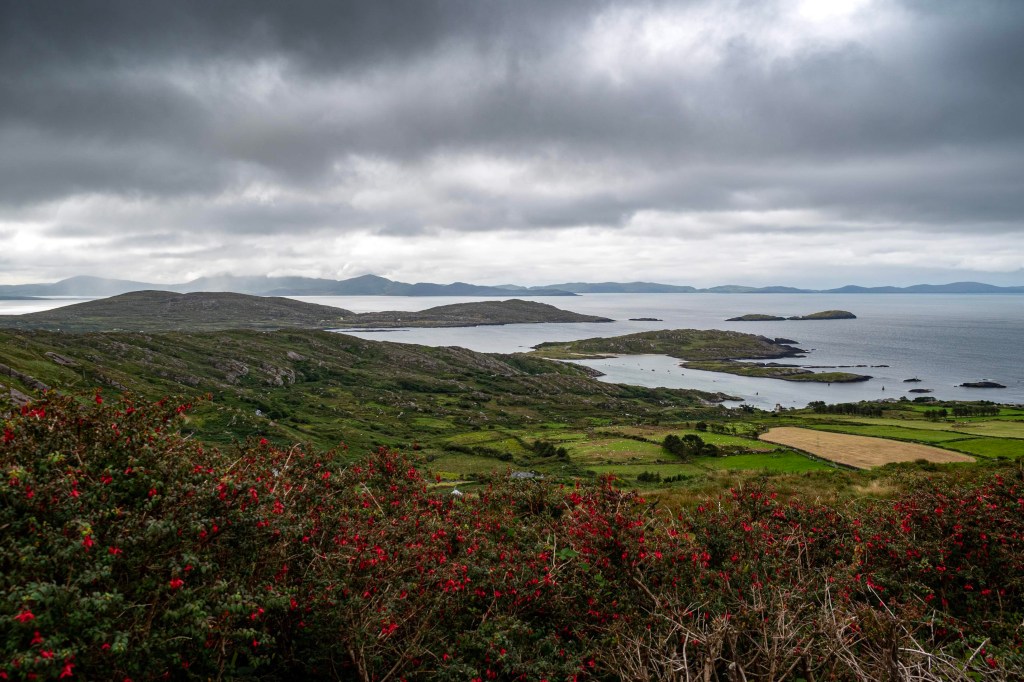
Killarney is a must-visit for many reasons. But again, if nothing else it’s a great place to stay the night for ease of access to the Ring of Kerry.
Belfast
As the capital city of Northern Ireland, Belfast is home to a lot of important Irish and world history.
During the late 1800s-early 1900s, the city was a center for shipbuilding. In fact, it is the origin of the most famous shipwreck, the Titanic. In 2012, Belfast opened a museum where the Harland & Wolff company built the ship. The exhibits detail the shipbuilding company, the ship’s construction process, and it’s ultimate, unfortunate demise. This museum is definitely worth the visit if you have a spare couple of hours.

Belfast also has excellent day trips to Giant’s Causeway, an incredible geological phenomenon consisting of around 40,000 interlocking basalt columns that formed from ancient volcanic activity. This site is a must-see for all.
Touching on some of the city’s not-so-great history, Belfast was a very active location during the Troubles—a violent conflict in Northern Ireland between Irish nationalists and British unionists that lasted from the late 1960s to 1998. While the violent tensions ended over 20 years ago, you can still find the physical peace “lines,” or walls. These walls were established at the start of the Troubles to separate people of different viewpoints and backgrounds. In addition, you can view many murals detailing varying political positions.
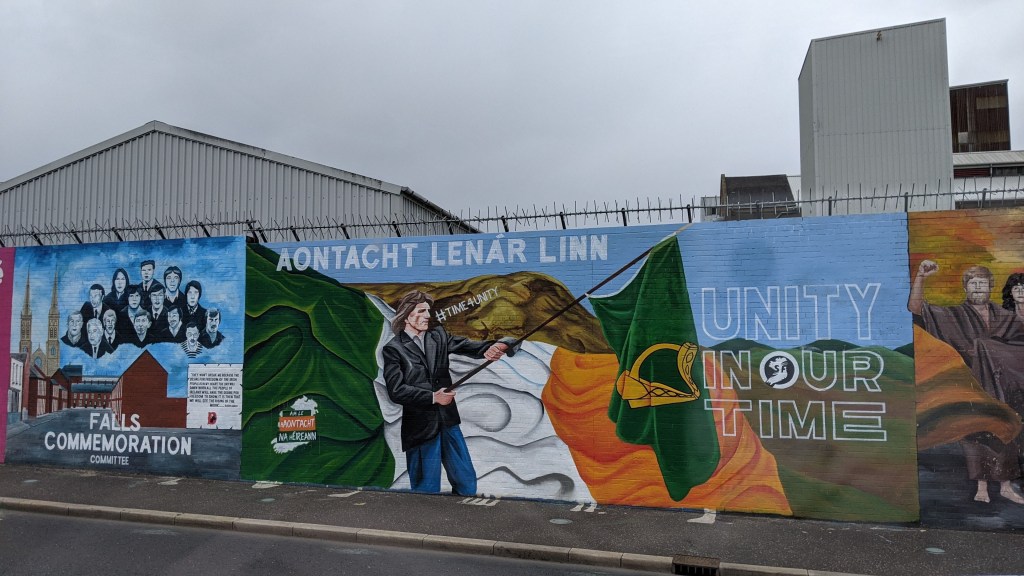
Belfast is a great place to visit if you’re a history lover because of its abundance of historical landmarks, but its also a wonderful place for night life and music.
Derry
Legally known as Londonderry, Derry is the second largest city in Northern Ireland. (There is still some contention about the name, but ‘Derry’ is your safest bet)
You might know of Derry because of Netflix’s popular show, Derry Girls. In case you don’t, the series follows the lives of a teenage group of friends during the end of the Troubles.
Derry is one of the only cities in Ireland that remains inside intact walls, which were built in the early 1600s. The walls are pretty easy to spot, and they are neat to look at.

Like Belfast, Derry was another hotspot for violence in Northern Ireland in the late 1900s. You can find many detailed murals in the Bogside area of Derry depicting political oppositions and social inequity. In addition, the Free Derry Corner, which states “You are now entering free Derry” still stands as a historical landmark. The sign marked the locale as a self-declared autonomous Irish nationalist area in what many then called Londonderry to protest the UK’s possession of Northern Ireland.
A few other notable sites include Guildhall (Derry’s city hall), the Tower Museum, and the Peace Bridge. The bridge is a relatively new, modern bridge, connecting the city center to Ebrington Square, the former army parade grounds.
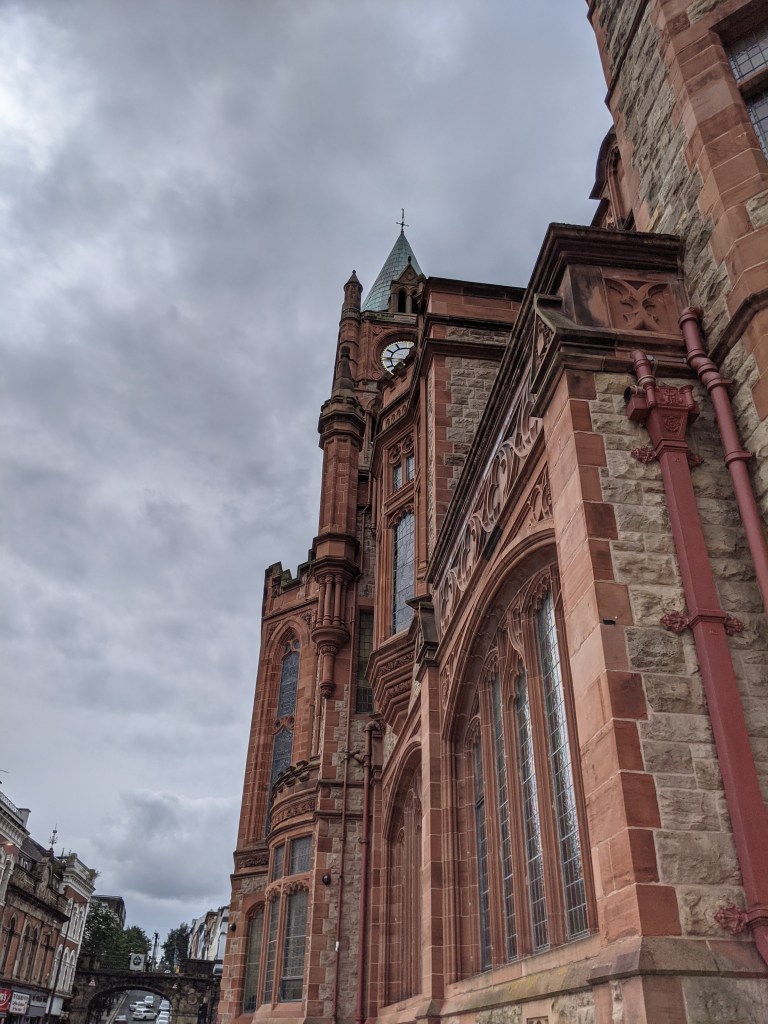
While it might initially seem like there’s not a lot to do here compared to other Irish cities, Derry is full of historical areas that deserve at least a day or two to take in.
Cork
Despite being a lesser-known city to foreigners, Cork is actually the second most populous city in the Republic of Ireland.
Unfortunately I can’t speak much on my personal experience in Cork because we only drove through it on our way to Blarney. However, I’ve wanted to visit this city for a while now, if for nothing but to see this specific view:

To name a few things to do, you can stroll the English Market, take a tour through the Cork City Gaol, visit some of the stunning cathedrals and churches, or get your foodie on at some local restaurants (after all, Cork is the culinary capital of Ireland).
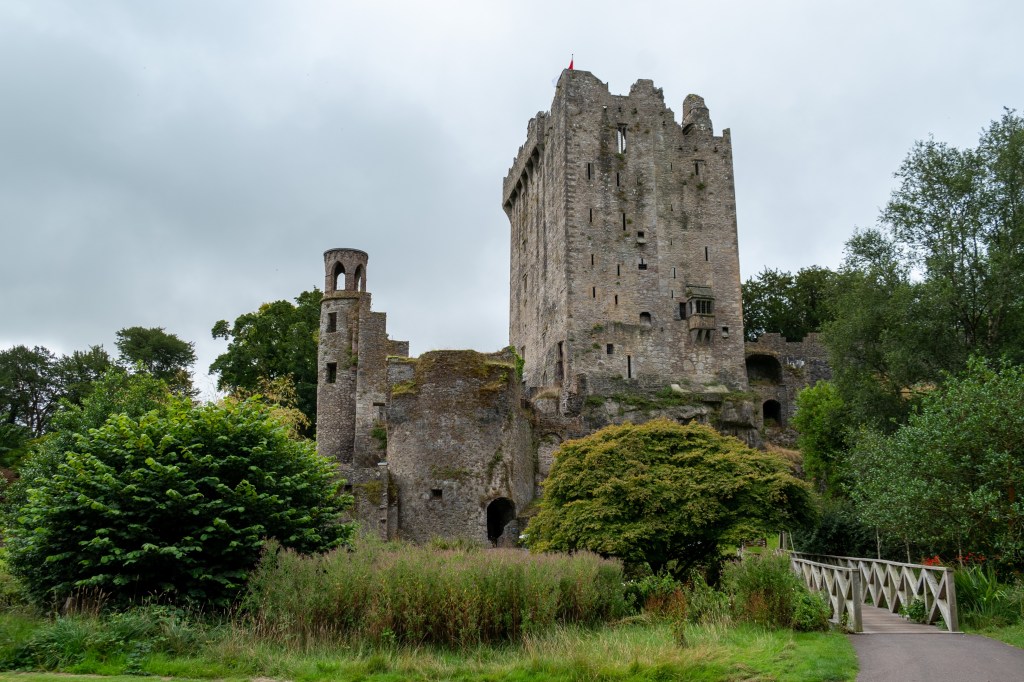
As I mentioned, Blarney is very close to Cork, so it’s an absolute must to take a day trip over to the castle and grounds. The grounds are lush and the medieval ruins are fascinating—and you can cross kissing the Blarney Stone off your bucket list!
Waterford
This southern city is Ireland’s oldest, founded in 914 A.D.
Top attractions here include the Waterford Treasures Medieval Museum, the Bishop’s Palace, the vibrant and well-maintained Mount Congreve Gardens, and the Viking Triangle, the historical center of Waterford established over 1,000 years ago.
However, Waterford is currently best known for its Waterford Crystal. You can tour the House of Waterford Crystal and see the factory, observing how the intricate pieces are crafted step-by-step.

At the end of the tour you can buy a Waterford Crystal piece for yourself in their large showroom. Just be mindful of your surroundings and be careful where you walk—you break it, you buy it! (And it’s noooot cheap)

I unfortunately didn’t have a lot of time in Waterford outside of the House of Waterford Crystal and waiting for a Covid test, but it’s another excellent city to spend a few days for its 1,000+ years of history and renowned festivals.
Ireland has so many incredible cities and towns, and there’s a seemingly infinite amount of things to do in each. Want to visit some of the smaller towns in Ireland? Check out this post.
 Happy Lil’ Traveller
Leave a comment