
From the infamous Bean and deep dish pizza to professional theatre and incredible museums, there is an endless amount of things to do in Chicago.
Before we get into specific things to do, as a resident (and tour guide) of Chicago, my first recommendation when visiting the city is don’t stay downtown the entire time. Yes, there are a lot of great things to do there and a lot of my suggestions are downtown, but it’s wildly overpriced and it can be incredibly congested with tourists during the summer and holidays. Instead, take a short train or bus ride to neighborhoods like Wicker Park or Lakeview, which are full of quality restaurants, shops, parks, and so much more.
Now, here are my recommendations for things to do in Chicago:
- See a show
- Stroll through a park
- Visit a museum
- Relax at the lakefront
- Explore some of Chicago’s 77 neighborhoods
- Navy Pier
- Eat Chicago’s famous foods
- View the city from the Hancock Building or Willis Tower
- Take a tour
- Walk the Magnificent Mile
1. See a show
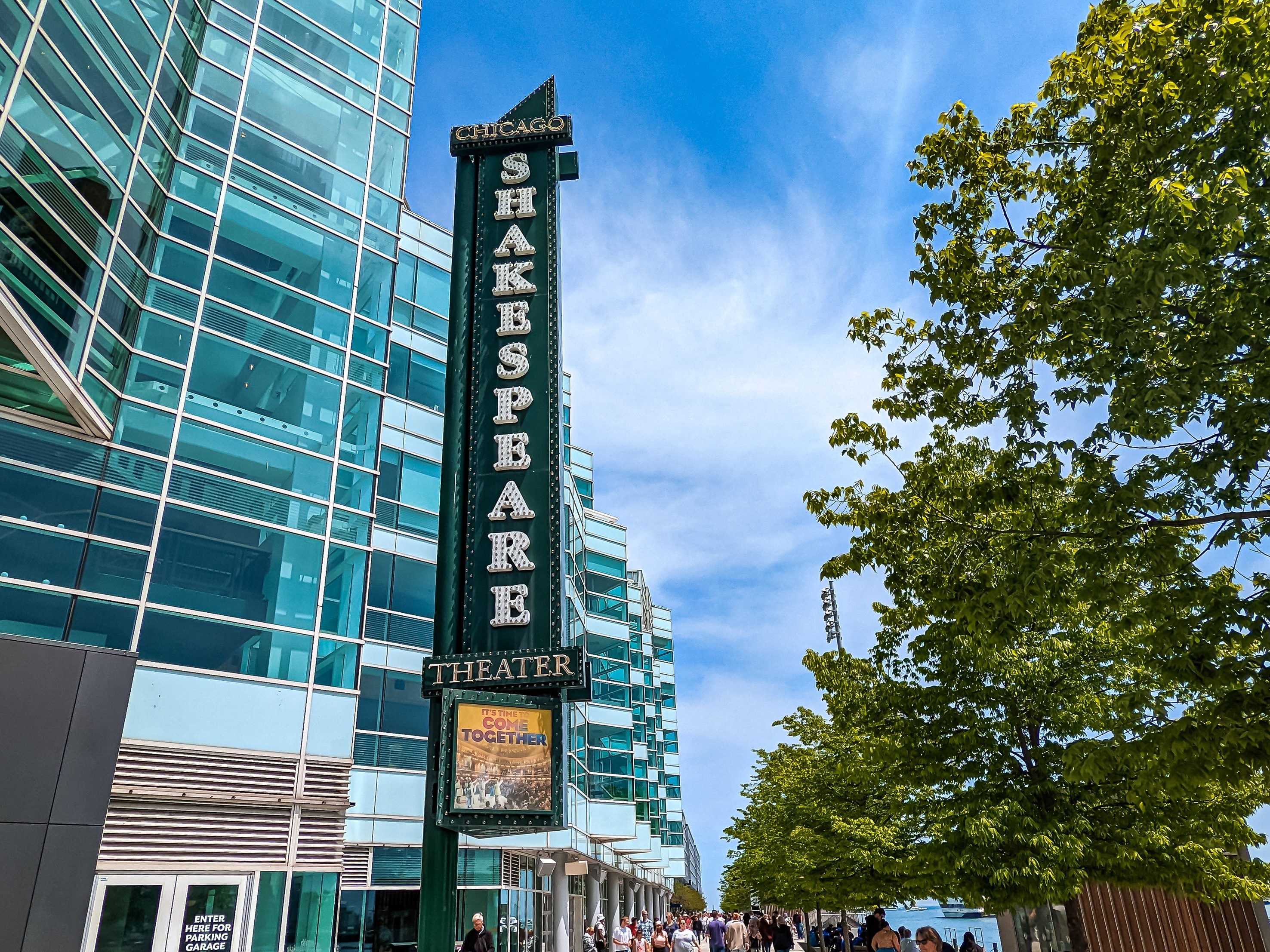
While it’s not exactly New York’s Broadway, Chicago has a vibrant theatre community with a dozen theaters downtown and more in the surrounding neighborhoods. Some theaters host touring companies and others only produce local productions. Be sure to check out what’s showing when you visit because it changes week-by-week!
Also, there are numerous improv and stand-up shows around. Check out the Laugh Factory, the Annoyance, or the famed Second City for some fun comedy in the evenings.
Here’s a list of some great Chicago theaters:
Broadway in Chicago
- CIBC
- Cadillac Palace
- James M. Nederlander
- Auditorium
- Broadway Playhouse at Water Tower Place
Professional Chicago Theatres
- Lyric Opera (I saw West Side Story here with Ryan McCarten as Tony and it was beautiful)
- Goodman
- Steppenwolf
- Chicago Shakespeare
- Lookingglass
- Briar Street Theatre – Home to the Blue Man Group
Smaller Regional Chicago Theatres
- Chopin
- Edge
- Factory
- The Den
- Stage Left
- A Red Orchid
- Theater Wit
And more!! Theatre is abundant in Chicago, so be sure to check out what’s playing during your trip.
2. Stroll through a park
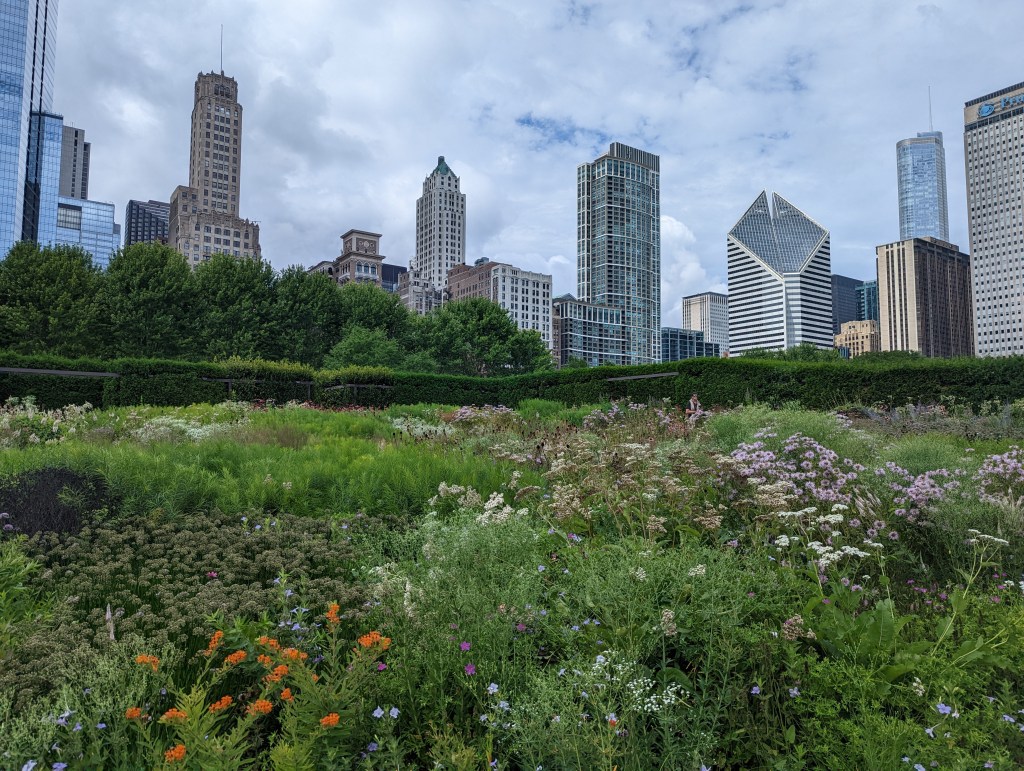
One of the best things about Chicago is its vast amount of parkland, even in the heart of the city. Each park has its own unique traits and things to do. Here are some of the must-visit parks in central Chicago:
Millennium Park
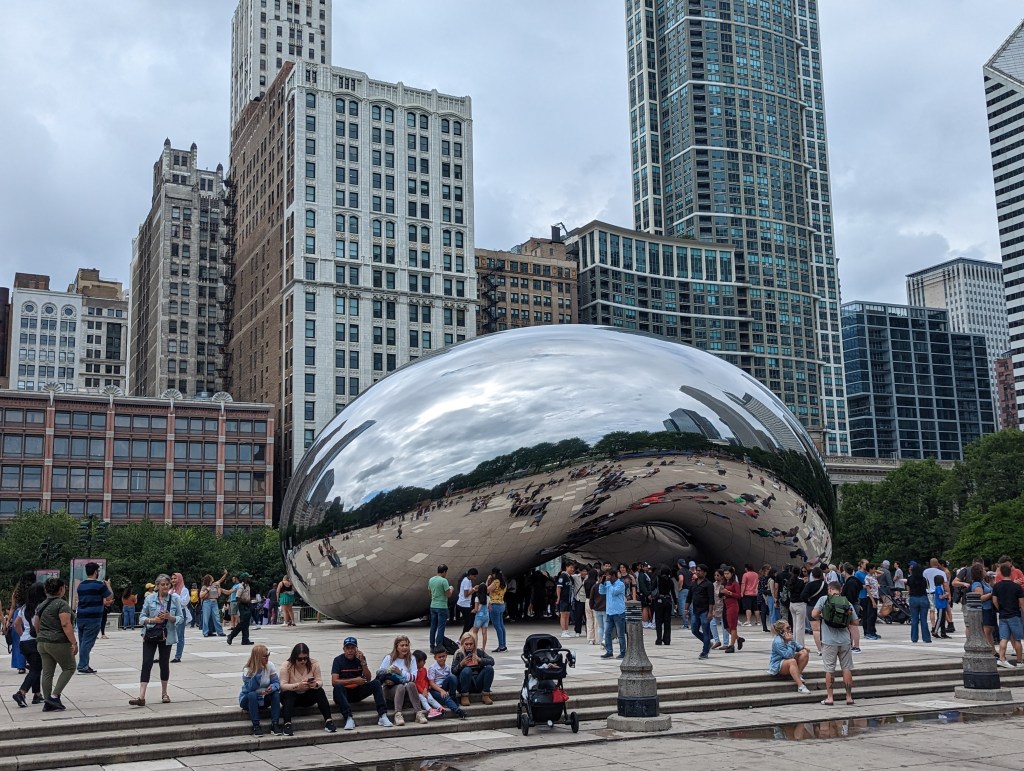
Millennium Park is the top tourist destination in Chicago, with more than 20 million people visiting every year. However, the main reason people visit the park is to see the reflective bean-shaped sculpture, aptly nicknamed “The Bean”. While the true name for the Bean is the Cloud Gate—as the sculpture captures the reflection of the clouds—no one actually calls it that except the sculptor, Anish Kapoor.
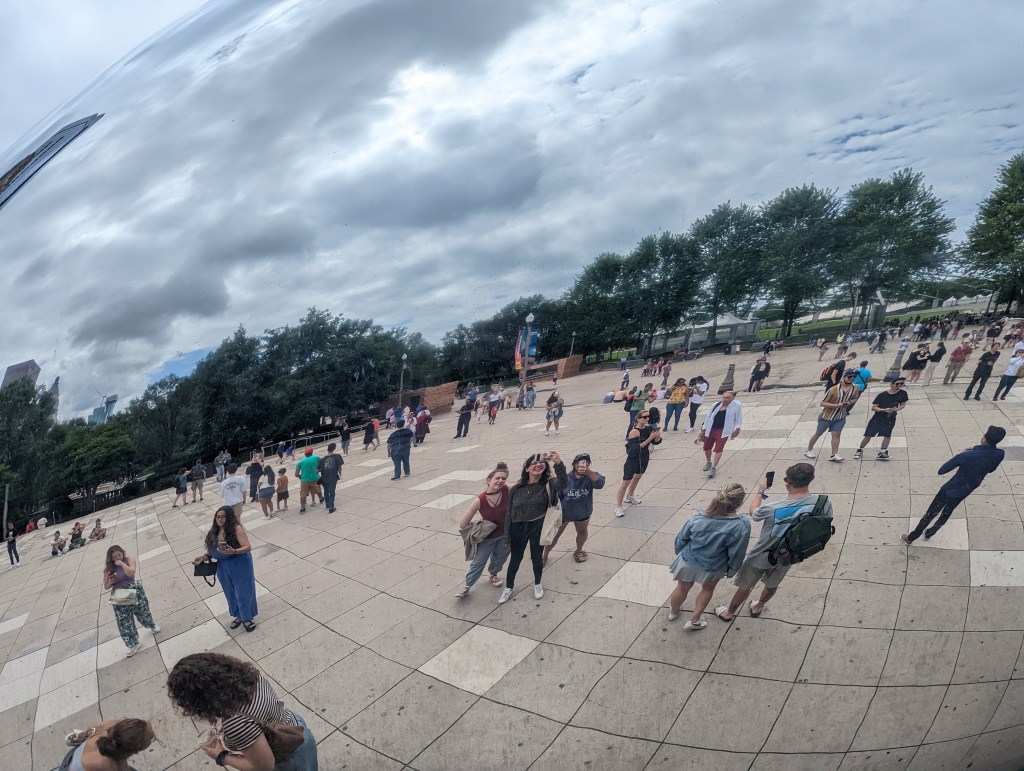
Other things to see inside Millennium Park include the Lurie Gardens, the Crown Fountain, and Pritzker Pavilion. The Crown Fountain consists of two brick-like structures that have the faces of over 1,000 Chicagoans on it (not all at once, they cycle through), and these faces will smile at you, and then spit on you. It’s weird, but kids love to play in the water. Pritzker Pavilion is a performance venue that hosts a lot of events, especially during the summer, including movie nights and concerts—and they’re all free to attend!
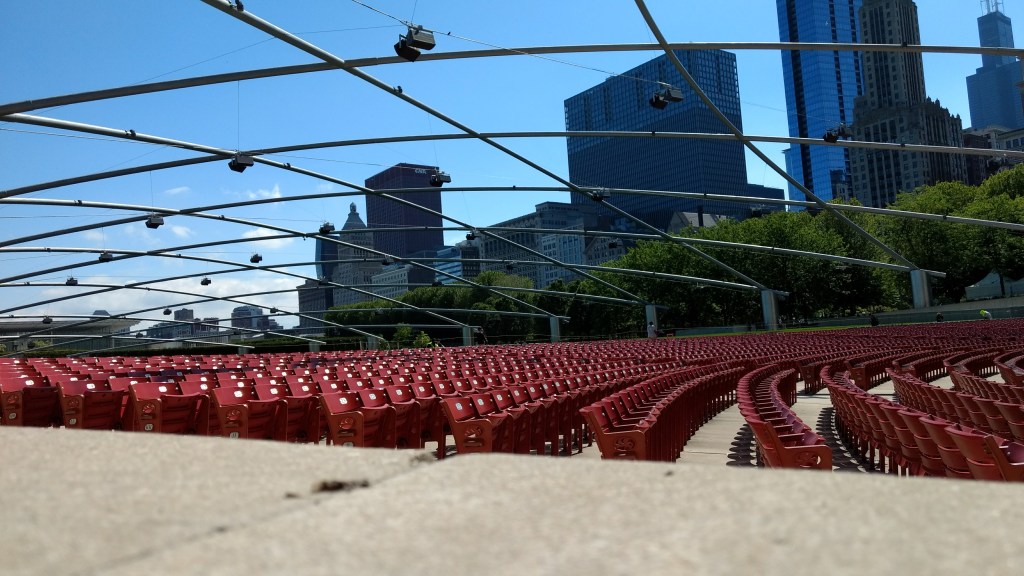
Just be aware that Millennium Park has tight security on weekend nights as well as on the nights they have events, which consists of bag checks and metal detectors.
Maggie Daley Park
The Maggie Daley Park is a short walk away from Millennium Park. In fact, there’s a bridge that connects the two. Here you will find a climbing wall and skating ribbon (ice skating in the winter), mini golf, and the serene Cancer Survivors’ Garden.
This park is also excellent for children, as there is a whole section dedicated to small playgrounds. Each playground has a name, such as the Enchanted Forest or The Harbor, and each has a designated age range.
Grant Park
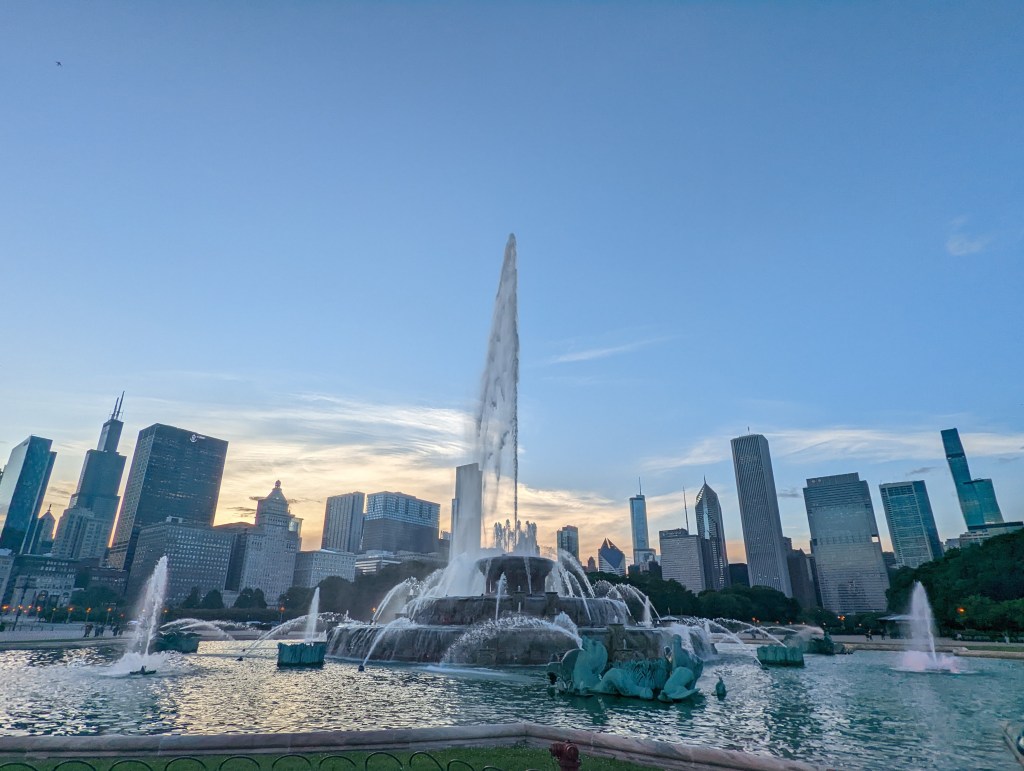
The oldest park in Chicago (originally established in 1844), Grant Park, is home to many festivals throughout the year, including the highly attended Lollapalooza music festival. At the center of the park sits Buckingham Fountain, which is a gorgeous, Versailles-inspired fountain built in the 1920s.
Before the Bean, Buckingham Fountain was the place where everyone went to take their photos to say “I’m in Chicago!”, and it was the largest fountain in the world when it was built. Now it seems looked over by many tourists, but it is an absolute must-see. If you go to the southeast side of the fountain, you get a beautiful view of the Chicago skyline, which is even prettier at night with the city lights. In addition to its immense size and stunning Rococo wedding cake design, the fountain shoots up a spout of water 150 feet in the air every hour on the hour for 20 minutes. At night, this is accompanied by a fun light and music show.

The park also has a beautiful garden area as well as baseball fields and more. The area is right next to the lakeshore, making it easy to access the Lakefront Trail.
Lincoln Park

At 1,200 acres, Lincoln Park is Chicago’s biggest park, providing an immense span of land to explore.
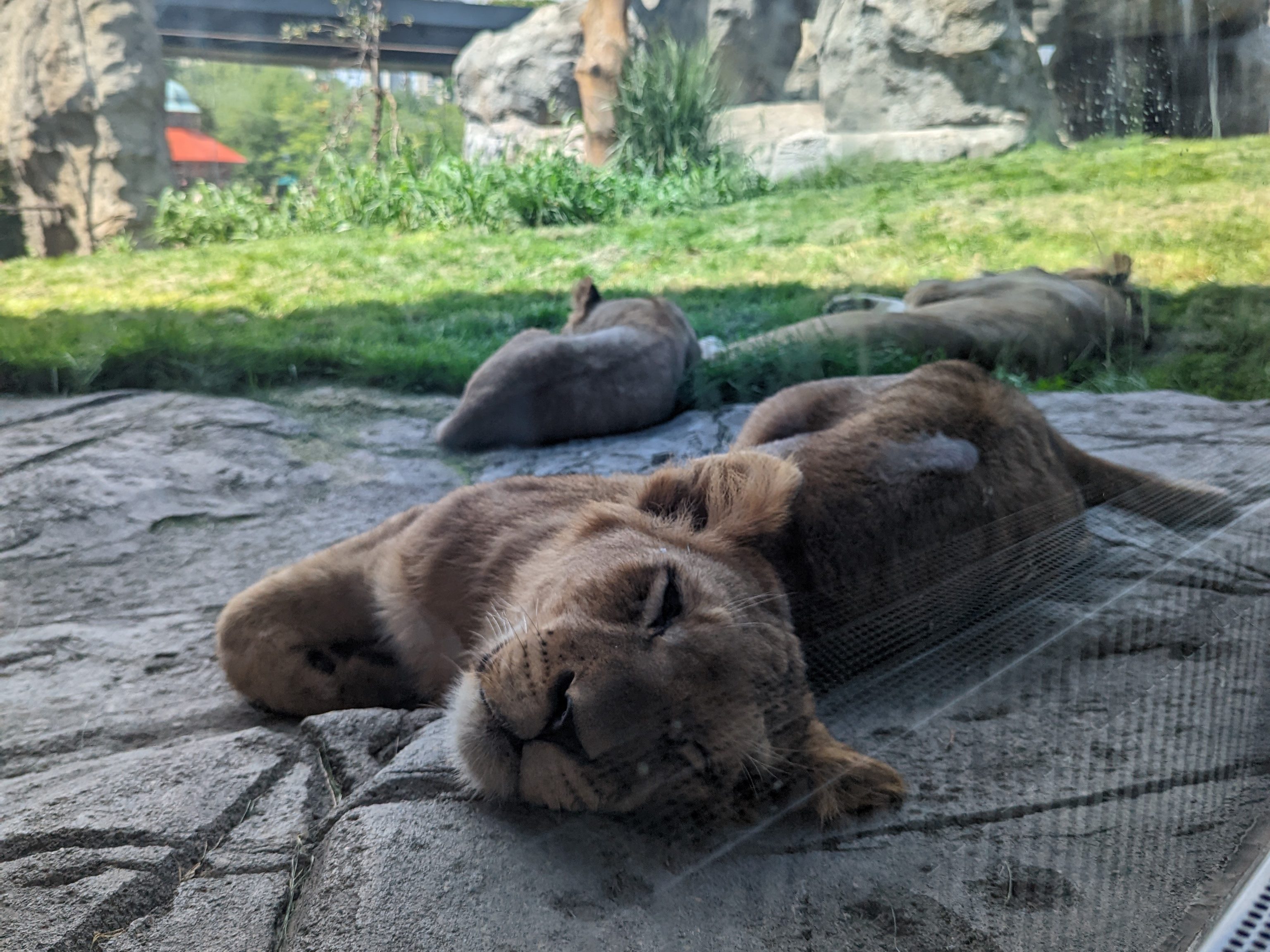
One of the best things to do in Lincoln Park is to visit the Lincoln Park Zoo, which is free! The zoo functions off of generous donations, making it a very inexpensive option for families and groups (though, if you take a car, you do have to pay for parking). The zoo is home to many incredible animals such as giraffes, lions (as of August 2023 there are three lion cubs that aren’t even a year old yet and they’re so cute), rhinos, polar bears, penguins, seals, and so many more.
Lincoln Park also holds the Peggy Notebaert Nature Museum and the Lincoln Park Conservatory. The nature museum costs money to enter, but the conservatory is an enclosed botanical garden and is free to enter (you just need a reservation).
Near the zoo and conservatory is the Lily Pool, which is a beautiful, secluded pond covered in lily pads. If you need a place to relax and retreat from the busyness of the city, this is the place to go.

Lincoln Park also has a nature boardwalk to protect wildlife. This area is a manmade pond that is now home to an abundance of native plants, birds, and other life. It’s another calming area away from the hustle and bustle of the city to take a stroll.
3. Visit a museum
Chicago has many incredible museums throughout the entire city, ranging from classic museums like art and history to odd ones like surgery and Medieval torture. It’s definitely worth spending an afternoon or two exploring some of these:
The Art Institute of Chicago
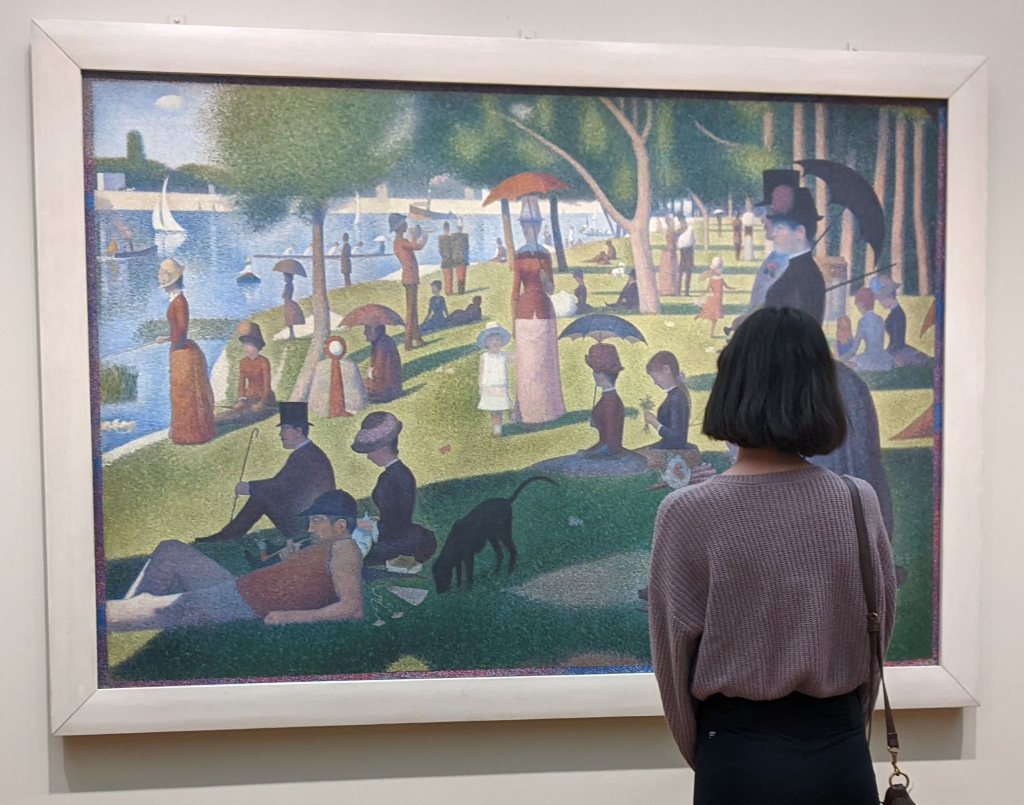
The Art Institute is one of the largest art museums in the world, and it’s home to many famous pieces like American Gothic and Nighthawks as well as works from Van Gogh, Georges Seurat, Monet, Georgia O’Keefe, and Renoir. I’ve been to the Art Institute about five times now and I still haven’t seen everything, so definitely plan to dedicate at least a couple hours here if you’re an art fan.
Field Museum

The Field Museum is one of the world’s largest natural history museums. With more than 40 million artifacts and specimens, the museum’s team of scientists and researchers continue to discover and share new things about the world and our history. Here you will find the infamous Sue—the largest and most complete T-Rex skeleton—along with other dinosaur fossils, a collection of artifacts from Ancient Egypt, beautiful rare gems, and more.

Museum of Science and Industry

While the Museum of Science and Industry is a little far away from downtown Chicago (it’s located in Jackson Park, south of downtown), it is not a museum to miss. This is an excellent museum for kids and adults alike, with a variety of interactive and hands-on displays. My personal favorite exhibits are the full German WWII submarine and the “Science Storms” with the 40-foot tornado made of water vapor.

Shedd Aquarium
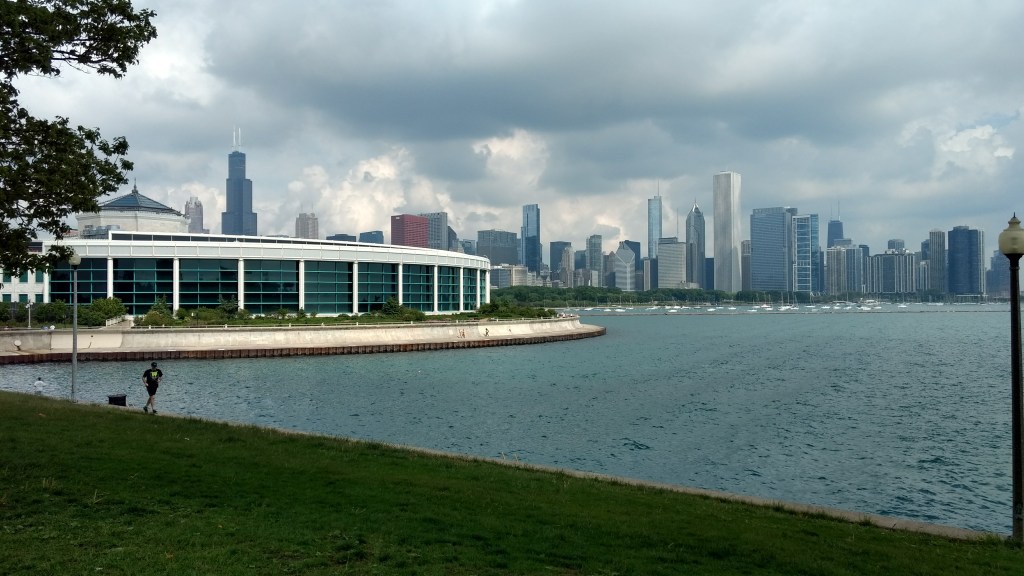
Shedd Aquarium is one of the largest aquariums in the Western Hemisphere, holding over 30,000 marine animals. Here you can find penguins, beluga whales, dolphins, multitudes of fish, stingrays, sharks, and so much more. It can become very crowded with families during peak season (summer), but it’s definitely worth a visit to see and learn about these marvelous animals.

Other Museums
The museums listed above are the most popular ones in Chicago, but there are many more throughout the city, including the Chicago History Museum, Peggy Notebaert Nature Museum, American Writers Museum, DuSable Black History Museum, and the Ukrainian National Museum, just to name a few. Here’s a great list from TimeOut Magazine.
4. Relax at the lakefront

We Chicago residents are very fortunate to live beside a Great Lake, giving us gorgeous views throughout the year and lovely places to walk and swim. The Lakefront Trail extends 18.5 miles along the shore of Lake Michigan, allowing for serene walks and long bike rides. You also get stunning views of the city’s skyline.
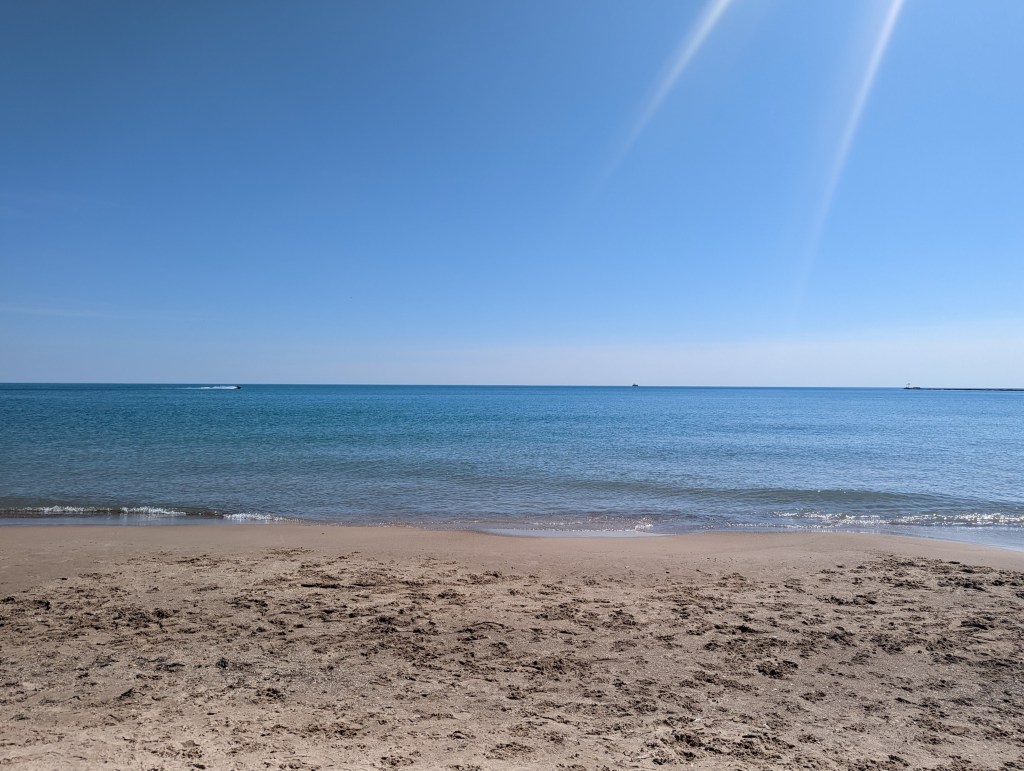
Chicago also has multiple beaches lining the shoreline, including Ohio Street, Oak Street, North Avenue, and Montrose beaches. These can get crowded on weekends throughout the summer, but they are an excellent place to cool off and relax from the hustle and bustle of the city. If you want a beach with lots of space, Montrose Beach is the largest.
5. Explore some of Chicago’s 77 neighborhoods
Each neighborhood in Chicago has something unique to offer. Some areas are great for dining, while others are perfect for sightseeing. Here’s a brief list of the most popular neighborhoods:
Chinatown
Chicago’s Chinatown has lots of great restaurants and shops, and it has a lot of history with ornate architecture.

You can find excellent dim sum and hot pot restaurants throughout the area, though my personal favorite so far is Happy Lamb Hot Pot. There’s also a food court and many more restaurants lining Chinatown Square. Within the square you’ll also find souvenir shops and bubble tea cafes, with my favorites being Joy Yee Plus and Uni Uni.

Be sure to also learn about the area’s history by taking a walking tour or visiting the Chinese American Museum of Chicago.
Wicker Park
Considered the hipster neighborhood of Chicago, Wicker Park has more record stores, cafes, and book shops than any other neighborhood in Chicago. This is also an excellent place to find unique food options and thrift stores.
Fulton Market
If you’re a foodie, Fulton Market is the place to visit. Fulton Market went through a renaissance of sorts when restaurants such as The Publican and Stephanie Izard’s Girl & the Goat opened in the earlier 2000s, and since then more and more quality restaurants have flocked to the area. Here you will also find TimeOut Market, which is a food court where you can eat all of Chicago’s best restaurant offerings—as deemed by TimeOut Magazine—under one roof.
The Loop
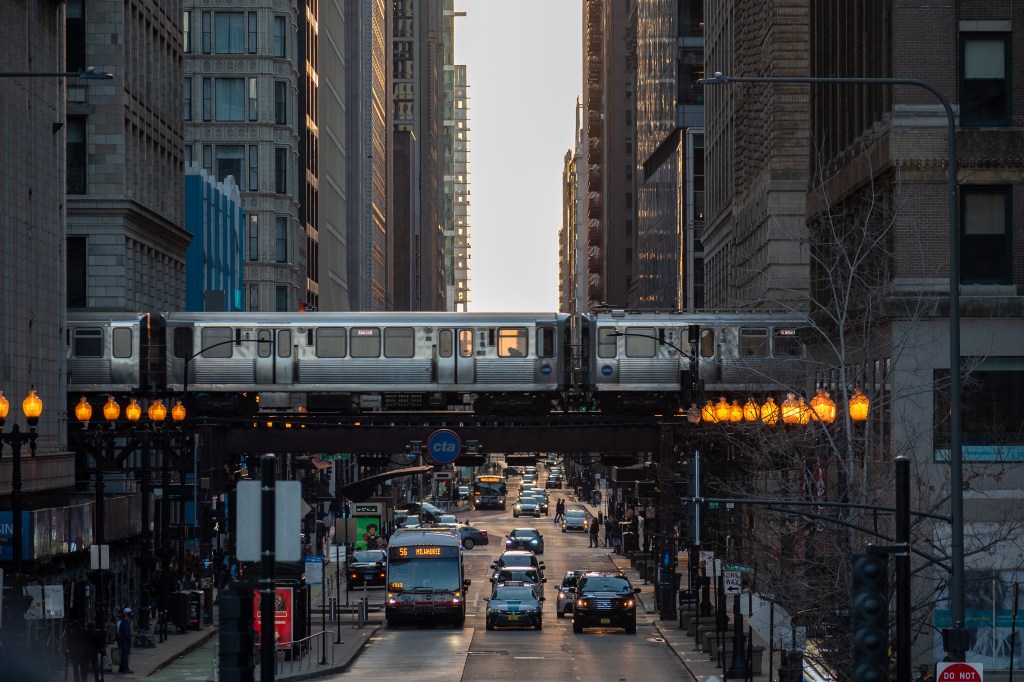
When you think of downtown Chicago, you’re probably thinking of the Loop. The Loop is where all of the elevated trains connect and go, well, in a loop, and it’s also the central business district.
In the Loop you will find Chicago’s theatre district, the Chicago Cultural Center, the Art Institute, and Chicago’s #1 tourist attraction, Millennium Park. The Loop is the place to explore if you only have one day in Chicago.
Gold Coast
The Gold Coast is a historic neighborhood, and it is one of the most expensive areas to live in Chicago. This is very apparent by all of the gorgeous multi-million-dollar condos, high-end stores, and fine dining restaurants lining the streets.
Andersonville
This northern neighborhood of Chicago is a great place to find lots of thrift and antique shops. Many of these stores can be found along Clark Street, which cuts right through the neighborhood. While it’s a little far from downtown, it’s a great place to explore if you love thrifting.
6. Navy Pier
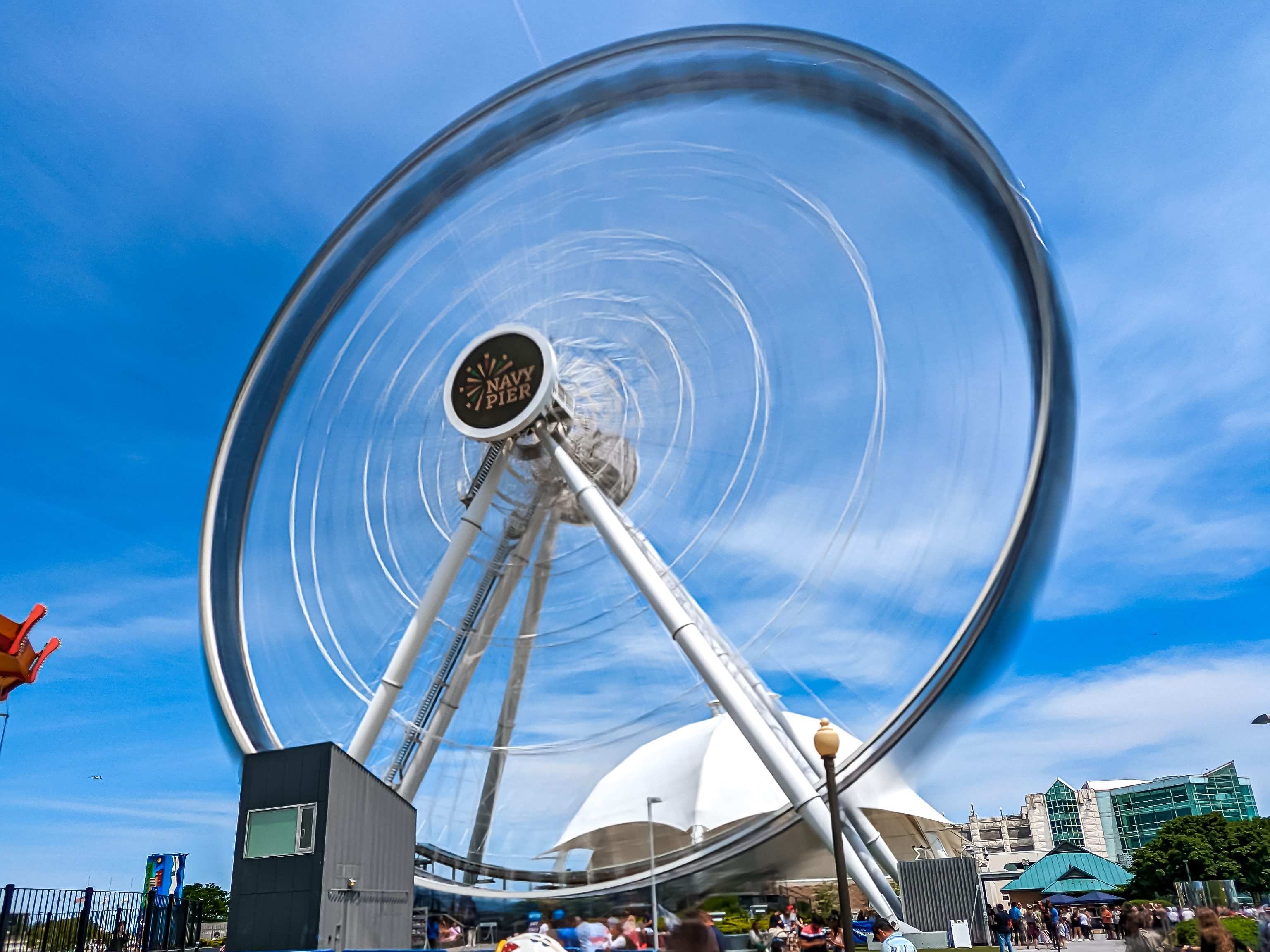
As the second-most popular attraction in Chicago, Navy Pier has a lot to offer. Inside you will find an array of souvenir shops as well as lots of dining options towards the back. Outside you’ll find numerous bars, beautiful views of Lake Michigan and the Chicago skyline, and the popular Navy Pier Ferris Wheel.

Navy Pier is a great place to spend a few hours, especially for families because of the amusement rides and Children’s Museum. If you visit during the summer, the Pier hosts fireworks every Wednesday at 9 p.m. and Saturday at 10 p.m. Memorial Day through Labor Day. The fireworks last exactly 10 minutes, so it’s a great thing to see if you’re around!
Here you can also find the Chicago Shakespeare Theatre, a Giordano’s deep dish pizza restaurant, and the famed Harry Caray’s Tavern. Speaking of deep dish pizza…
7. Eat Chicago’s famous foods

Chicago is known for three primary foods: deep dish pizza, the Chicago hot dog, and the Italian beef sandwich. If you can only try one, deep dish is the must.
The two most popular restaurants for deep dish pizza are Giordano’s and Lou Malnati’s (Giordano’s is my personal favorite, though it’s quite hefty compared to Lou’s), but others include Pizzeria Uno, Pequod’s, and Gino’s East.
For Chicago-style hot dogs, you really can’t go wrong with whichever place you choose. There aren’t really any hot dog chains besides Portillo’s, but Weiner’s Circle in Lincoln Park is a good option if you want a…unique experience to say the least.
A Chicago hot dog consists of chopped onions, tomatoes, a pickle spear, sweet pickles relish, sport pickled peppers (so many pickles??), yellow mustard, and a dash of celery salt. No. Ketchup. If you ask for ketchup on your hot dog at a place like Weiner’s Circle, they will tell you to get out. You have been warned.
Italian Beef can also be found at many local Chicago restaurants, though Al’s Italian Beef is the originator.
Another unique food to try is a great dessert option: the original brownie. Yes, brownies were first made in Chicago, specifically in 1893 for the World’s Fair. You can still buy the original brownie at Palmer House Hotel, though it’s more of a fudge-like texture than your typical brownie nowadays.
8. View the city from the Hancock Building or Willis Tower

The John Hancock Building (now known as 875 N Michigan Avenue) and the Willis Tower (formerly known as the Sears Tower) both provide stunning views of Lake Michigan and the city.
Both have restaurants and bars on the viewing deck, however each offers a slightly different experience. Though, you probably don’t need to visit both.
I personally love the view from the Hancock Building more, as it has a closer view of the lake and a better view of the skyline. The viewing floor here is referred to as “360 Chicago”, and it also has a “tilt experience” where a machine-run glass panel will slightly tilt you over the side of the building 1,000 feet in the air. It’s honestly not as thrilling as it sounds, so I personally wouldn’t pay the extra money—up to $10 for a max of 3 minutes—to do that (I got to do it for free during a choir trip in high school).

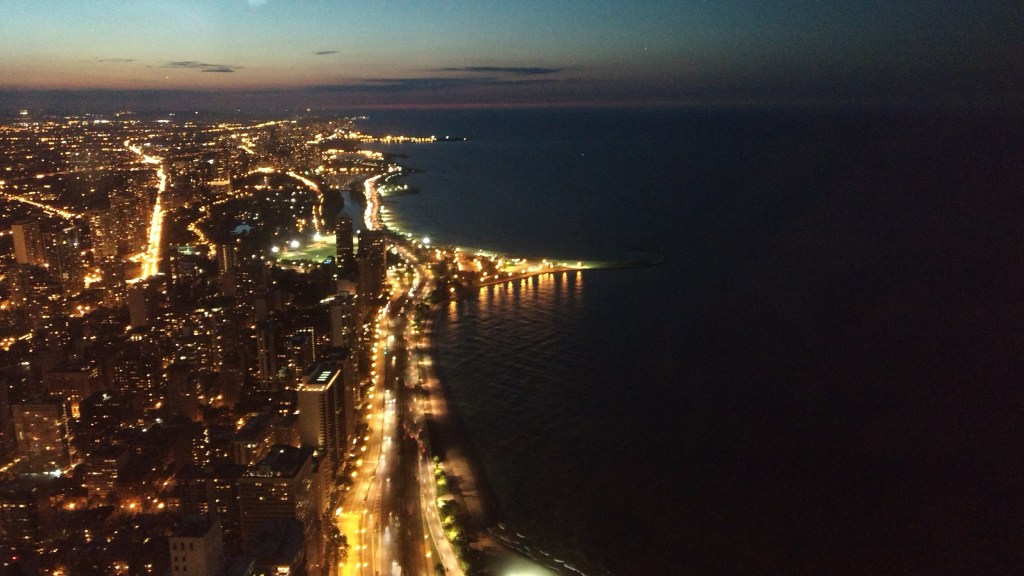
The Willis/Sears Tower is taller and, instead of a paid “tilt” experience, it’s Skydeck has free glass floors you can step out on to view the ground 1,350 feet below you. Definitely more of a thrilling experience. One side of the viewing deck has a gorgeous view of the skyline and lake, but the other looks out onto the flat expanse of highway and suburbs, which personally isn’t as exciting to me. But, choose whichever experience appeals to you most.
9. Take a tour
The best way to see the city is to take a tour, whether it be walking, biking, driving, boating, or Segwaying. Yes, there are Segway tours!
One of the most popular tours in Chicago is the Architecture Boat Tour. This is a 75-90 minute tour that takes you along the Chicago River and discusses the history and architecture of the area. There are multiple companies that run this kind of tour, and it’s the perfect way to learn about what made Chicago into what it is today.
If you like dark history and haunted stories, another fun tour is the Gangsters and Ghosts tour. You’ll learn about Al Capone and the mobs from the early 1900s, as well as tragic events that have left areas around the city supposedly very haunted.
The Big Bus tours are an easy way to see the city and all of the major sites if you don’t want to plan out a route for yourself. Though, you can save money by making your own route and taking a bus from place to place. The Big Bus is really about convenience.
Numerous tour companies also do food tours, letting you try deep dish pizza, hot dogs, and other popular Chicago foods/restaurants.
10. Walk the Magnificent Mile

The Magnificent Mile is a mile-long stretch of Chicago’s northern downtown area, lined with historic buildings and luxury/designer shops. Here you will also find Water Tower Place—a large shopping mall, hotel, theatre, and condominium. The building is named for the old water tower that sits across the street, which is one of the only buildings that remains from before the Great Chicago Fire in 1871.
Further south on the Mag Mile, near the river you will find the Tribune Tower and Wrigley Building. These buildings were both completed in the 1920s and have gorgeous, unique architecture. The Tribune Tower (no longer home to the Chicago Tribune, but rather extremely rich residents) is a neo-Gothic skyscraper, but what makes this building so unique is that it has fragments of other buildings from around the world embedded in its outside walls. As you walk around it, you can find pieces from places such as Edinburgh Castle, the Taj Mahal, the Great Pyramid, the Parthenon, and more.

The Magnificent Mile can be busy with the amount of pedestrian traffic, but it is an iconic part of Chicago to explore.
From its historic architecture and prominent foods to its vast culture and proximity to freshwater beaches, Chicago is a city unlike any other. No matter what time of year you visit, you will find a variety of things to see and do. Be sure to make this “Second City” the first destination on your travel list!
 Happy Lil’ Traveller
Leave a comment