
Welcome to my 9-day Thailand itinerary!
To preface, this itinerary mainly focuses on the Bangkok and Chiang Mai regions. If you want to visit any beaches or islands in the southern part of Thailand, I’d recommend budgeting at least 14 full days in the country. I unfortunately did not have time to visit the south, so I’m only sharing what I have experience with! However, 9 days is still enough to explore lots of amazing places and experience incredible things in Thailand.
This itinerary is based on my trip I took in September 2022, but you can change things around as needed to fit your schedule/interests. I spent about 3 full days in Bangkok, 5 in Chiang Mai, and one more in Bangkok before flying back home.
In addition to the itinerary, at the end I share a few recommendations on places to stay, restaurants to try, when to visit, etc.
Another thing to note: while this is a 9-day itinerary, plan to budget another 2-3 days for travel. If you’re flying from the US, it will take about a full 24 hours just to fly there. Just something to keep in mind!
- 9-Day Thailand Itinerary
- Day 1: Bangkok – Old Town, Food Market, Shopping
- Day 2: Bangkok – Ayutthaya
- Day 3: Bangkok – Shopping, Parks
- Day 4: Chiang Mai – Self-Guided Walking Tour, Wats, Night Bazaar
- Day 5: Chiang Mai – Doi Inthanon National Park
- Day 6: Chiang Mai – Elephant Nature Park
- Day 7: Chiang Mai – Doi Suthep, Cooking Class
- Day 8: Chiang Mai – Khao Soi, Spa
- Day 9: Bangkok – National Museum, Chinatown, Chatuchack
- Day 1: Bangkok – Old Town, Food Market, Shopping
- Accommodations
- Safety in Thailand
- When to Visit
- Transportation
- Places I Ate At
9-Day Thailand Itinerary
Day 1: Bangkok – Old Town, Food Market, Shopping

1. Bangkok Old Town
I always like using my first day in new places to orient myself with the area and see the sites I’m most eager to see. So, I’d recommend starting out by visiting Bangkok’s Old Town which is home to its most famous temples (wats) and Buddha statues. Keep in mind, you’ll probably be pretty jet lagged on your first day, so pace yourself as needed.
You can explore these places on your own or look online for a guide to show you around and share more about the history of each place. I signed up for a guided tour and photoshoot through Airbnb experiences, which was honestly one of the best decisions I made while in Bangkok. My guide was wonderful and I got some incredible photos out of it to remember the day (especially because it was my birthday haha), so I highly recommend looking into a unique experience like that.
Grand Palace

Established in 1782, the Grand Palace is considered to be the royal residence for the Kings of Siam/Thailand, though kings have not resided at the palace since 1925. It’s still often used for official events, and it’s become one of the most popular tourist attractions in the country. The Grand Palace is also home to the famed Temple of the Emerald Buddha.
The palace is open every day from 8:30 a.m. to 3:30 p.m. and costs 500 baht to enter ($15.30 USD). You can buy tickets online or at the entrance.
Be aware, there are quite a few scammers who stand outside of the temple and say the palace is closed for a special event (when it isn’t) and will offer instead to take you on a tuk-tuk (basically open-air 3-wheeled taxis) ride to lesser-known shops, which are actually overpriced and run by their colleagues. The palace is rarely ever closed and if you’re unsure, just check online. But never agree to go with anyone who offers to take you somewhere, and I’d avoid tuk-tuks altogether. More on that later (see the transportation section).
Wat Pho
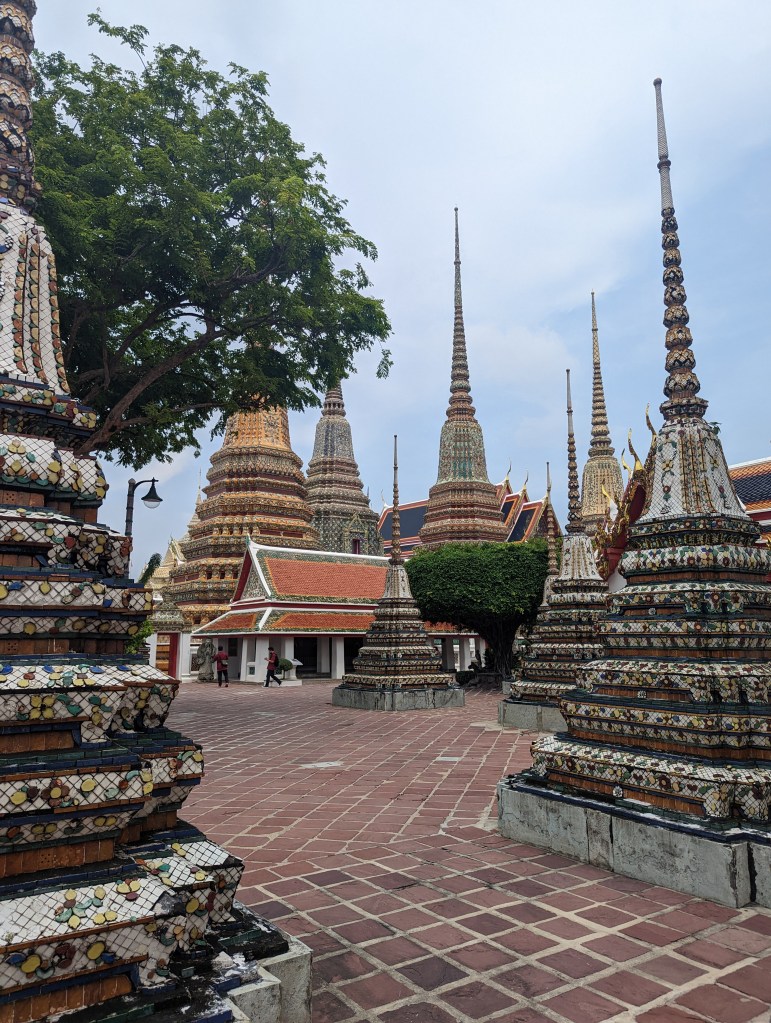
There are more than 400 wats in Bangkok alone, but Wat Pho and Wat Arun are the probably the most well-known.
Wat Pho is only about a 12 minute walk south of the Grand Palace, which makes it super convenient to visit both within the same few hours.
Wat Pho was originally built in the 1500s, making it one of the oldest temples in Bangkok, especially because it was built about 200 years before Bangkok was established as the new capital. This wat is best known for the golden Reclining Buddha.
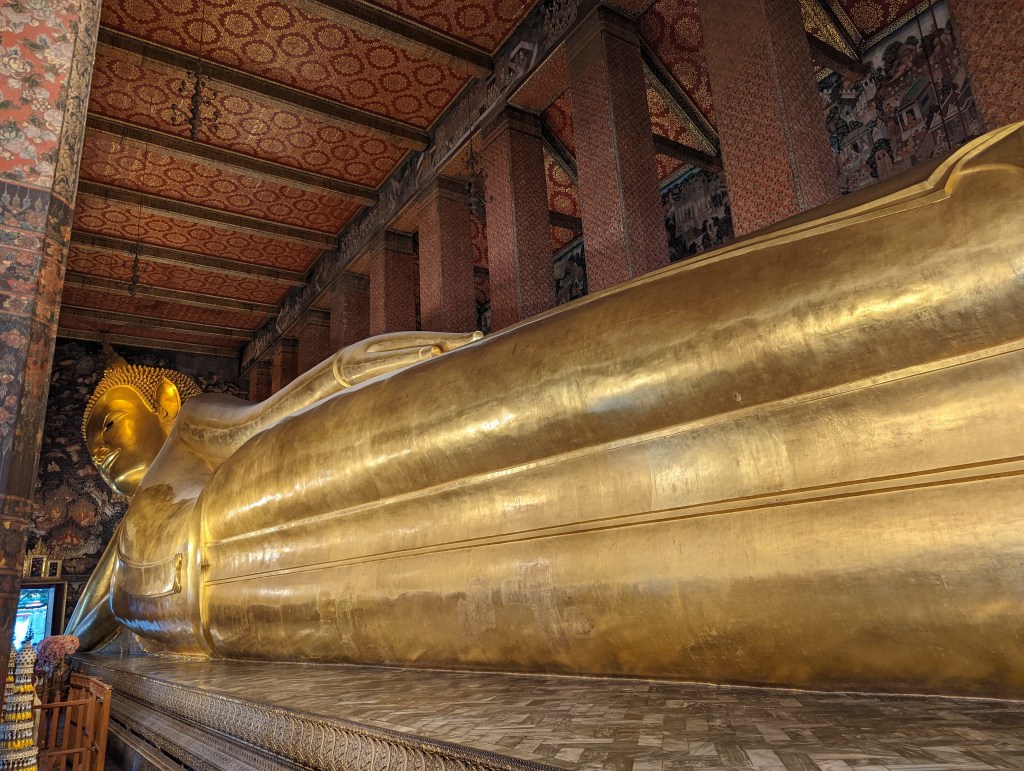
Starting in 2024, entry into Wat Pho will be 300 baht ($8.35 USD). The temple is open every day from 8 a.m. to 6:30 p.m.
Wat Arun

From Wat Pho, you can take a ferry directly across the Chao Phraya River to Wat Arun, which costs about 20 baht (<$0.60 USD).
Otherwise known as the Temple of Dawn, Wat Arun is another gorgeous Buddhist temple. This wat only costs 100 baht ($2.75 USD) to enter and is open from 8 a.m. to 6 p.m. daily.
2. Lunch at Wang Lang Market
You can get from Wat Arun to Wang Lang Market by taxi in 7 minutes, or you can walk there in about 25 minutes, which isn’t that bad (as long as it’s not downpouring, of course).
The Wang Lang Market is open every day from 9 a.m. to 6 p.m. and has a ton of well-priced street food ranging from traditional Thai meals, desserts, and snacks. You’ll also find a few clothing shops throughout. Keep in mind that while this is close to a lot of tourist attractions, this is considered a local market, so English might not be as widely used here as it is in more tourist-heavy areas. Though, some signs are still in English and you can always use translation apps.
3. Shopping at ICONSIAM
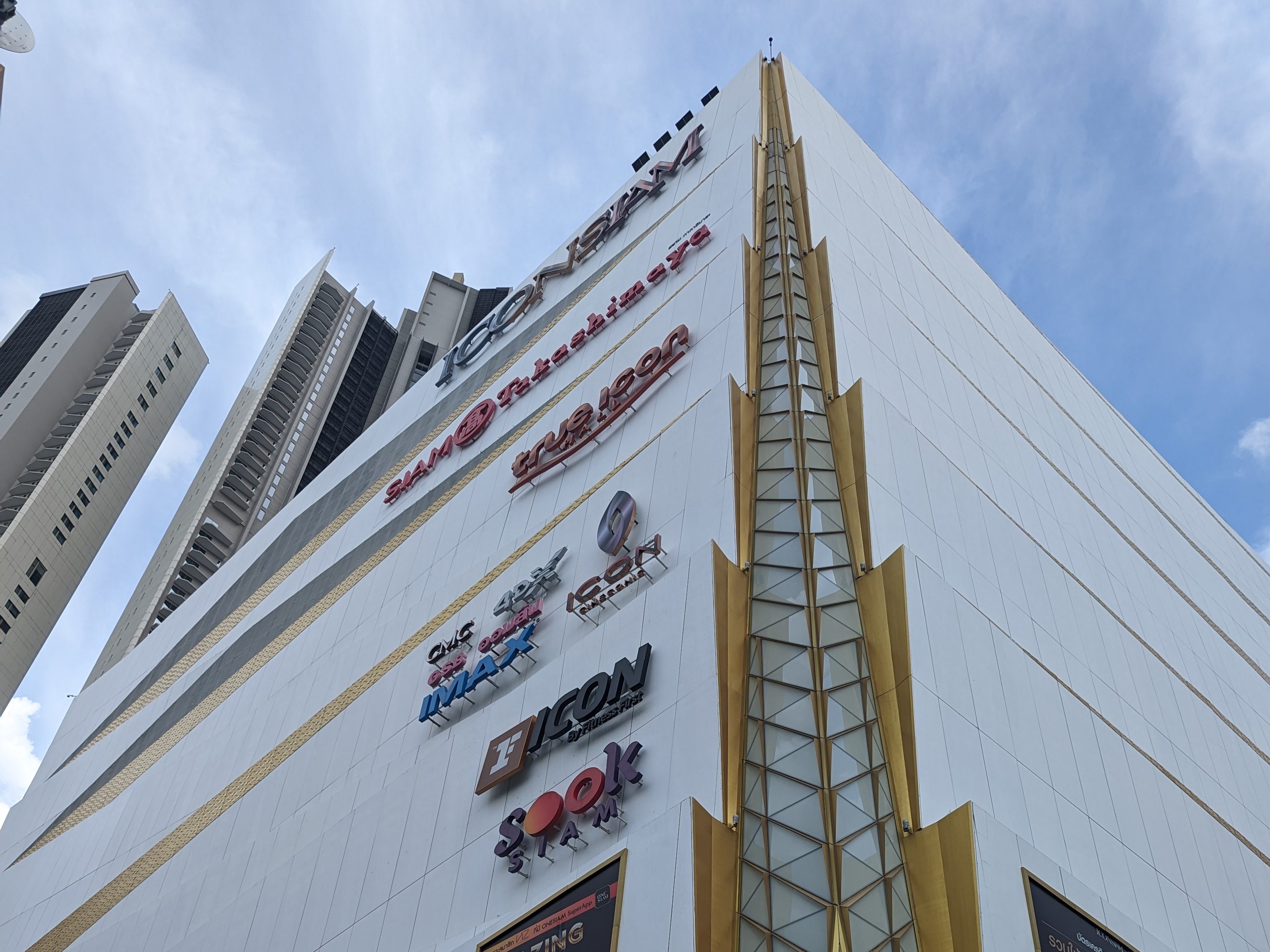
ICONSIAM can be reached either by taxi or by taking another ferry down the river.
ICONSIAM is a huge shopping center, filled with everything including luxury stores, touristy shops, restaurants, movie theatres, and even a food market area called SOOKSIAM that includes food from all 77 provinces in Thailand that’s meant to look like an upscale town and river market. This specific area also has performances and crafty items like unique earrings and souvenirs.
4. Head back to accommodations and explore the area
Honestly, by this point on your first day you’re probably going to be pretty exhausted. After the morning activities on my first day, I went to my hotel to freshen up and relax for a little bit, and in the evening when it started to cool down, I decided to explore the area and find a street market for dinner.
Of course, the restaurants and things to do will depend on the area you’re staying in. I happened to be staying near the Bangrak Bazaar market in Silom, so I got something to eat there and explored for a bit before retiring to my room for the day.
Day 2: Bangkok – Ayutthaya
1. Day trip to Ayutthaya
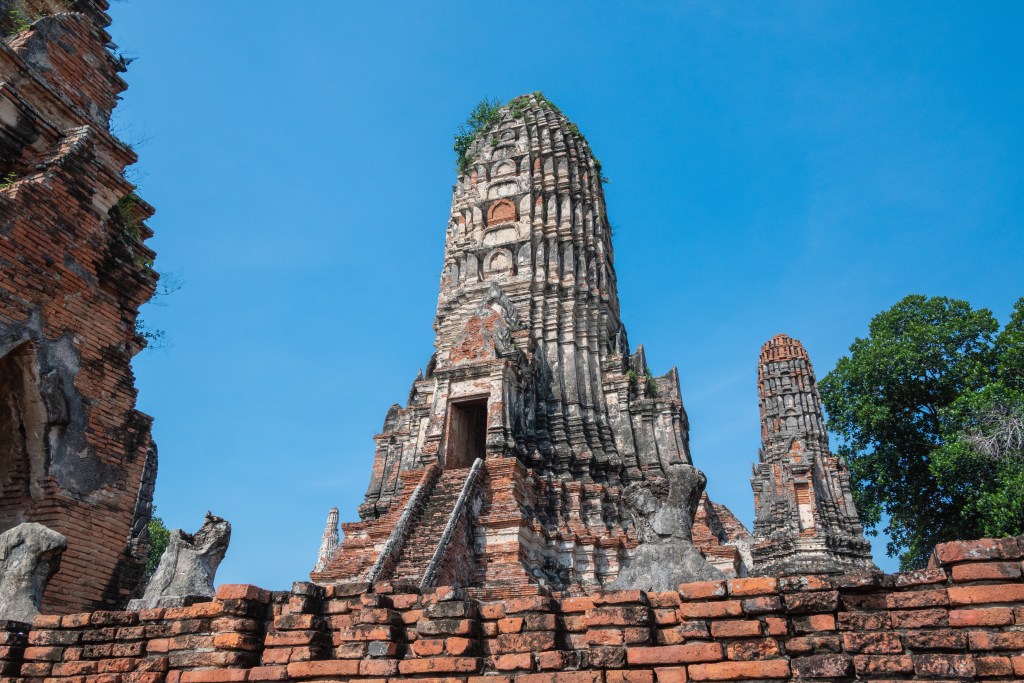
As an UNESCO World Heritage Site, Ayutthaya is a must-visit place if you are staying in Bangkok. The area is about an hour drive north of Bangkok, but it’s best experienced on a group tour.
Ayutthaya is an ancient city that was once the capital of Siam starting in 1350. Though, the city was destroyed by the Burmese in the 1700s, leaving the area in ruins.
Throughout the ancient city you can visit a multitude of sites, including:
Wat Chaiwatthanaram
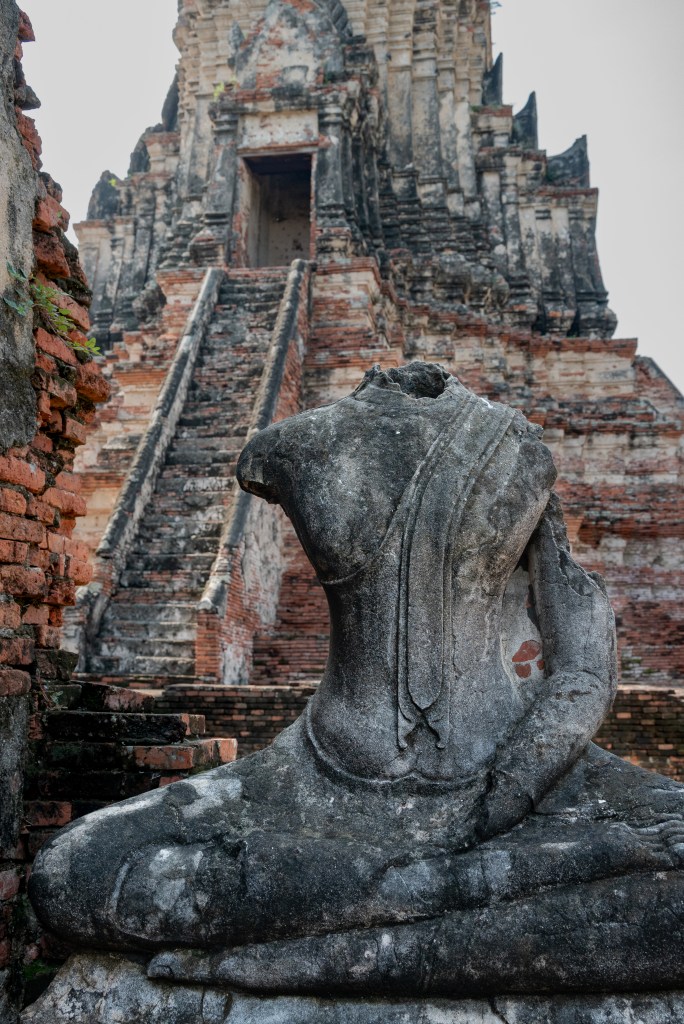
This wat is one of the best known temples in Ayutthaya. It was built in the 1600s as a memorial to King Prasat Thong’s mother. Surrounding the temple—and really all throughout Ayutthaya—you’ll find beheaded Buddha statues. When the Burmese destroyed the ancient city, they were in search of money and treasure, and it was believed that treasure was hidden in the heads of the Buddhas.
Reclining Buddha
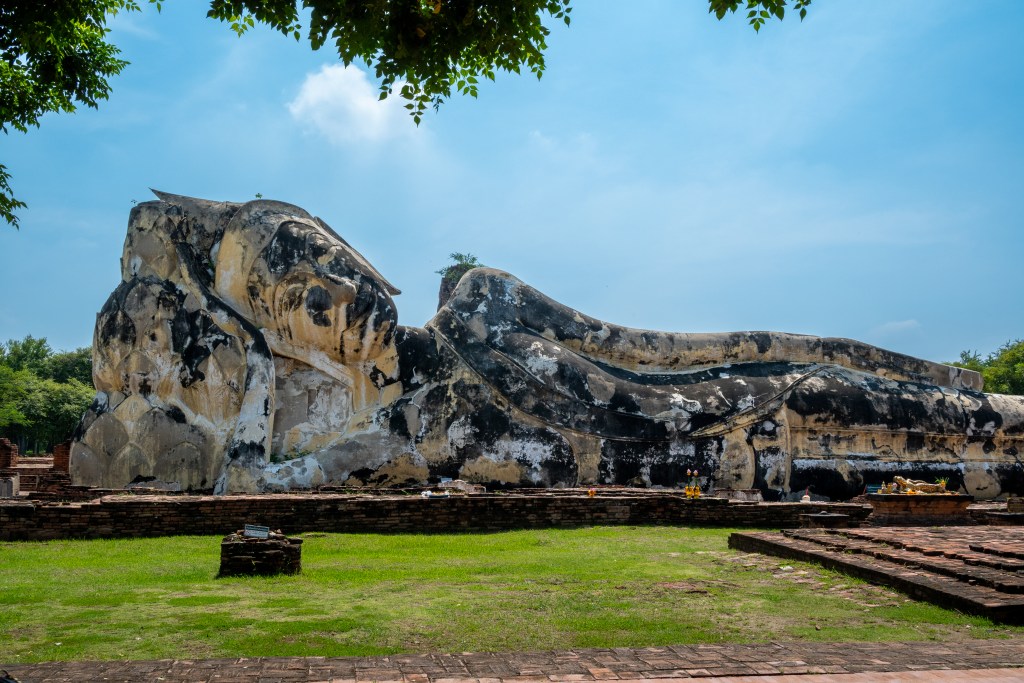
Though a little bit smaller than the Reclining Buddha in Wat Pho, this figure is a bit older. It is part of the ruined Wat Lokayasutha, aka “The Temple of the Earth”. The only other part of the temple that remains is a single stupa, but the reclining Buddha is still often visited by Thai people to provide offerings.
Wat Phra Sri Sanphet

This wat was my personal favorite. It’s located on the site of the old Royal Palace and was considered the holiest temple there.
In addition to the 3 iconic Chedis (pictured above), there’s a stunning modern temple nearby called Wihan Phra Mongkhon Bophit.
Wat Mahathat

This is said to be one of the oldest temples in Ayutthaya, dating back to the late 1300s. Though, the most popular part about this temple is the Buddha head entangled in a tree’s roots. This is one of the many heads that were cut off of Buddha statues when the Burmese came through, though this one was obviously left behind and the tree grew around it.
When taking a photo of Buddha statue, you’re always supposed to have your head below it as a sign of respect, so you have to squat/kneel when you take pictures of this particular Buddha.
2. Dinner/Khaosan Road
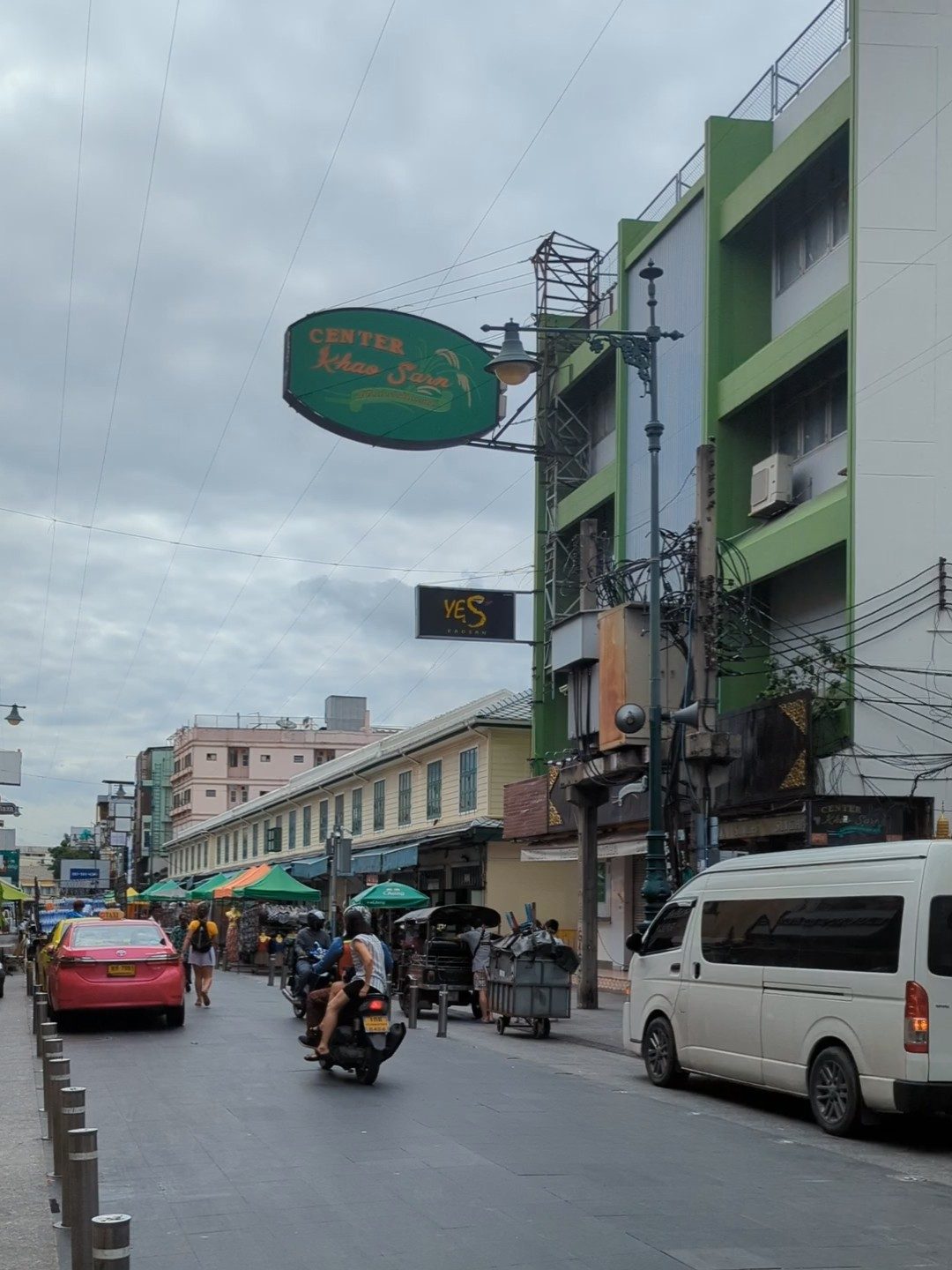
The trip to Ayutthaya will probably take up most of your day, so use the evening to explore more food markets, do some shopping, and get dinner at a new place.
If you want a more lively, social evening, visit Khaosan Road. This is the backpackers’ haven, offering cheap accommodations for travellers on a budget. That being said, it’s also a hub for nightlife.
Going out (especially when travelling solo) isn’t really my thing, so I didn’t visit at night. I strolled through here during the day and grabbed a smoothie at a small food stall, but before dark this road is pretty empty and lifeless.
Day 3: Bangkok – Shopping, Parks
As my last day in Bangkok before heading to Chiang Mai, I decided to take it easy since I did a lot my first couple days. I had breakfast at a restaurant near my accommodation (see restaurant list further down) and brought my luggage to a small storage facility because I had to check out by 11 a.m.
I tried to stay inside as much as possible because I was quite exhausted from the heat and humidity, so I spent the day exploring a couple more of the major shopping centers.
1. MBK Center
The MBK Center is an 8-story shopping mall made up of around 2,000 shops and restaurants. You can find practically anything in this mall, including souvenirs, clothes, Tim Hortons, you name it.
One of the more notable shops in the MBK Center is Don Don Donki, which is a Japanese supermarket filled with toys, skincare, food, and Japanese snacks.
There’s a lot to see in the Center. I spent around 2 hours here perusing through stores and eating lunch at a ramen restaurant.

2. Siam Paragon
Siam Paragon is a shopping mall right across the road from the MBK Center. This mall is more on the high-end side, with luxury shops, a multitude of restaurants, and a 16-screen cinema.
3. Lumphini Park

Lumphini Park is a serene public park full of trees, grassy areas, and an artificial lake. Large public green spaces like this are few and far between in Bangkok, so this is a great place to take a slow stroll in the middle of a hot day.
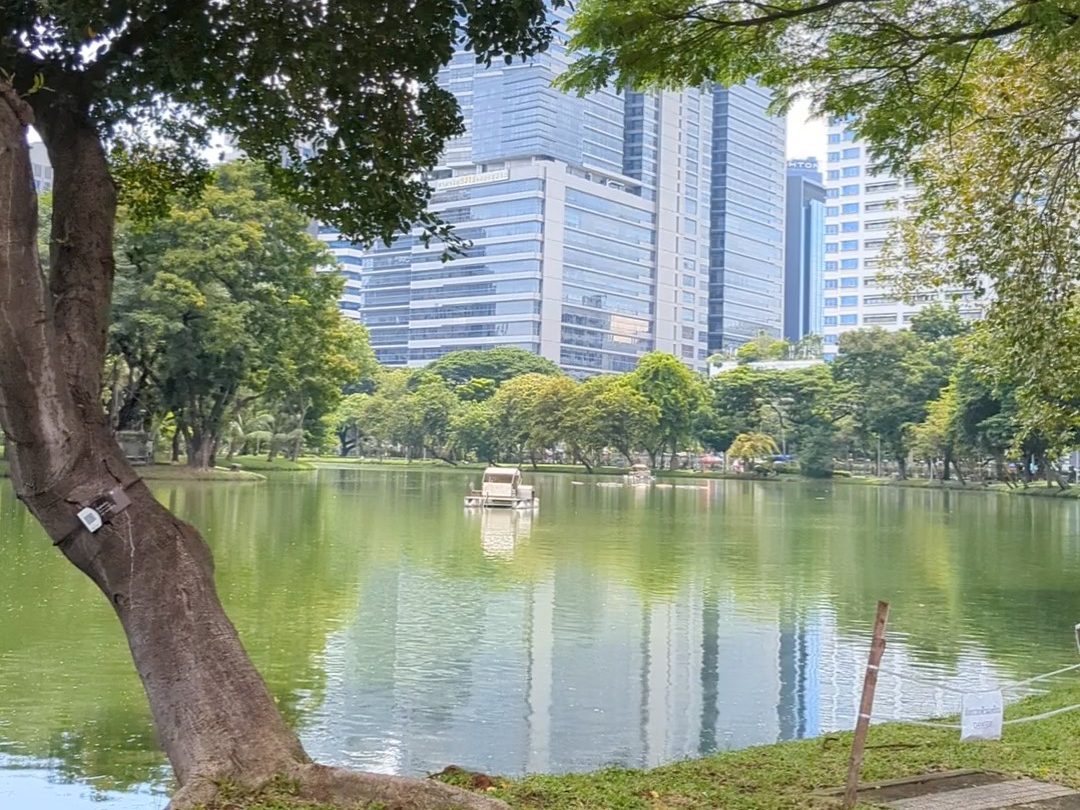
The park is about a 30 minute walk from Siam Paragon, but if it’s too hot or you’re trying to get there from some place farther away, an easy way to get to it is by taking the BTS (Bangkok Mass Transit System) Skytrain. More on public transit later on.
Also, there’s a really cute cat cafe near Lumphini Park that I wanted to go to called Caturday Cat Cafe, but there was a really long line so I wasn’t able to go in. But, something to check out if you’re interested!

4. Fly/train to Chiang Mai

Many people say flying is the easiest (and sometimes cheaper) way to get to Chiang Mai, however I took an overnight train. Flying would only take a couple hours, giving you more time to explore Bangkok, however the train takes about 14 hours. I ended up leaving Bangkok around 6 p.m., so I didn’t have time for anything in the evening.
Day 4: Chiang Mai – Self-Guided Walking Tour, Wats, Night Bazaar

After being in Bangkok for a few days, you’ll find Chiang Mai to be a much quieter, smaller city. Really, in comparison to Bangkok, Chiang Mai feels like a small town.
It’s pretty easy to get from the airport or train station to the city. You can take a taxi or Grab from the airport, or at the train station you can take a large red truck (called songthaews) for a pretty cheap price. I took a songthaew because the price was cheaper than a grab, though you do share the truck with other travellers looking to get to their destinations. The truck only cost around 30-60 baht (less than $2 USD). I’d typically avoid tuk-tuks, as they tend to hike up prices.
I stayed near Old Town, which made it incredibly easy to walk everywhere without needing to take a taxi.
On my first day in Chiang Mai, I planned my own walking tour to orient myself with the city and see the main historical sites and wats. Honestly, I did not stick to this route because I ended up finding more wats and places to explore while walking around, so feel free to change up your plans as you go along!
1. Tha Phae Gate

Tha Phae Gate is one of the main gates into the walled Old Town of Chiang Mai, dating back to the early 13th century.
Here you’ll often find tons of pigeons looking for scraps, and locals will help tourists take photos walking through the wave of flying birds.
2. Wat Phan Tao
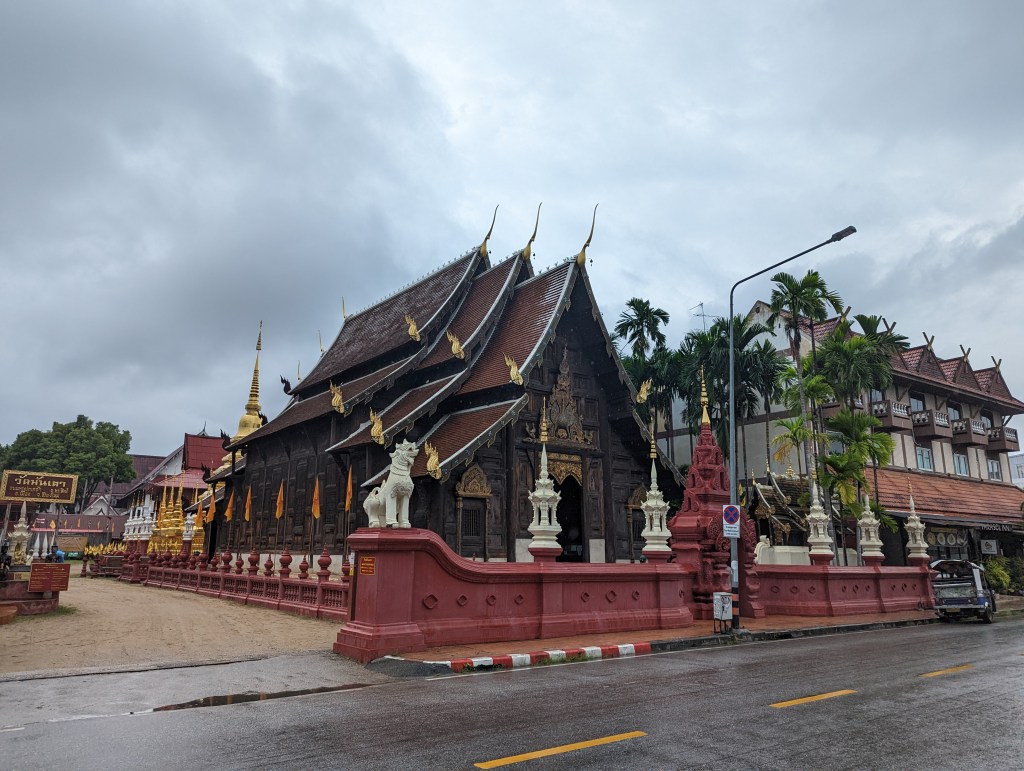
There are about 300 wats in Chiang Mai, so it’s difficult and unnecessary to see them all. However, Wat Phan Tao is unique in that it is made entirely of teakwood, giving it a much different appearance than most other temples you’ll find in the city.
3. Wat Chedi Luang
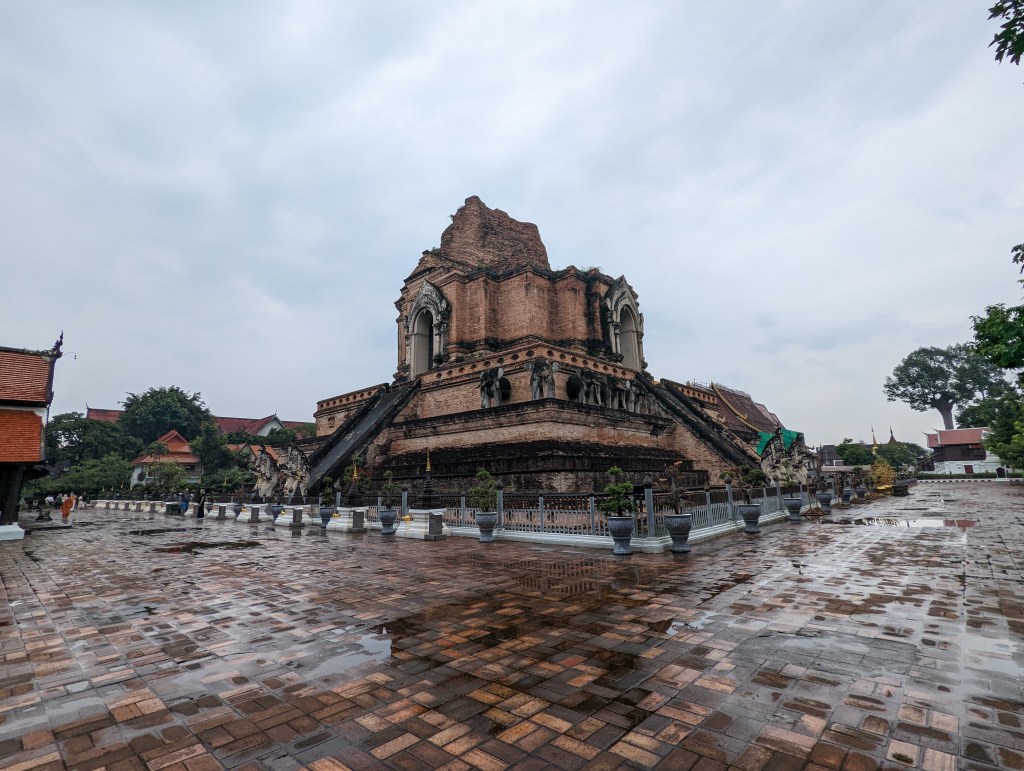
Wat Chedi Luang is, in my opinion, the most fascinating wat to visit in Chiang Mai.
The wat was originally built in the 14th century, and it remains an iconic structure towering above many buildings in the city. The main Chedi (pagoda) is now in ruins, but it’s still massive compared to most temples in the area. It also originally housed the Emerald Buddha, which now sits in the Grand Palace in Bangkok.
4. Chiang Mai Arts and Cultural Center/Three Kings Monument


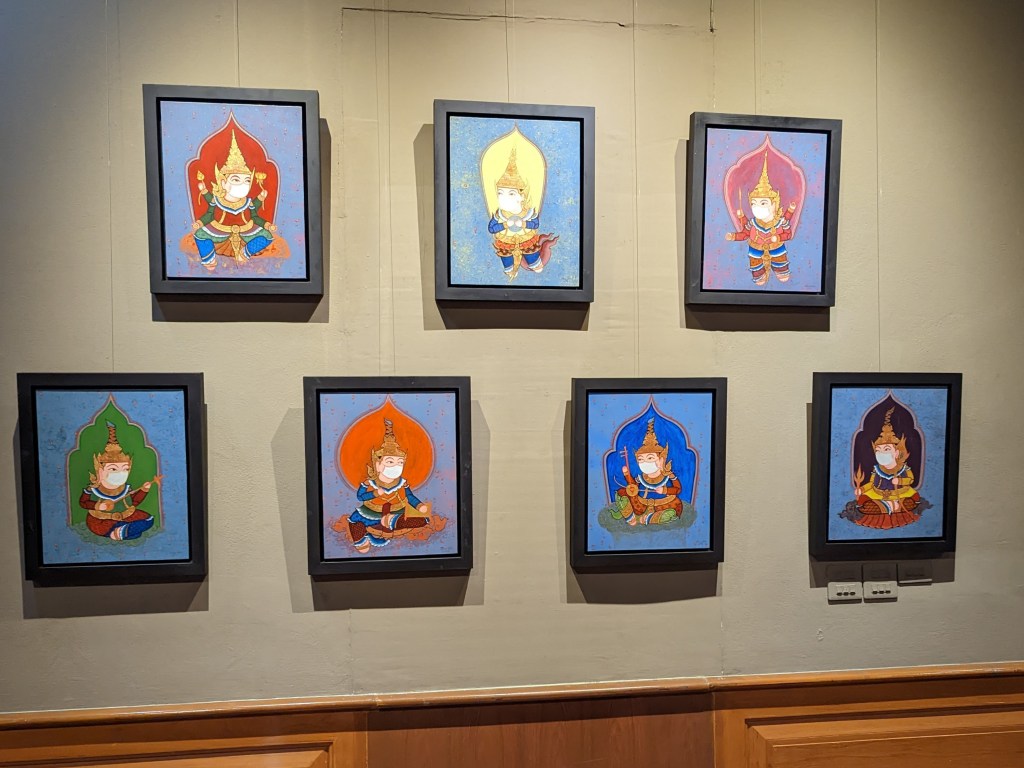
The Chiang Mai Arts and Cultural Center displays the history of the Chiang Mai Province and features art and artifacts.
Outside of the Historical Center stands the Three Kings Monument, which is dedicated to the original rulers of Chiang Mai who built their palaces in that area and planned the layout of Chiang Mai.
5. Wat Phra Singh

Wat Phra Singh is one of the most-visited temples in Chiang Mai. It houses the famed Buddha image referred to as Phra Singh (Lion Buddha), which has been in Thailand since the mid-1300s. This is also one of the more grand wats in Chiang Mai.
6. Chiang Mai Night Bazaar
With hundreds of stalls selling street food, souvenirs, clothing, art, and more, the Chiang Mai Night Bazaar is the most popular market in the city.
This is definitely not a local market (meaning locals do not shop here), but rather a big tourist area. Though, if you’re looking for gifts and souvenirs, this is definitely the place to go, as most things are not a fixed price and you can haggle for a bargain. I didn’t barter that much and got most of my souvenirs/gifts for around $50 total.
This is also a great place to grab dinner. I got a pad thai for 60 baht ($1.67 usd) as well as a fruit smoothie for even less.
I spent a couple hours here and visited multiple nights because the market is so big. Though, again, this area can be very touristy, so it’s not for everyone.
Day 5: Chiang Mai – Doi Inthanon National Park
1. Day trip to Doi Inthanon

Doi Inthanon National Park is 37 miles from Chiang Mai and consists of about 185 square miles of natural land. The park is home to multiple waterfalls, stunning temples, and the highest point in Thailand. If you only have time for one day trip while in Chiang Mai, I highly recommend visiting Doi Inthanon.

2. Dinner from Chiang Mai Gate Market
The Gate Market is often frequented by locals, making it an excellent place to get great street food in Chiang Mai. This market is also a lot smaller and a lot less overwhelming than the Night Bazaar.
3. Take an evening stroll in Nong Buak Haad Public Park
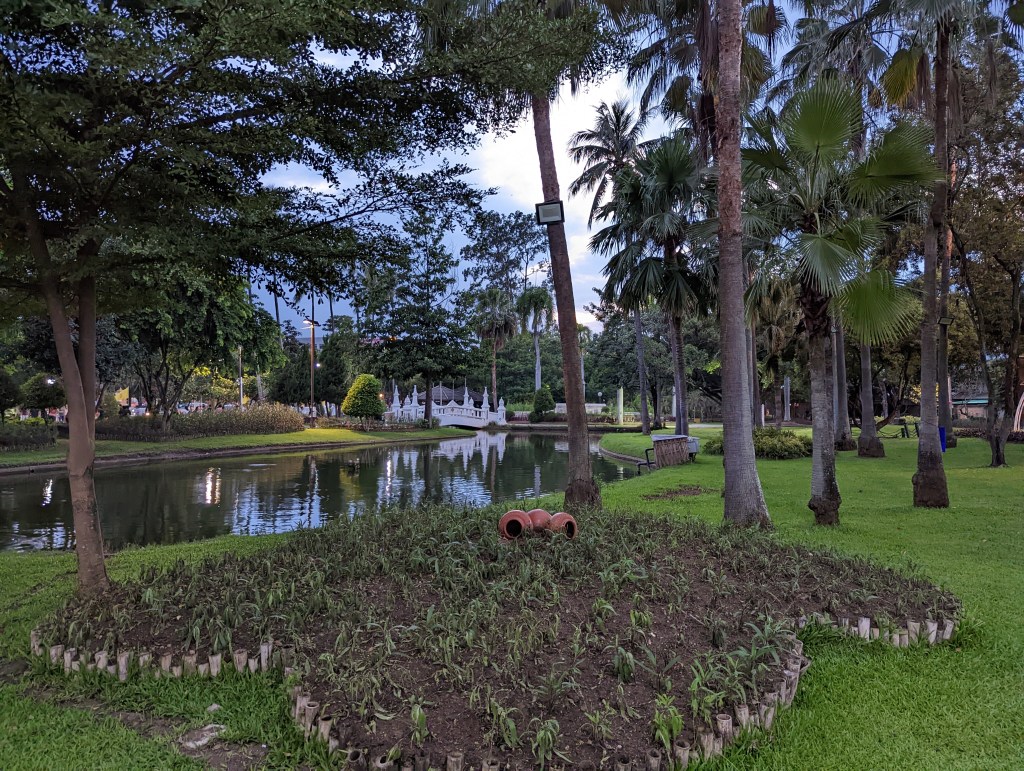
This public park is the only park in Chiang Mai’s old city, and it’s a great place to relax after a long day of exploring.
Day 6: Chiang Mai – Elephant Nature Park
1. Meet elephants at Elephant Nature Park
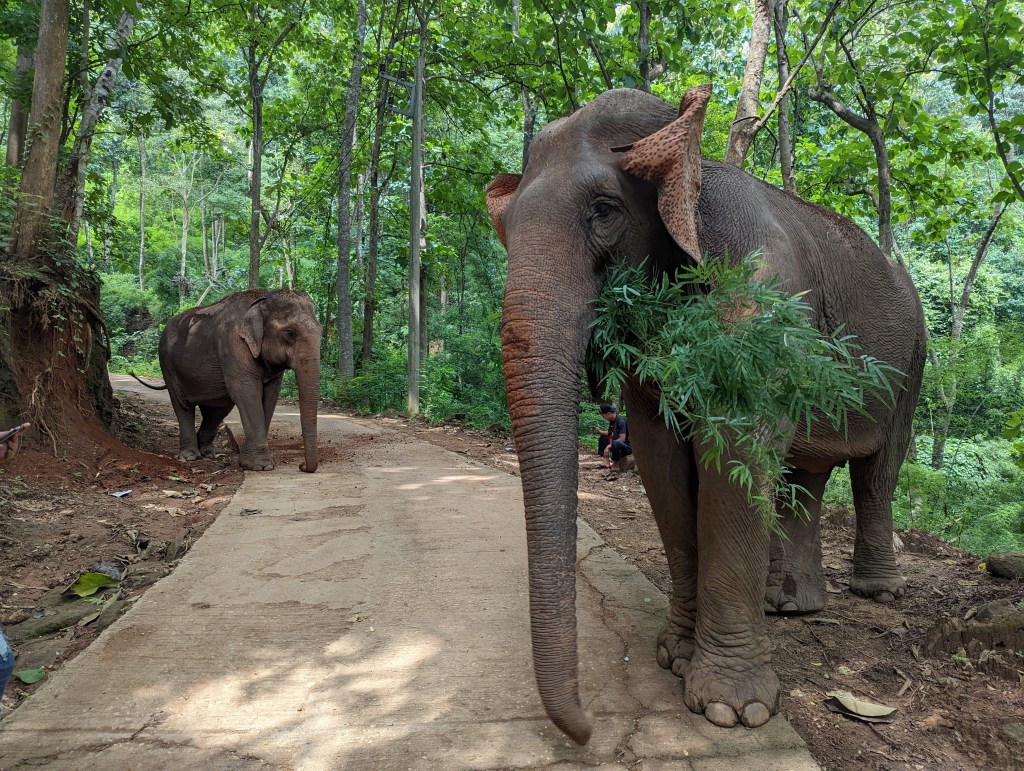
For my second day in Chiang Mai, I decided to take a day trip to Elephant Nature Park where I got to spend a few hours feeding and walking with elephants. I highly recommend visiting this park. If you choose to visit a different place to see elephants, please do your research to make sure it has ethical practices (no riding, forcing elephants to play games, etc.).
If you want to know more, I have a detailed description of my experience at the Elephant Nature Park here!
Day 7: Chiang Mai – Doi Suthep, Cooking Class
1. Catch the sunrise at Doi Suthep
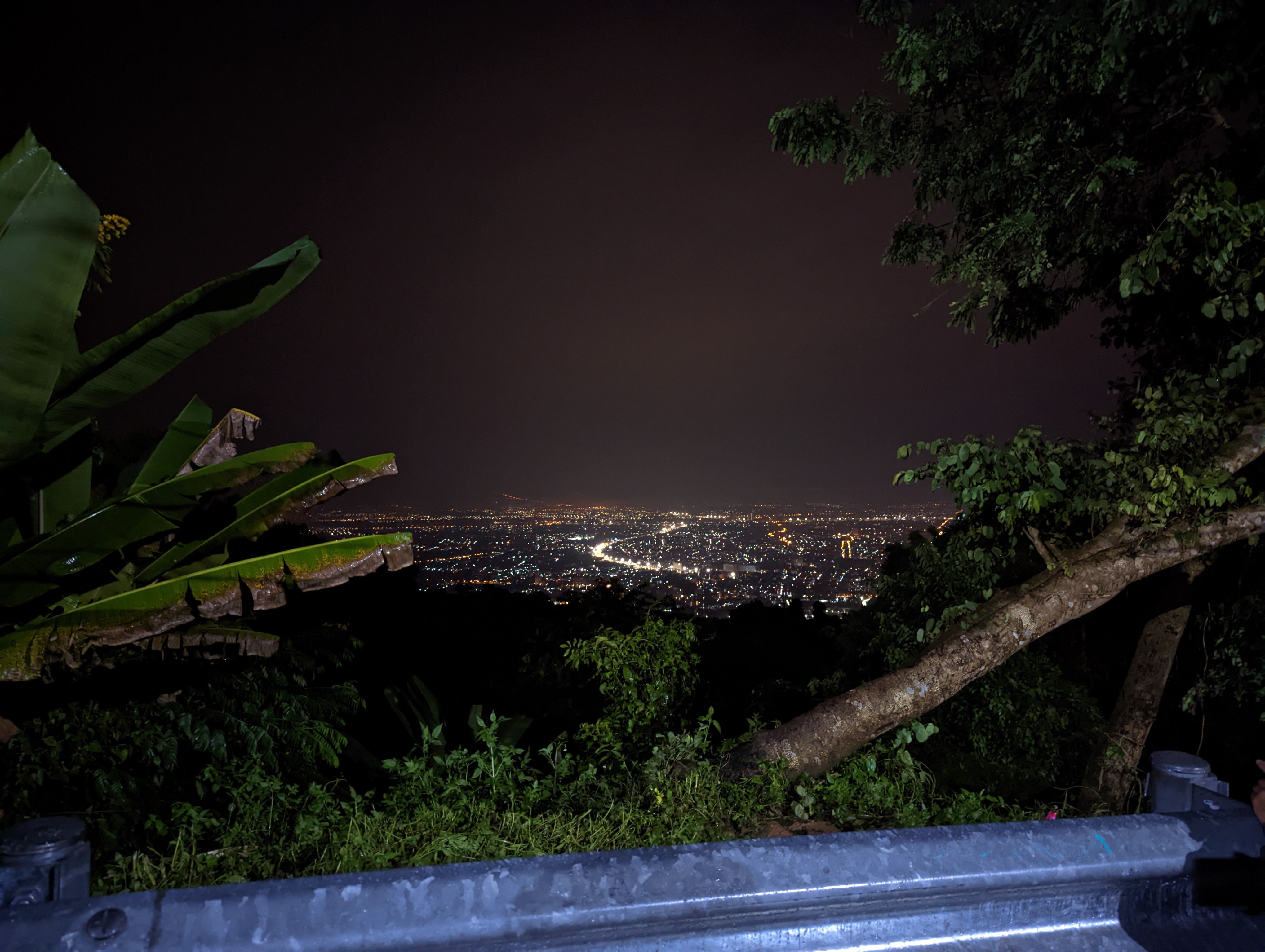
By this point you’ve probably overcome jet lag, so take this opportunity to wake up early and watch the sun rise from Doi Suthep, one of Thailand’s most sacred temples.


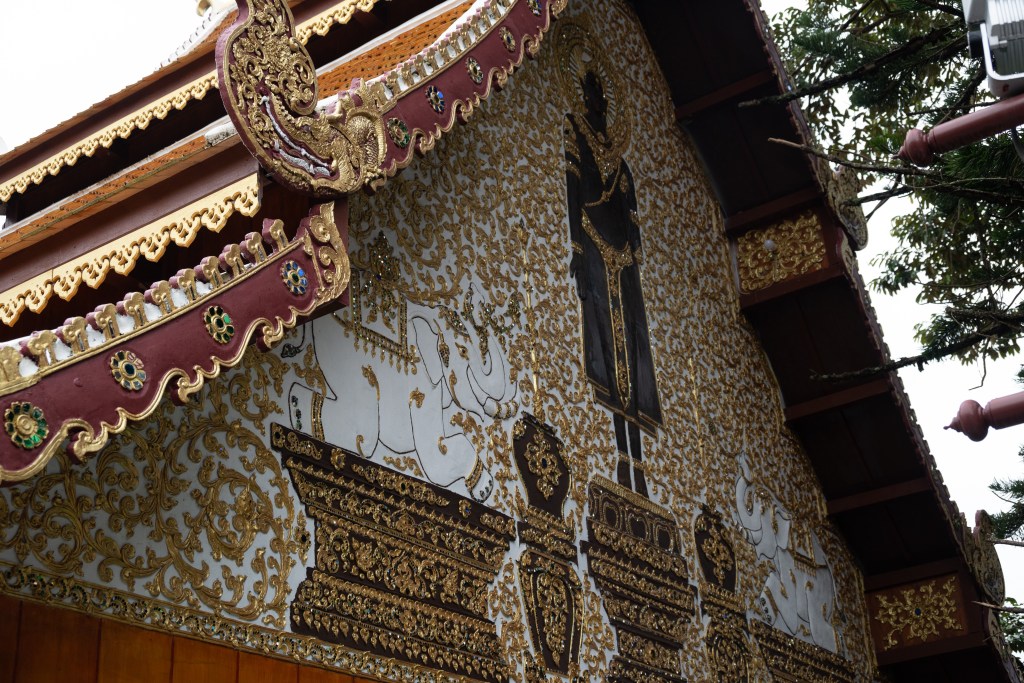
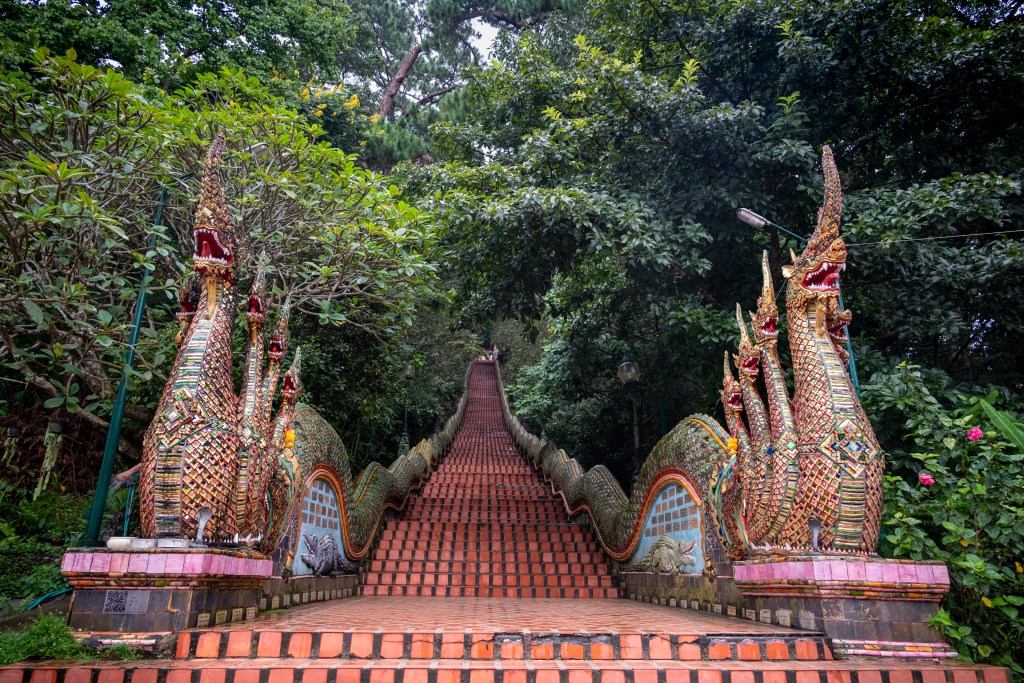
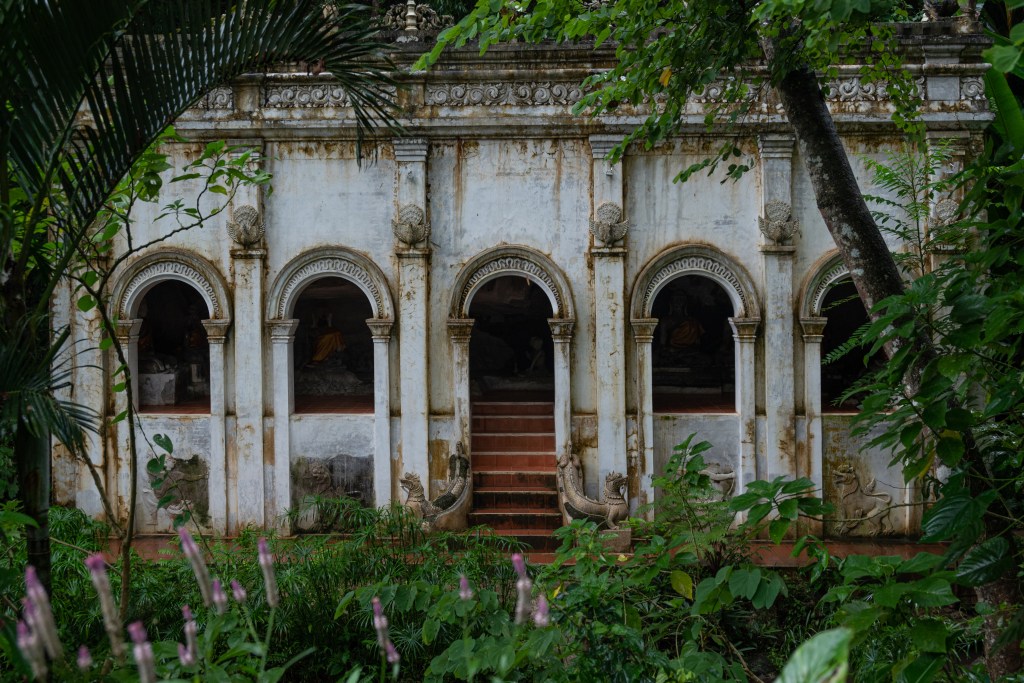
This wat is about 10 miles from Chiang Mai, so the best way to get there for sunrise is to take a half-day tour. The tour I joined also stopped at a few smaller temples on the way back to Chiang Mai, like Wat Pha Lat and Wat Umong Suan.
2. Take a Thai cooking class

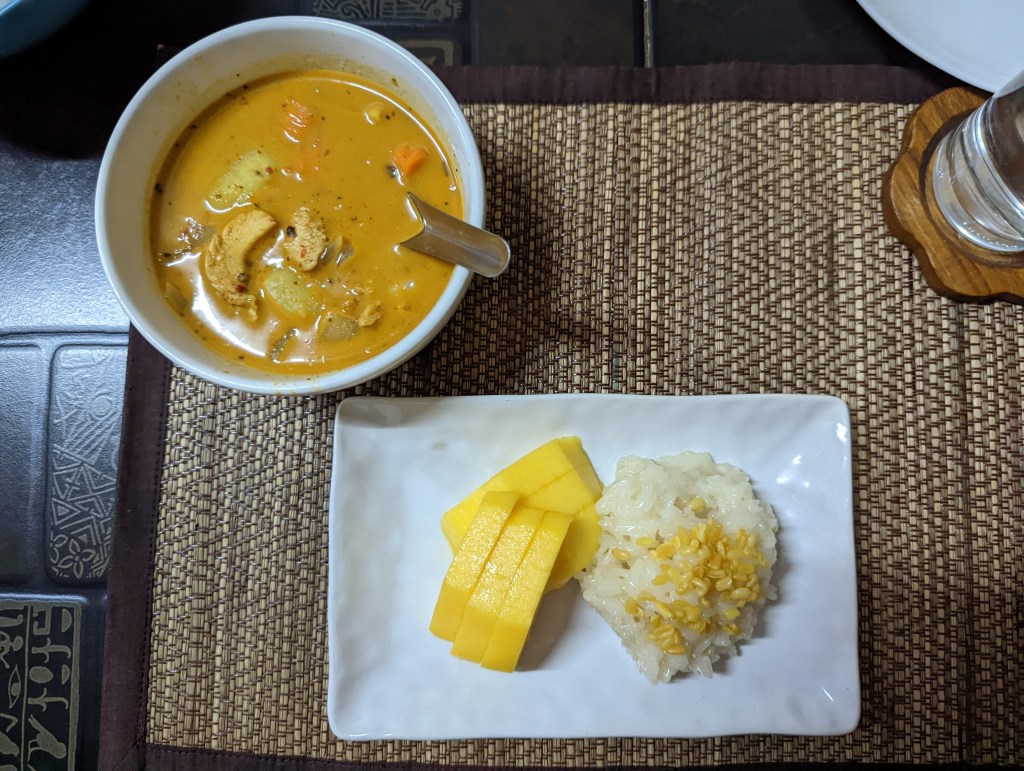
If you’re visiting Thailand, or really any country with different food, I highly recommend taking a cooking class to learn about the popular dishes and the most common ingredients. And you get to bond with strangers over food which is pretty great.
In the cooking class I took, we cooked a stir fry, soup, curry, as well as papaya salad and mango sticky rice for dessert.
3. Go out to a bar/socialize
While it’s not a big party area like some places in Bangkok, Chiang Mai has a few popular bars. I ended up being too tired to go out, but I was recommended Zoe in Yellow as a great nightclub for travellers.
Day 8: Chiang Mai
As your last day in Chiang Mai, this is your chance to see/do anything you’ve been meaning to but haven’t had the chance yet.
1. Eat Khao Soi at Khao Soi Kuhn Yai

Khao soi is a curry from Northern Thailand, but it’s most famously connected to Chiang Mai. In fact, some say you haven’t really been to Chiang Mai if you haven’t had Khao Soi there.
After reading many blogs and reviews, I found the best khao soi restaurant was deemed to be a small outside place called Khao Soi Kuhn Yai. I’d never had khao soi before, so I can’t say if it’s the best because I have nothing to compare it to, but I can confirm it was pretty darn good.
2. Visit a spa/get a Thai massage

I’m personally not really into massages/spas, but many people recommend getting a Thai massage while in Chiang Mai. You can find massages all throughout the city, including in the Night Bazaar. However, a Thai massage is said to be very strong because it’s essentially assisted yoga with acupressure, so I chose to go to a spa for the first time. The place I visited was Fah Lanna Spa, and while spas are definitely still not my thing, it was a lovely place.
3. Back to Bangkok
My flight back home was out of Bangkok, so I took the overnight train again to spend one more day in Bangkok. As mentioned before, flying is a much faster option.
Day 9: Bangkok – National Museum, Chinatown, Chatuchak
1. Bangkok National Museum
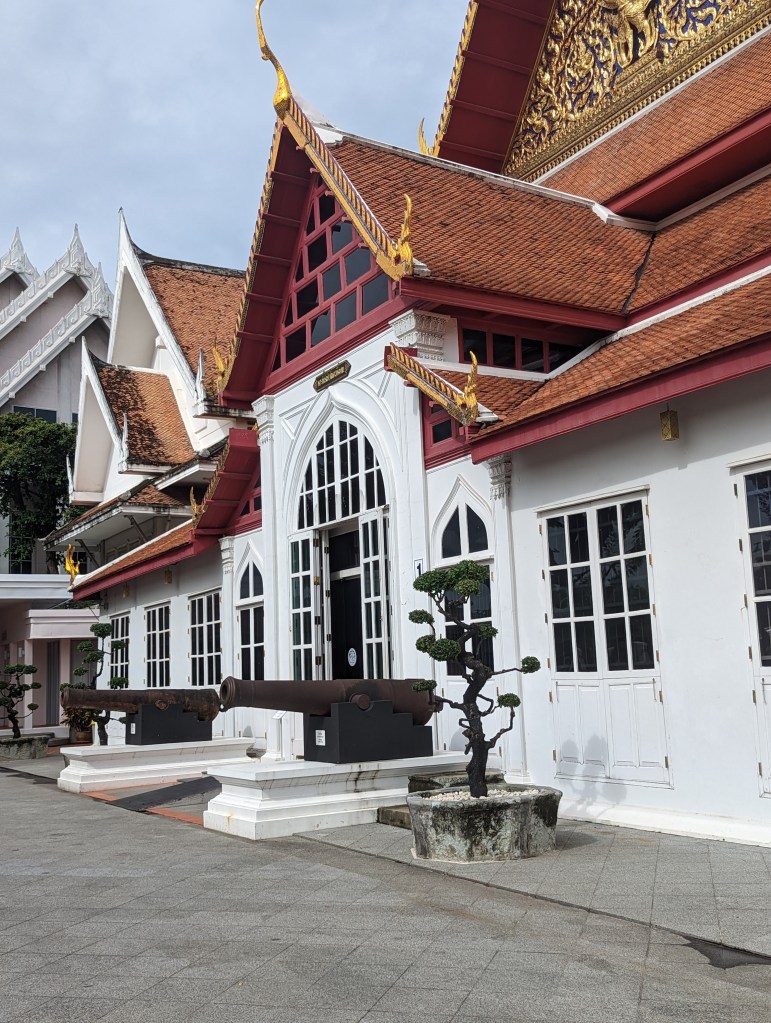
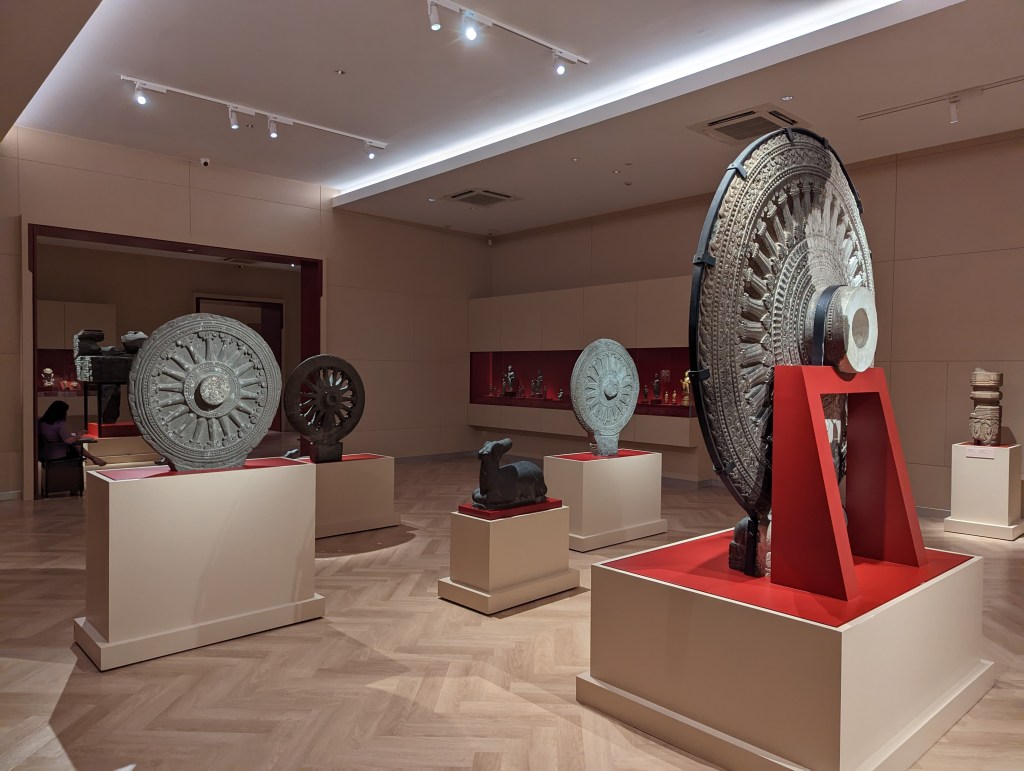
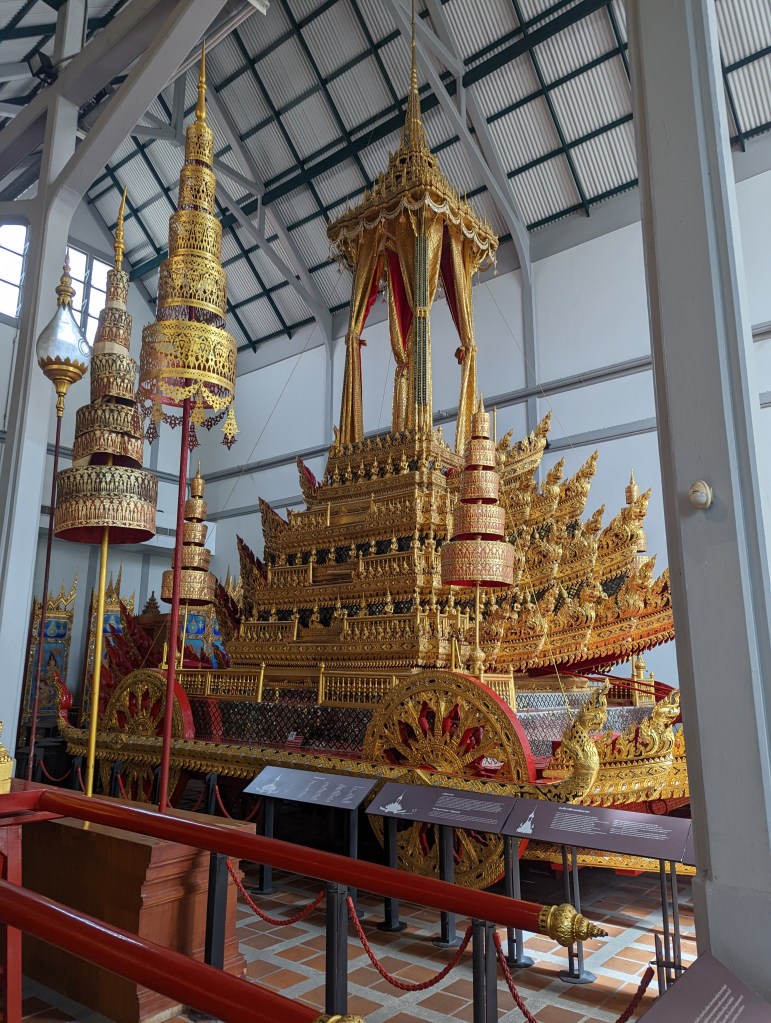
The Bangkok National Museum showcases Thailand’s history and art, displaying a multitude of artifacts from various periods throughout Thailand’s past.
I visited the museum right when it opened at 8:30 a.m. and there was hardly anyone else there, so it was a relaxing place to spend an hour at.
2. Democracy Monument, Giant Swing
While in the area, stop by a couple iconic structures along the road on the way towards Chinatown.
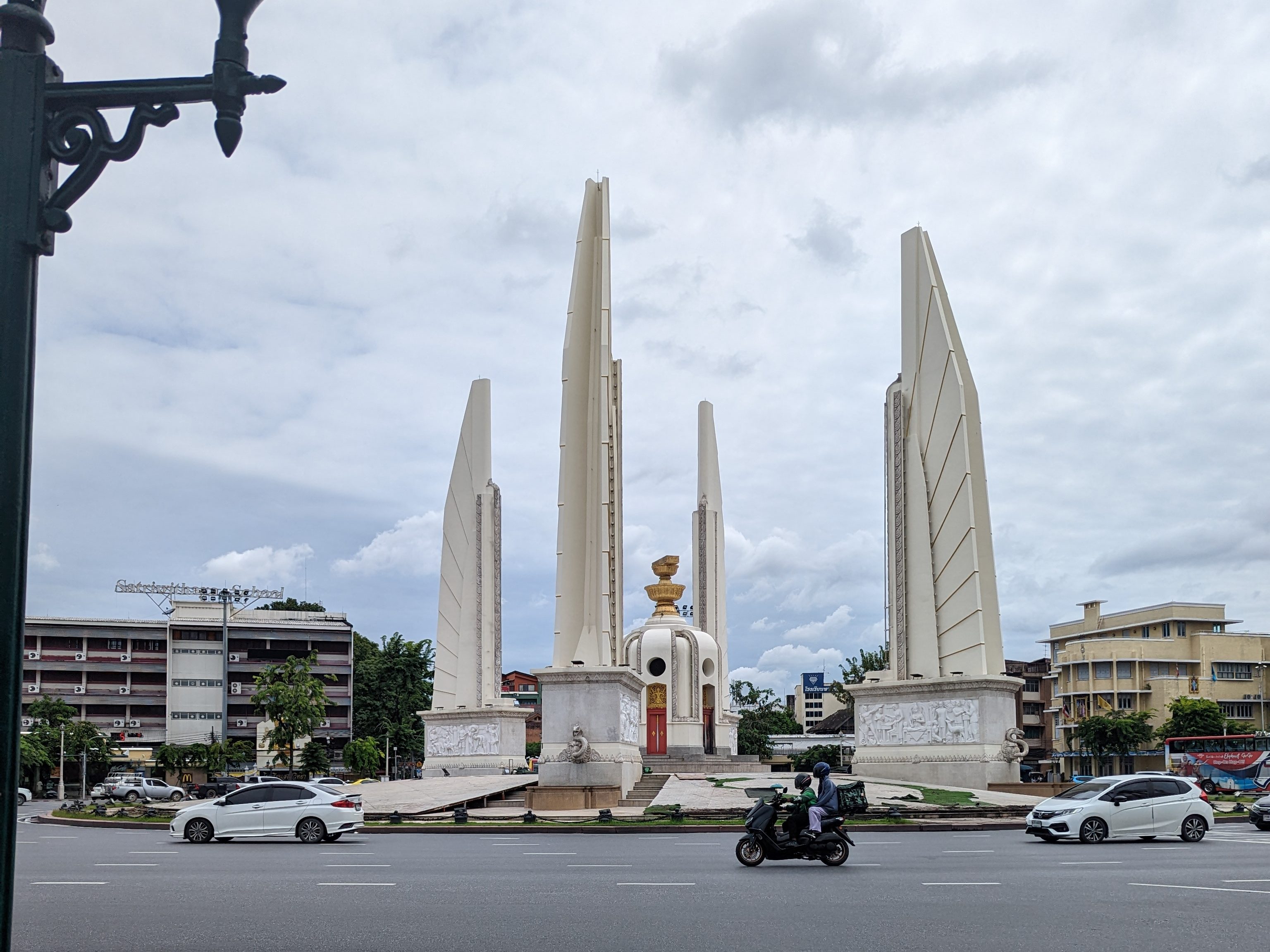
The Democracy Monument sits in the middle of a traffic circle and was established to memorialize the Siamese coup d-etat in 1932 that led to the constitutional monarchy being established.
A 10-minute walk south of the Democracy Monument, the Giant Swing sits in front of Wat Suthat and used to be used for a Hindu religious ceremony up until 1935. The structure no longer has an actual swing and has been renovated multiple times since it was first built in 1784, but it is considered an important historical attraction.

3. Chinatown

The Chinatown in Bangkok is one of the largest in the world. Primarily located on Yaowarat Road, Chinatown is filled with hundreds of shops, traditional goods, and food.
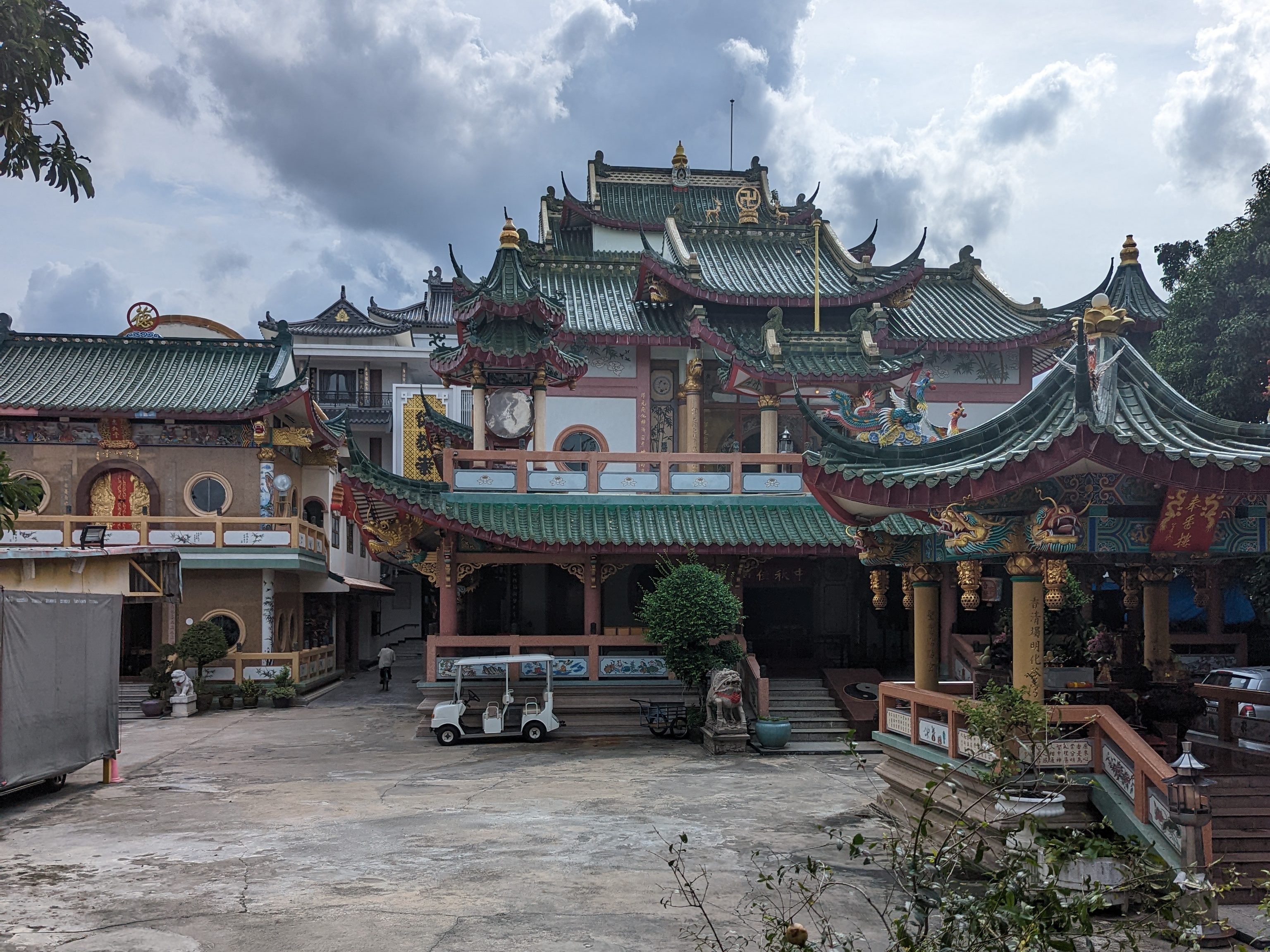
While most of Chinatown is on the east side of the Chao Phraya River, there is a beautiful Taoist pagoda and temple called Che Chin Khor on the west side. This temple is kind of hidden away and is much less-frequented by tourists. In fact, I visited with a friend and we were the only ones there. We only spent about 15 minutes there, but it was one of the most unique temples I’d seen during my time in Thailand.
4. Chatuchak Weekend Market
If you’re in Bangkok on Saturday or Sunday, make sure to visit the Chatuchak Market. It’s technically open Wednesday through Sunday, but the weekend is the only time everything is open.
The Chatuchak market is huge. To put into perspective just how big it is, around 200,000 people visit the market on the weekend to peruse the 15,000+ stalls. These stalls include clothes/accessories, home décor, plants, and—most importantly—food. You could probably spend all day here and still not see everything. Quite a few stalls sell similar items, so you can shop around and barter for the best prices.
5. Fly home
Annnnd this brings us to the end of my 9-day Thailand itinerary. Obviously, these suggestions are only a few of the thousands of things to see and do in Thailand, but hopefully this is a helpful start for your plans. Below are recommendations on places to stay, restaurants, etc.
Accommodations
Generally, accommodations in Thailand are very inexpensive when compared to American prices. For example, you can stay in a 5-star hotel for less than $150 a night. Here are some nice hotels, hostels, and areas to stay in Bangkok and Chiang Mai.
Bangkok
Hotels:
- Centre Point Hotel Silom (starting at $65/night)
- Millennium Hilton Bangkok (starting at $110/night)
- Lebua at State Tower (starting at $150/night) – I stayed here for my birthday and the views were stunning (see below)

Hostels:
- Slumber Party Hostel (~$10/night)
- Mad Monkey Bangkok (~$25/night)
- Tiny Taladnoi Hostel (~$12/night)
Areas to stay:
- Sukhumvit – Great area for dining & night life, and easily connected to the rest of the city through the BTS Skytrain
- Silom – Close access to street food and Lumphini Park
- Bangrak – Luxurious shopping and entertainment area
Chiang Mai
Hotels:
- Bed and Terrace Guesthouse (~$25/night)
- Banjai Garden Guesthouse (starting at $13/night)
- Shangri-La Chiang Mai (starting at $170/night)
Hostels:
- Sylvis Hostel (~$20/night) – I almost stayed here, but prices were so cheap everywhere that I decided to stay in a private Airbnb thru the Bed and Terrace Guesthouse mentioned above
- Hidden Garden Hostel (starting at $18/night)
- The Common Hostel (starting at $16/night)
Areas to stay:
- Old City – Honestly, in or near the Old City is the best place to stay in Chiang Mai. I stayed a block southeast of Old Town by the Bed and Terrace Guesthouse, and I felt incredibly safe in that area as a solo female
Safety in Thailand
One of the biggest culture shocks for me in Thailand was how safe it is. Yes, crime still happens, however there are few—if any—areas you need to avoid in terms of violent crimes. The most significant crimes you will find throughout Thailand are pickpocketing and scams, especially in heavier tourist areas. This makes Thailand a refreshingly safe place for solo female travellers. Just keep your personal belongings/money secure and be aware of your surroundings, as you should be in any place.
Also, be aware when crossing the roads! Many crosswalks don’t have traffic lights, so you often have to wait for an opening on busy streets to cross.
When to Visit
Thailand is always hot. But it is especially hot and humid during the summer, specifically from July to October. This is the monsoon season.
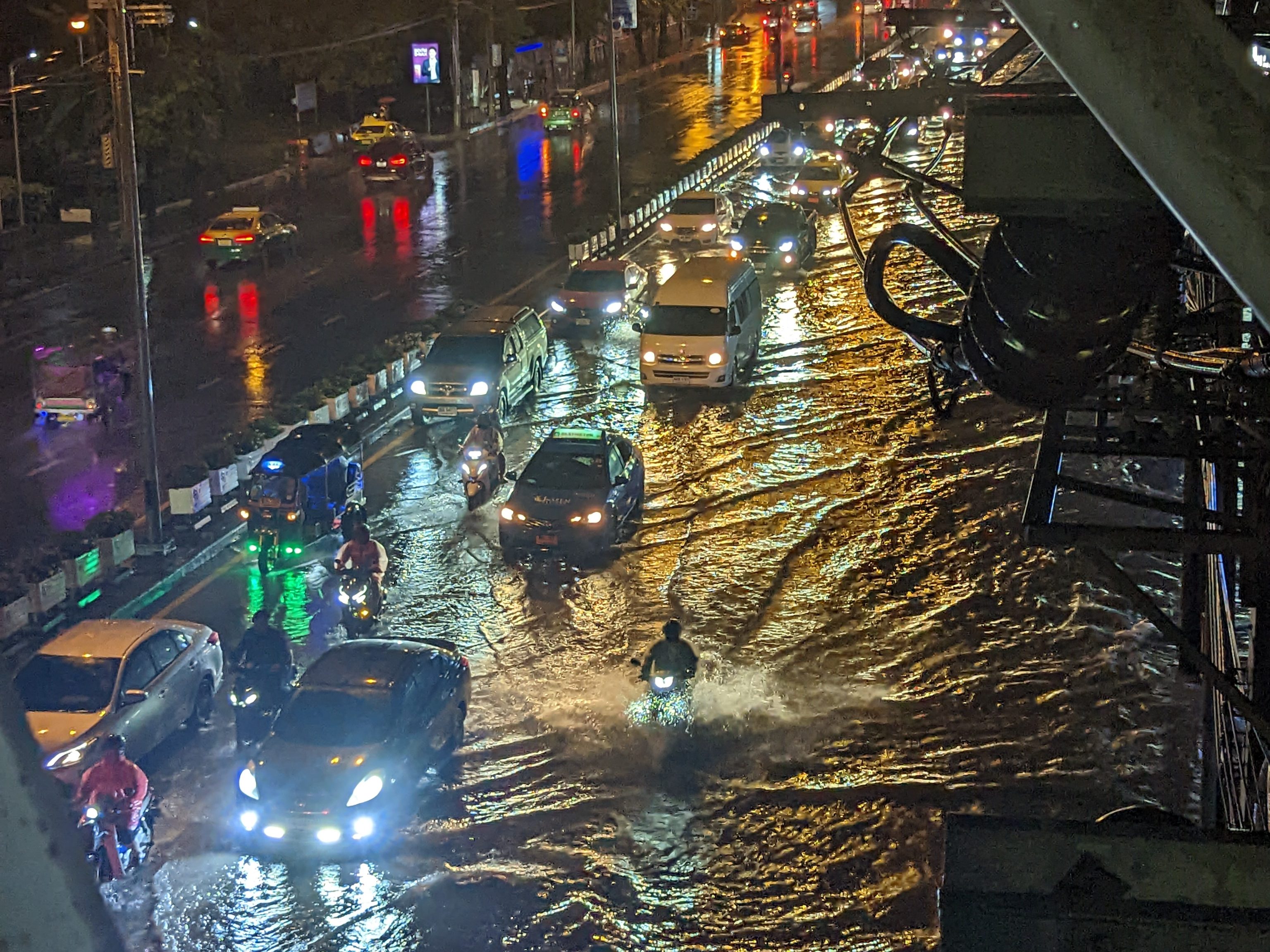
The best time of year to visit is November through March. The temperature will vary depending on where in the country you are (e.g. south in the peninsula versus up north in the mountains), however Bangkok usually averages around 90 degrees during the day at 70-80 at night throughout the year. Chiang Mai is a few degrees colder, especially in the evenings, but it’s still usually 85-90 degrees during the day.
With that being said, wear light, breathable clothes made of fabrics like cotton and linen (not polyester! You will sweat just by standing, trust me). The tricky part is to be a little more conservative in how you dress, as you will get weird looks if you wear shorts or crop tops (both are no-go’s in the temples). More information on how to dress here!
Transportation
Bangkok
In some areas of Bangkok you’ll be fine walking from place to place, but it’s not necessarily a very walkable city. It’s also a very big city, but because of that it has a great public transportation system. Here are the best ways to get around Bangkok:
Grab
Grab is Thailand’s version of Uber. It’s very easy to use and I found it very safe and convenient. I often paid a little over 200 baht (less than $6) for a 10–20-minute ride. However, I wasn’t able to set up my credit card with the app, so I always had to pay in cash. The drivers don’t have change, so keep that in mind.
BTS Skytrain
Besides Grab, the Skytrain is the easiest and most affordable way to get around the city. I primarily stayed in the Silom and Sukhumvit areas—both of which have numerous train stops—and used Google Maps to figure out which trains I needed to get on. I found the trains very easy to navigate, though living in Chicago for a year prior probably helped with that. I don’t have a guide (yet) on how to navigate the system, but there are many resources online if you need help!
Bus
I only used the bus once, mainly because I was quite intimidated by it. First of all, the busses will not stop unless you motion for them to do so. I didn’t realize that until 3 busses passed by me. Second, unlike the train, there is no swipe-able pass/card for the bus. Instead, you pay in coins. Busses are usually no more than 10 baht (~$0.25), and the fares are collected by the bus conductor. The bus I was on was pretty rickety, but there are also air-conditioned busses for a pricier fair (10-30 baht).
MRT (Metropolitan Rapid Transit System)
The MRT is Bangkok’s fasted way to get to more distant parts of the city. The main line runs in between two of Bangkok’s major train stations, Hua Lamphong and Bang Sue, and the other extends outside of Bangkok. The MRT also connects to the Airport Rail Link, which is a convenient way to get to and from the airport.
Not recommended:
Taxi (unless from a facilitated place like malls)
Taxis in Thailand are known for not using a meter and hiking up their prices. You’re better off taking a Grab or the train. Though, if you need to use a taxi, always ask if they use the meter before you get in.
I did use a taxi twice, but only from places that facilitated the communication with the taxi drivers, which were at the airport and from ICONSIAM.
Tuk-tuks
You will see tuk-tuks everywhere in Thailand. And I mean everywhere. That being said, they are geared towards tourists and often cost the same as taxis, though they don’t use meters. This means you can negotiate for the price, but if you don’t like bartering then tuk-tuks might not be for you. Many tuk-tuk drivers will ask if you need a ride (especially in Chiang Mai and if you look foreign), but it’s best to pay no mind unless you’re looking to take one.
Chiang Mai
In contrast to Bangkok, Chiang Mai is a very walkable city if you’re staying in/near Old Town. The only time I took any sort of transport around the city was when getting to and from the train station.
As I mentioned above, tuk-tuks are abundant in Chiang Mai, but I wouldn’t recommend using them, especially because it takes less than 30 minutes to walk from one side of the Old City to the other. Sometimes you’ll also see tuk-tuk drivers offering tours to temples or shops, but those are scams trying to get more of your money. A good rule of thumb to avoid scams in Thailand: don’t agree to do anything/go anywhere with someone who offers you something, especially if it’s a “deal”.
Grab
Again, Grabs were my saving grace in Thailand. I took one to get from my accommodation to the Chiang Mai train station, and it was incredibly simple and safe.
Songthaew or “Red Car”
Like tuk-tuks, I don’t really trust songthaews as a tourist, but these are the cheapest option to get around Chiang Mai. These red trucks have two benches in the back that can fit about 8 people on average, so you might be sharing a ride with someone else.
The only reason I took a red truck was because they were lined up outside the train station when I arrived in Chiang Mai, and they offered a very low price and I saw other travellers choosing them over taxis. So, I followed and it ended up being a great decision. I can’t remember exactly how much my trip cost, but red cars can range anywhere from 30-150 baht per person (so generally less than $5).
Again, as a tourist the songthaew drivers can try to hike up the price, but they’re typically more trustworthy than tuk-tuks.
Places I Ate At
To preface: while I enjoy food, I’m not necessarily what one would call a “foodie”, meaning I usually try to find cheap, quick meals as opposed to searching for the best restaurants around. However, since food is so cheap in Thailand, I tried to eat out more, so here are the places I visited:
Bangkok
In Bangkok I often got food at 7/11 (they are on every street corner there), at a mall, or happened upon street food. So, I don’t have many recommendations in Bangkok to share, but here are a few:
Luka Cafe

Located in Silom close to the Lebua State Tower, Luka Cafe is a hip restaurant with specialty coffees and international foods. I had the Runny Egg Aubergine (eggplant) for 341.33 baht (~$10). While this is such an inexpensive meal compared to restaurants in the US, Luka is a pricier place to get a meal in Bangkok. But it’s a relaxing, chill environment to get a bite to eat.
Bangrak Bazaar

As with any market in Thailand, Bangrak has a ton of places to buy street food.
Chatuchak Weekend Market
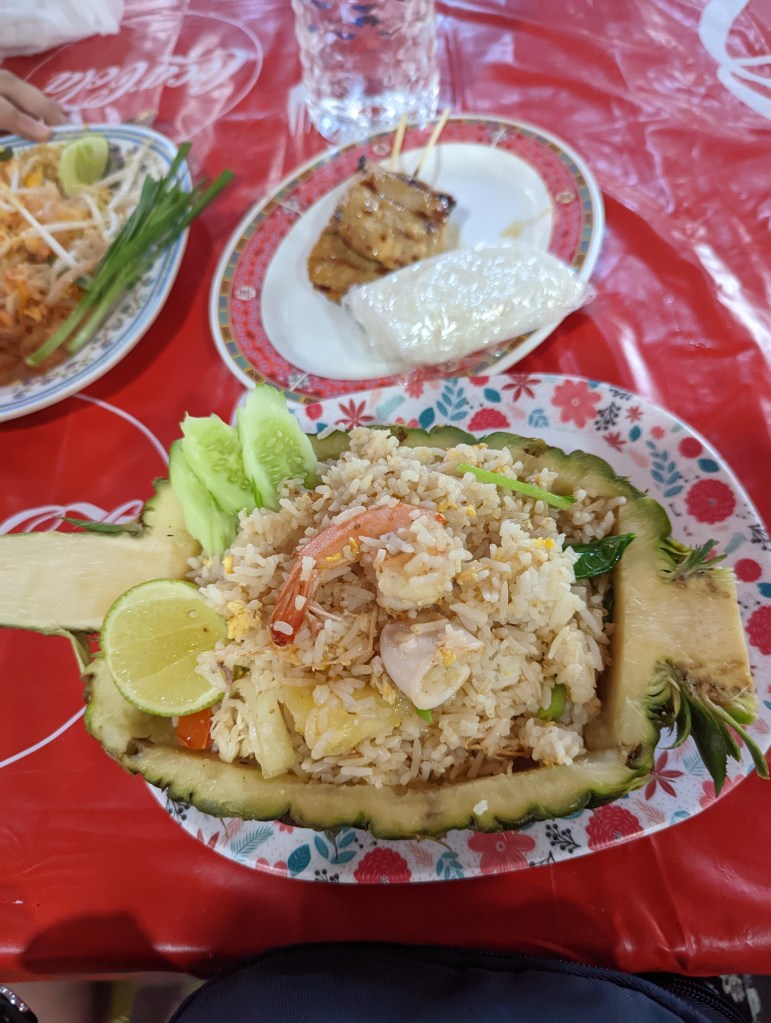
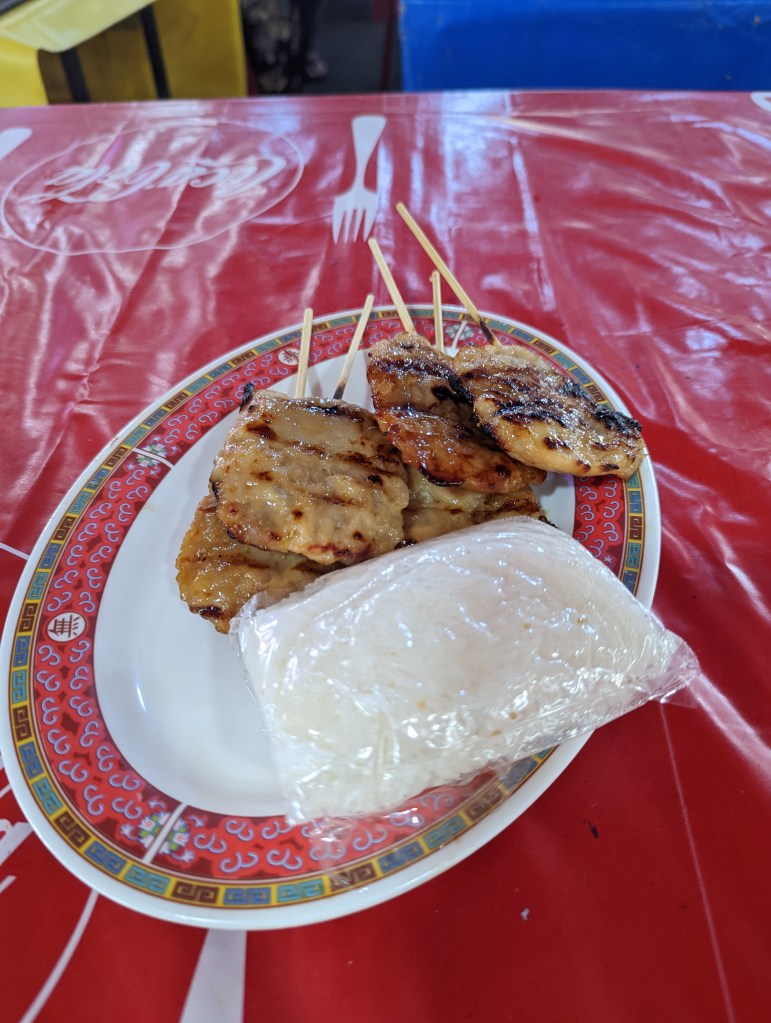
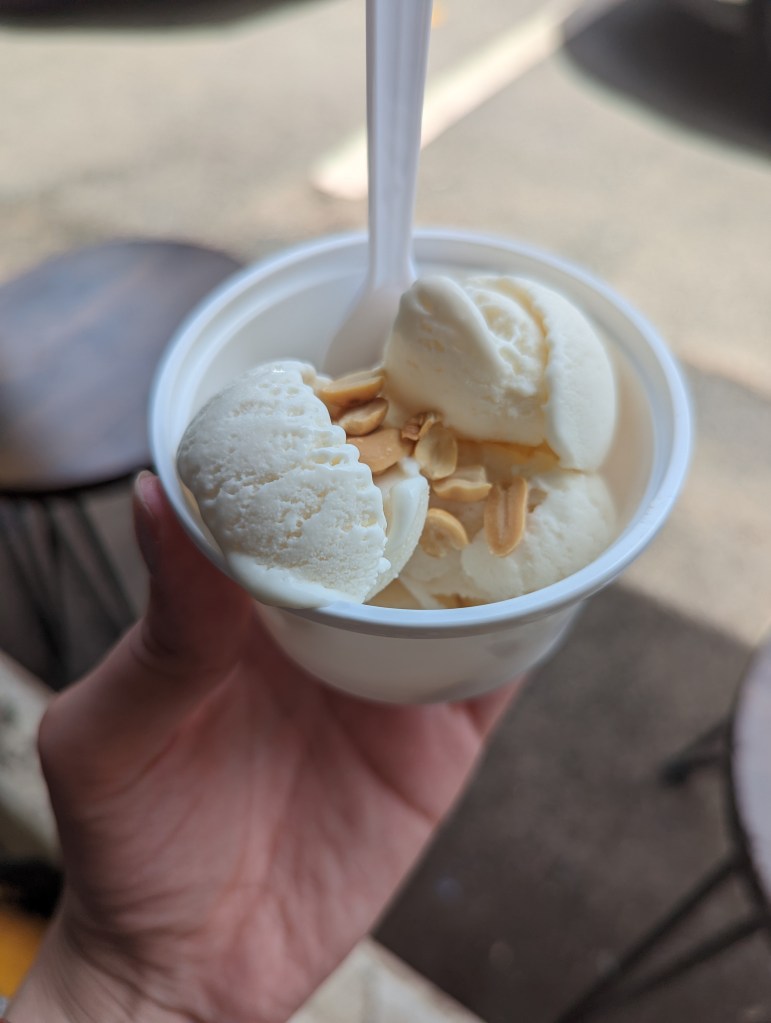
The Chatuchak Market has some incredible food, and I highly recommend spending at least a couple hours there perusing the shops. I had pineapple fried rice and chicken skewers and it was incredible. Oh! And coconut ice cream—a must-have at some point while you’re in Thailand.
Chiang Mai
The Corner Restaurant
When I arrived in Chiang Mai, this was the first place I happened upon for breakfast. I had yogurt with muesli and fresh fruits, toast w/ butter & jam, tea, orange juice, all for 130 baht ($3.65 USD)
Sweety Keto Cafe

I don’t adhere to any diets, but I was really curious about what a keto restaurant in Thailand would look like, so I decided to try it out. I got a stir fry of chicken and bok choy with cauliflower rice as well as an iced Thai tea, and it was surprisingly quite tasty.
Bear Hug Cafe

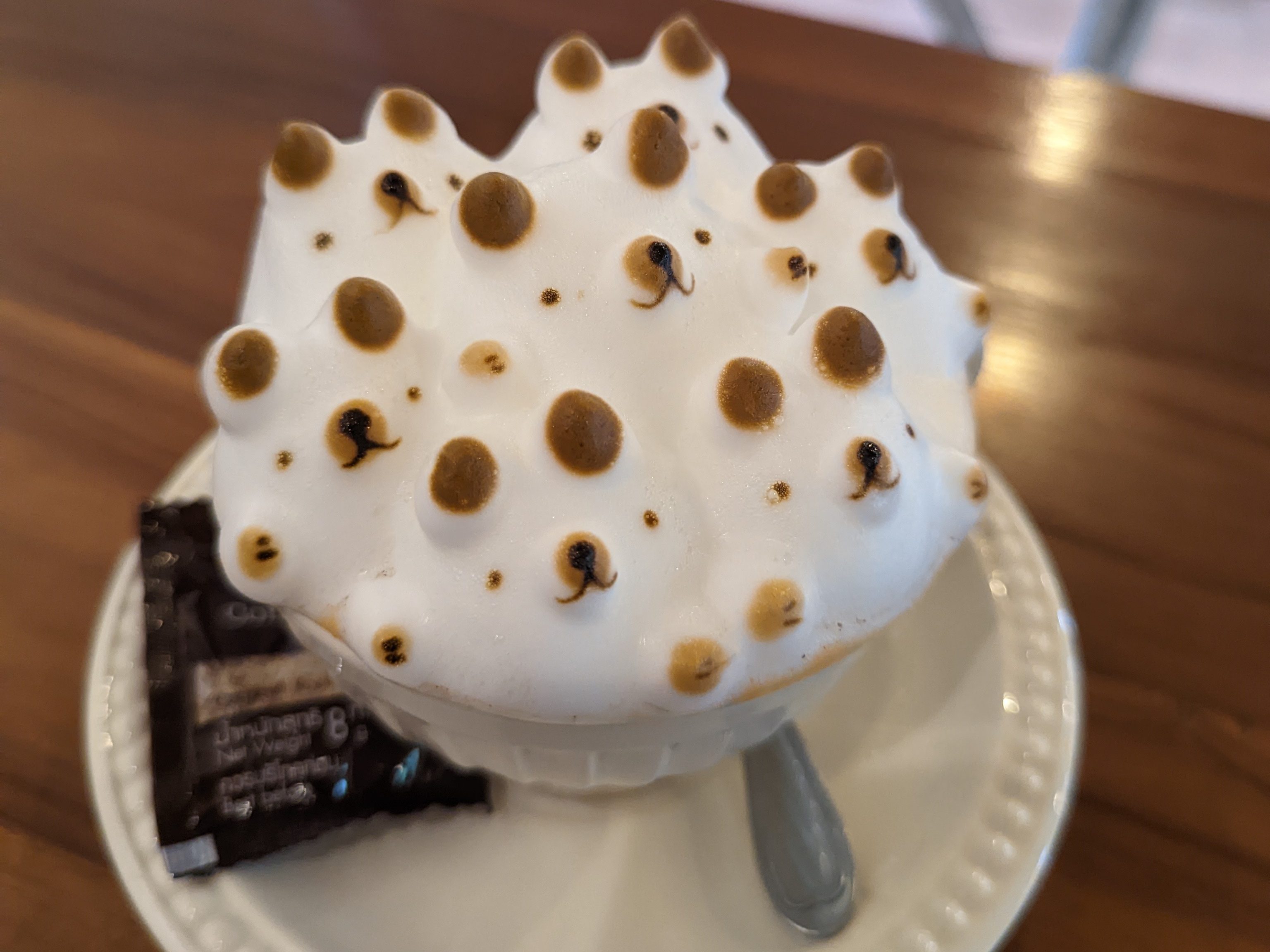
The Bear Hug Cafe is such an adorable restaurant and makes the cutest latte art I’ve ever seen. Here I had the Happy Morning Pancake, which consisted of a bear shaped pancake with an egg and sausage for 135 baht ($3.80). I also had a latte with the bear art. The latte was 45 baht ($1.25) and the art was an extra charge.
McDonald’s
McDonald’s?! I know, I know. But hear me out.
I love trying McDonald’s in different countries to see the different variations of foods they sell. I ended up trying the cheese sticks, corn pineapple pie, and a piece of fried chicken for total of 157.94 baht (~$4.45). Yes, these seem like basic items, however we do not have cheese sticks or single pieces of fried chicken in America, so this was new and exciting to me.
Khao Soi Khun Yai

People say that you haven’t really been to Chiang Mai unless you’ve eaten khao soi (a creamy, spicy curry) there. So, I obviously had to scout out the best place to get khao soi, and this ended up being the winner. It’s a little hidden away, but their khao soi is excellent.
Chiang Mai Night Bazaar

The Night Bazaar is an excellent place to grab an inexpensive meal. I got a pad thai for 60 baht ($1.70) and a fresh mango smoothie. Though, there are dozens of street food stalls around.
Chiang Mai Gate Market
The Gate Market is another great place to find street food, and it’s often frequented by locals, so it’s even better than the touristy Night Bazaar. I got a kebab wrap as well as fresh coconut water (I had never tried water straight from a coconut prior to that and I do not think it’s for me).
Thailand is an incredible place to visit, especially if you’re looking for a safe place for your first solo trip like I was. Hopefully this itinerary/guide provided some useful recommendations and tips. Happy travelling, everyone!

 Happy Lil’ Traveller
Leave a comment