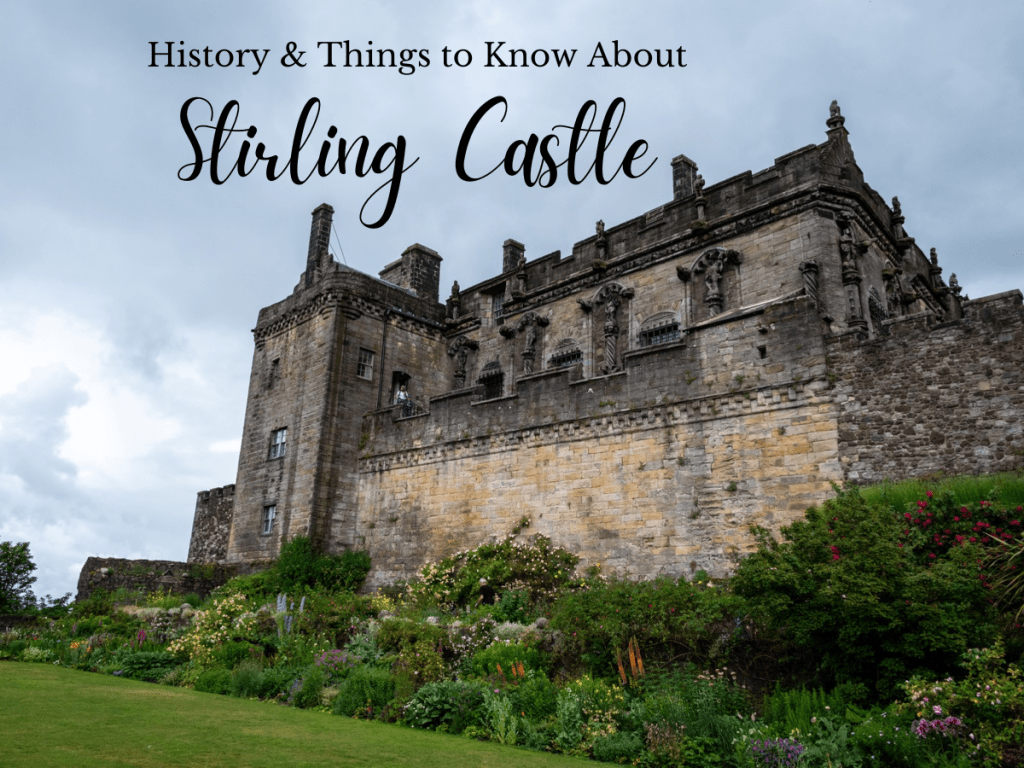
Situated on a rocky bluff, Stirling Castle in Scotland was once one of the country’s most important structures. Not only that, but it was the early childhood home of Mary Queen of Scots, one of Scotland’s most prominent royals.
I had a chance to visit the castle in June 2023 and catch a small glimpse into the lives of those who resided there. I love visiting old castles, but this was a particularly exciting visit because I have a personal connection to the area. Some of my ancestors lived in the village of Stirling for over 100 years in the 18th and 19th centuries, so it was fascinating to explore a structure they probably saw every single day. Anyways, enough about me. Here are some things to know about Stirling Castle:
- Where is Stirling Castle?
- How old is the castle?
- The History: Why was it so important?
- What are some prominent buildings/things to see?
- Stirling Castle now (+visiting info)
Where is Stirling Castle?
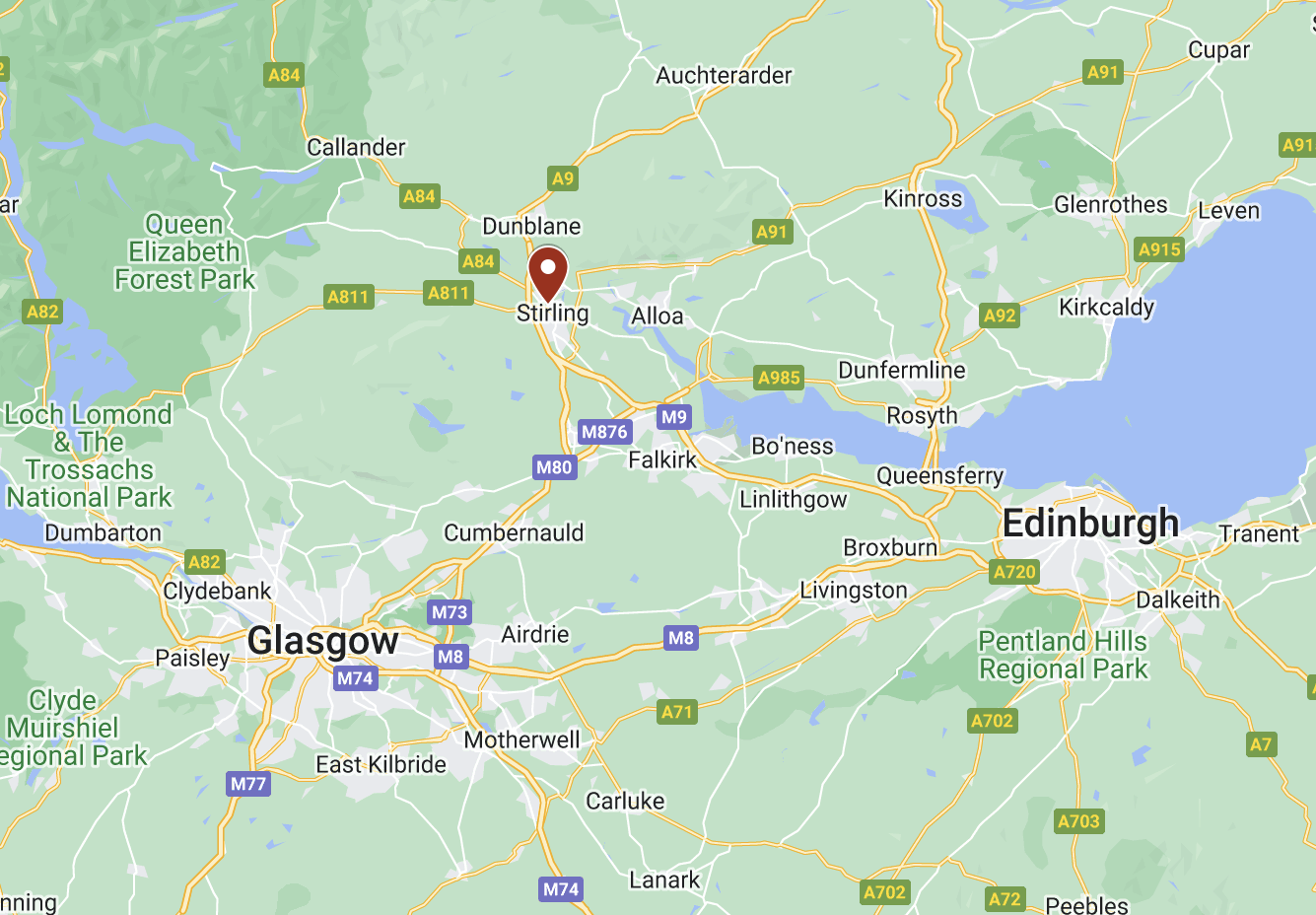
Stirling Castle is located in south-central Scotland, about 30 miles northeast of Glasgow.
How old is the castle?
The earliest record of Stirling Castle dates back to about 1110, though most present-day buildings were constructed between 1490-1600.
The History: Why was it so important?
It would take a long time to detail everything that happened at Stirling Castle throughout its 900-year history, so I’ll discuss some highlights.
Stirling Castle was conveniently built between the Scottish Lowlands and Highlands, making it the subject of many sieges and thus changing hands between the Scottish and English about 8 times. These sieges mainly took place during the Scottish Wars of Independence, which started with the English invasion of Scotland in 1296.
One of the most historic battles in Stirling took place in 1297, known as the Battle of Stirling Bridge. At that time, the English were in control of the land, but Scottish hero William Wallace and his army defeated the English and took back control of the area. Because of all Wallace did for Scotland, the country dedicated a 220ft tower in his honor on Abbey Craig, a hill to the north of Stirling. “The National Wallace Monument” was completed in 1869 on the 572nd anniversary of the Scottish victory at the Battle of Stirling Castle, and you can see the monument in the distance from Stirling Castle.

Another prominent siege of Stirling was the Battle of Bannockburn in 1314. During this battle, the English were once again defeated by the Scottish, this time led by King of Scots, Robert the Bruce. Though, Robert also destroyed Stirling in the process.
The last major siege took place much later in 1746 when Charles Stuart, aka the Bonnie Prince Charlie, took back the castle during the final Jacobite Rising.
Battles aside, a few well-known Scottish royals called Stirling Castle home. Some of the oldest remaining structures in the castle were constructed during the reign of James IV, who made it a place fit for royalty. His son, James V lived and was coronated there.
Though, probably the best-known royal to have resided at the castle was Mary Queen of Scots. While she wasn’t born there, she was crowned queen in the old Chapel Royal just nine months after her birth in 1542 and lived there for the first 5 years of her childhood. Her son, James VI, was also baptized there in 1566.
What are some prominent buildings/things to see?
The Royal Palace

Consisting of multiple spacious meeting halls and bedchambers, the Royal Palace is where royals such as Mary de Guise would have resided. Her husband, James V, initiated the construction of the palace, but he passed away before he could see it through.
Each of the rooms is furnished to resemble what the palace might have looked like when Mary Stuart was residing there as a child in the mid-1500s. Some of these furnishing include very vibrant tapestries in the Queen’s Inner Hall that depict the “Hunt of the Unicorn”, which are not original to the palace but are stunning to look at nonetheless.

While you walk through the palace, there are a couple interpreters dressed in mid-16th century attire stationed to answer any questions and talk about what life was like at the palace.
Great Hall

Mary’s grandfather, James IV, had this Great Hall built around 1500 to host feasts and dances. Measuring at nearly 6,500 sq ft and housing five fireplaces, this was the largest banquet hall in Scotland. Celebrations in this hall certainly would have been grand and very exciting to attend.
Chapel Royal
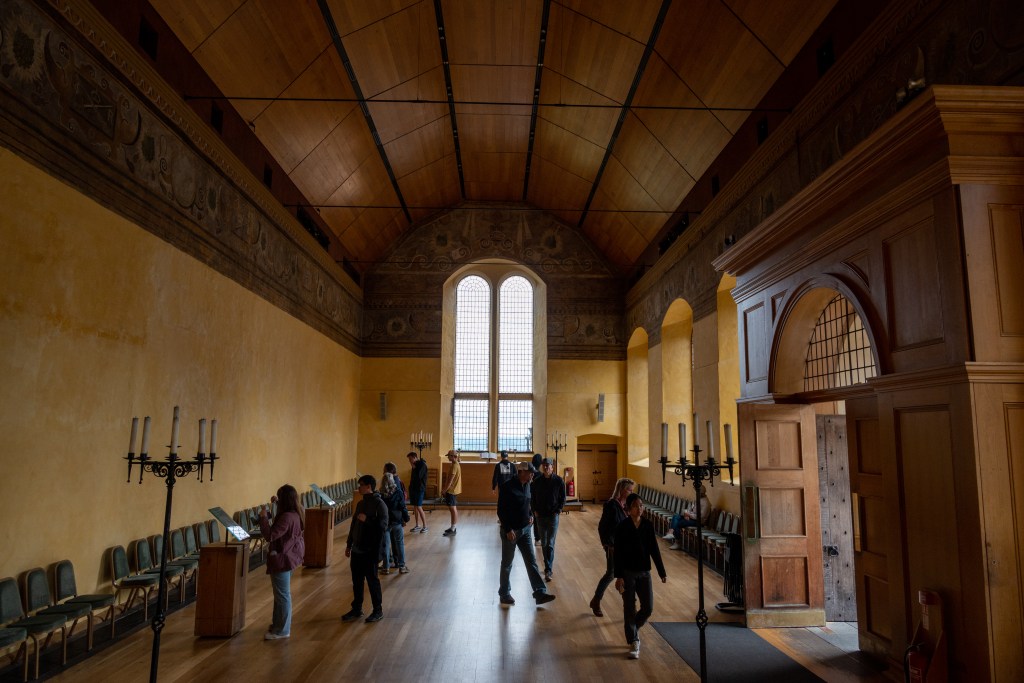
The current Chapel Royal was built by James VI for the baptism of his son, Prince Henry, in 1594. James VI had plans to create a new chapel for a while, but when it was clear his son would become the heir to the thrones of both Scotland and England after Elizabeth I passed away, James wanted a proper location to christen Henry.
It’s a simple-looking structure on the outside, but during that time the interior would have seemed magnificent—fit for a king, one might say. The large arched windows allow lots of sunlight to illuminate the room, and the murals along the upper walls are all original from 1628.
Stirling Castle now (+visiting info)
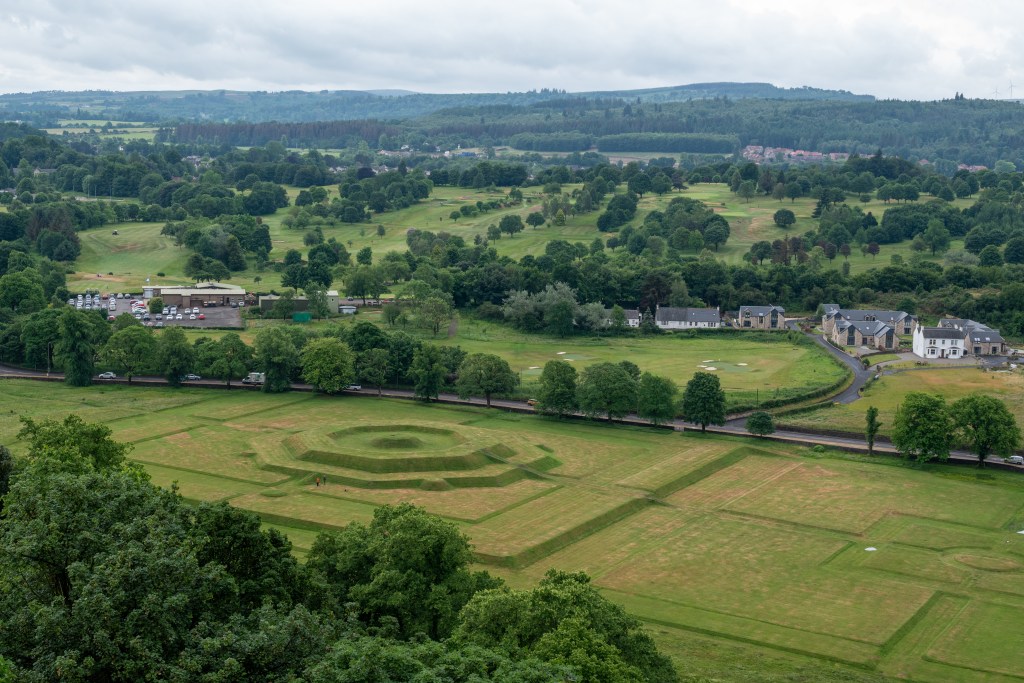
After James VI was crowned King of England in 1603, he moved to London and Stirling castle was no longer used as a royal residence. It later served as army barracks from the mid-1700s until 1964. Now, it’s a museum showcasing the lives of those who lived here and highlighting important Scottish history. More than half a million people visit Stirling Castle a year to walk along its stone walls and learn about the histories held within the buildings.
The castle is open every day from 9:30 a.m. until 6 p.m. (this is subject to change, of course). Tickets start at around £18 for adults if you purchase in advance online, and you can get discounts for family and seniors. For more info, visit the Stirling Castle website here.
 Happy Lil’ Traveller
Leave a comment