
Chicago may be known as the “second city”, but despite the nickname, it’s known for many “firsts” among other interesting things you might not know about.
I started a job as a Chicago tour guide this summer, and I’ve learned lots of odd yet fascinating things about the city. So, I wanted to share a few:
- Chicago was home to the world’s first skyscraper
- The city reversed the flow of the Chicago River
- The St. Patrick’s Day river dyeing started from an environmental effort
- The world’s first Ferris wheel was built in Chicago
- Chicago has the worlds largest green roof
- Chicago is home to the world’s tallest skyscraper—designed by a woman
- Chicago isn’t called the Windy City because it’s windy
1. Chicago was home to the world’s first skyscraper
Following the Great Chicago Fire in 1871, Chicago’s downtown was a very desolate place. Because there was so much open real estate to build upon, a lot of architects flocked to the area to help rebuild, and they were able to try a lot of new, creative ideas. As a result, Chicago became home to what was known as the world’s first skyscraper.
Built in 1885, this “skyscraper” was designed by William Le Baron Jenney and was called the Home Insurance Building—and it was a whopping 10 stories tall (180 feet). They later added an additional two floors in 1891.
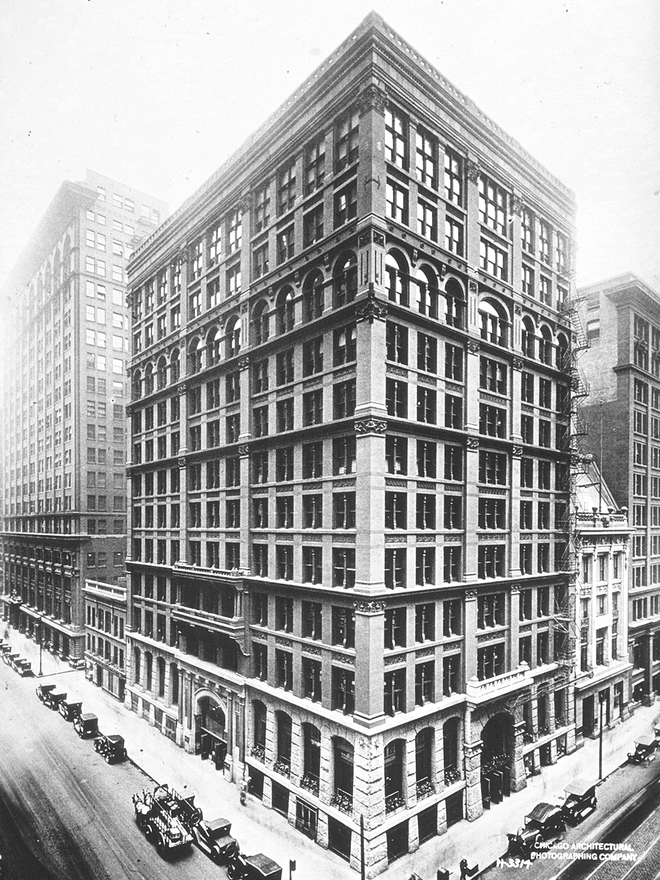
Obviously that’s not very tall compared to the skyscrapers we have today, but this was the first time they were using steel frames to support the weight of a building that height, rather than using just wood and/or concrete.
The building was demolished in 1931 to make room for the Field Building (1934), so you’re not able to visit the original structure. Though, there is a plaque in the lobby of the Field Building recognizing the Home Insurance Building and its world-changing accomplishments in the realm of construction.
2. The city reversed the flow of the Chicago River
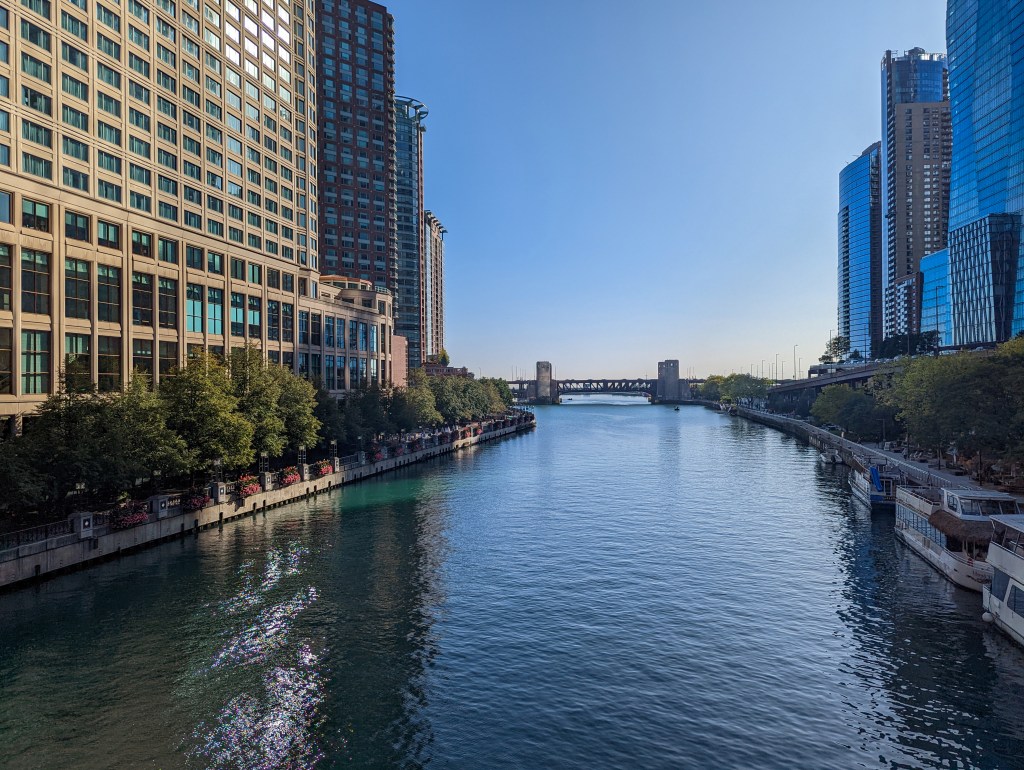
Our lovely Chicago River flows through Chicago and then branches off into north and south branches, spanning about 156 miles in total. Like all rivers, the Chicago River originally flowed into a larger body of water: Lake Michigan.
When people first started settling along the river, they used that as their drinking water source. However, the city started growing rapidly with the addition of many factories in the mid-1800s, and everyone started dumping the factory waste and raw sewage into the river.
As you can imagine, people started getting very sick. So, they needed to start getting their drinking water out on Lake Michigan, which has a huge supply of fresh water. To be a little more precise, over a quadrillion gallons of fresh water (that’s 1,000 trillion!).
In the 1860s, the city started utilizing water intake cribs along the shore, however the flow of the river caused the pollution to keep getting further and further out into the lake. So, they kept building cribs further and further out into the lake to avoid the pollution, but it was so bad that the water still got contaminated. It became so drastic at one point that we became the cholera capital of the world. Yeah—disgusting.
They needed another solution.
Now, the obvious solution would’ve been to stop dumping into the river. Perhaps that seemed too difficult for them at that point, so instead they decided to tackle the incredibly super easy task of reversing an entire river.
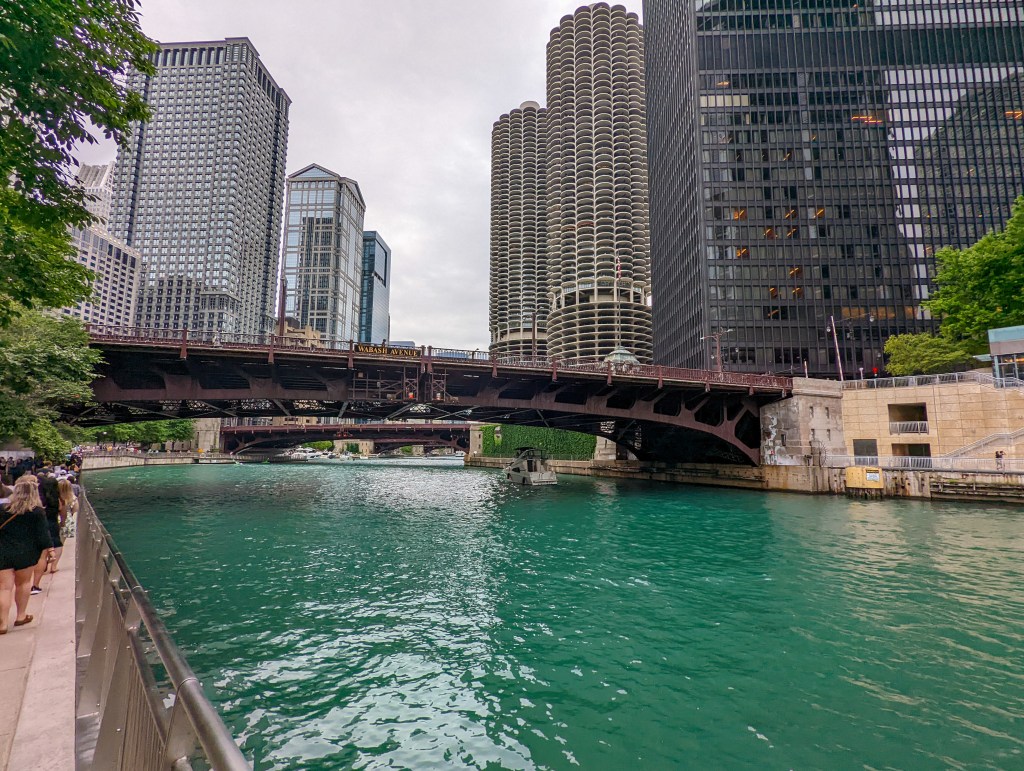
But, they did it. They created a complex 28-mile canal consisting of a series of locks and dams that eventually connected the Chicago River to the Mississippi. This is called the Chicago Sanitary and Ship Canal and it took 8 years to build until it was completed in early 1900. And it worked—our river still flows in the opposite direction that it’s supposed to today, and all of our problems were solved as all of our pollution flowed on to St. Louis 🙂
The river has been cleaned up significantly since then, so we aren’t sending a ton of pollution south anymore. The canal also replaced a previous shipping canal, providing a better route for ships to access the Mississippi River system.
Speaking of the river…
3. The St. Patrick’s Day river dyeing started from an environmental effort

In case you don’t know, every year on St. Patrick’s Day, Chicago dyes the main branch of the river a bright neon green. And here’s why that began:
By the 1950s, the Chicago River was still not very clean. It was much better than it was in 1900, but still not great. There was still a lot of pollution and sewage leaking into the water from pipes along the river.
To figure out where the pollution was still coming from, the city decided to put a solution in the water that would allow them to find the sources. When they did this, it turned the river a very bright green. And thus, the idea for the St. Patrick’s Day river dyeing was born.
With approval from the city, the Plumbers Local Union decided to start using that dye to celebrate St. Patrick’s Day in 1962, and since then it has become a tradition that draws a lot of people to the river the Saturday before St. Patrick’s Day. The dye is now more environmentally friendly and is said to be vegetable-based, though the public has not been told the actual formula.
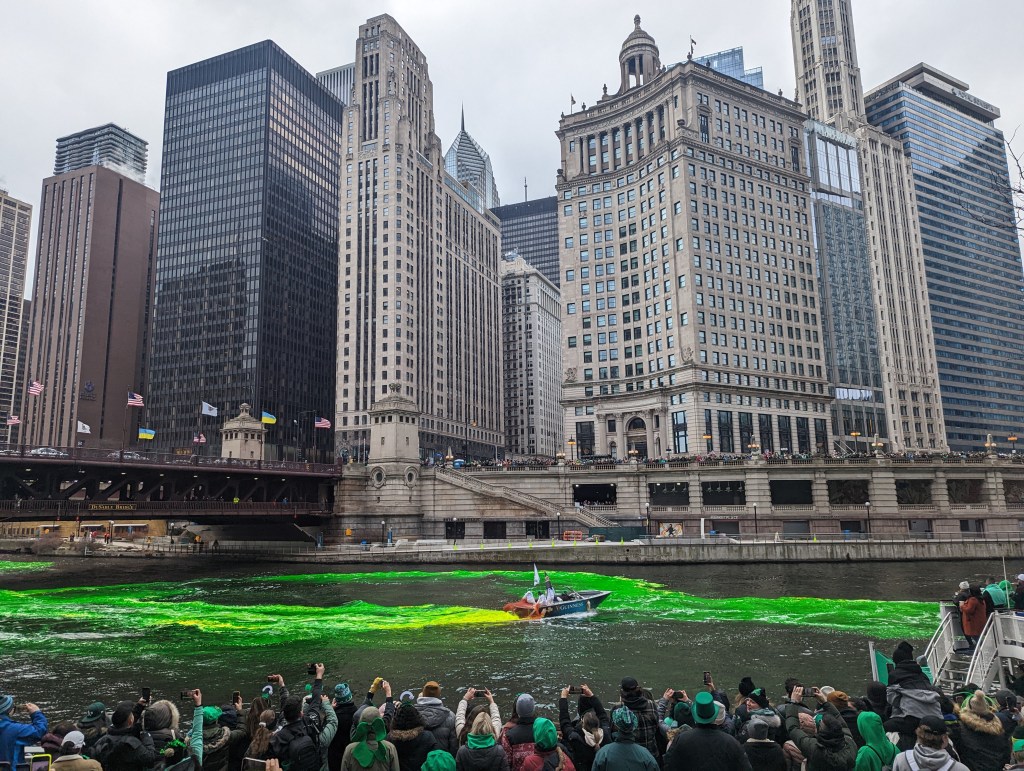

The river dyeing is quite a sight to behold, though the green river is best seen the next few days following the dyeing, as there are thousands of onlookers—drunk ones as well—who surround the area the day of.
4. The world’s first Ferris wheel was built in Chicago

The World’s Fair in 1893 was Chicago’s chance to reintroduce itself after the fire that basically wiped out the city in 1871. Because of this, the fair’s planners really went for “go big or go home.”
Four years prior to the fair in Chicago was the World’s Fair in Paris where they unveiled the Eiffel Tower. Initially the planners wanted to enlist Gustavo Eiffel himself to build a similar tower, however they decided they wanted something designed by an American. So instead, they sent out a challenge to America’s engineers to “out-do the Eiffel.” This was not a simple task
A man by the name of George Washington Gale Ferris Jr. submitted his plan for a giant wheel that would spin around, and people could view the fair entire from it. Initially, planners rejected this idea twice because they were concerned about the structural safety, but after some tweaks and safety studies, it was eventually approved.
Once completed, this Ferris Wheel was 264 feet tall. For reference, the current wheel at Navy Pier is 196 feet tall, so this thing was massive. Not to mention that with its 36 passenger carts made of railroad cars, the wheel could fit well over 2,000 people on it at a time. Throughout its five-month duration during the Chicago fair, over a million people took a spin on it.

The wheel later moved to Lincoln Park in 1895, then moved one last time to be a spectacle at the St. Louis World’s Fair in 1904 until it was demolished in 1906.
Similar, smaller wheels made of wood existed before this as early as the 1500s, but the fair was the first time something of this size was created, and it was the first time the term “Ferris Wheel” was coined.
5. Chicago has the world’s largest green roof
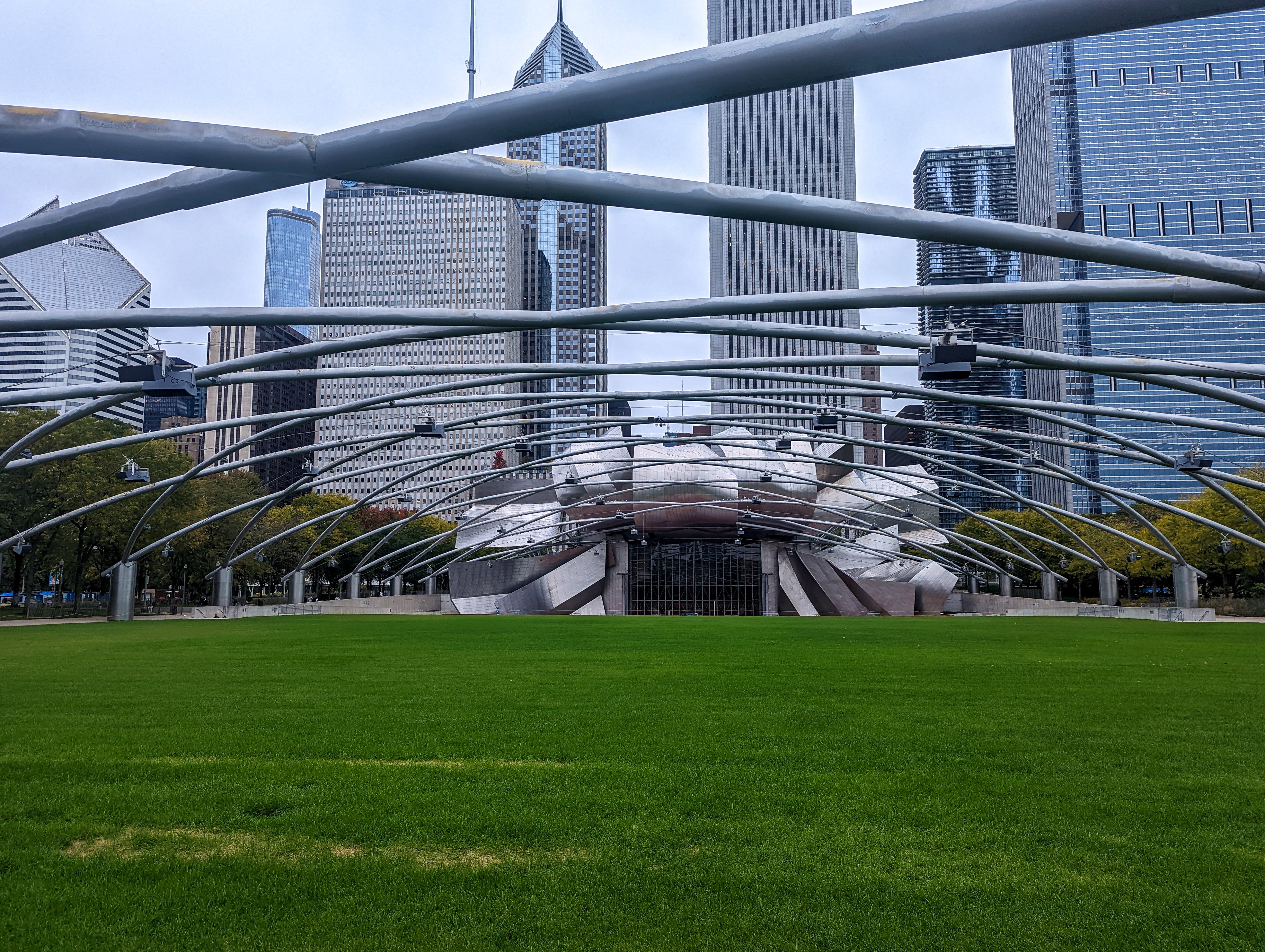
Again, Chicago is known for a lot of “world’s first/biggest” innovations. It’s also a very green city, especially when compared to New York and Los Angeles.
Millennium Park, famously home to The Bean, is the world’s largest green roof. There’s a parking garage as well as train lines that run underneath.

The city has always been dedicated to providing lots of open green spaces for the public to enjoy, and Millennium Park was one of the more recent projects. Completed in 2004, the 24-acre park features multiple works of art (The Bean, Crown Fountain), a public pavilion that hosts free concerts and movie nights throughout the summer, and a garden.
6. Chicago is home to the world’s tallest skyscraper—designed by a woman

For a while, Chicago was home to the world’s tallest skyscraper (the Willis/Sears tower for 25 years, starting in 1973), but that title now belongs to the Burj Khalifa in Dubai. In fact, the Willis/Sears Tower is now the 23rd tallest building, so it’s been knocked down quite a few pegs the past 25 years.
However, we still hold the title for tallest building designed by a woman, and that is the St. Regis Tower. This is the third tallest building in Chicago, but it’s a magnificent sight.

Designed by Jeanne Gang, this 1,198 foot structure is personally one of my favorite buildings in Chicago. Its elegant, wavy shape and blue color-shifting panels resemble flowing water. It’s especially beau on bright, clear days when the sun amplifies the blue shades.
The St. Regis consists of a hotel and luxury condominiums—for well over millions of dollars each, of course.
7. Chicago isn’t called the Windy City because it’s windy

Most people assume that Chicago must be incredibly windy since it’s nicknamed the “windy” city, but it’s not windier than any other Midwest city. While sometimes the winds do get pretty brutal, the true origin of the nickname dates back to the 1893 World’s Fair.
When cities put in their bids to host the fair, there were quite a few other contenders, including Cincinnati and New York. At the time, Chicago was still in pretty rough shape despite having rebuilt quite a bit after the fire, so many viewed the city with distaste.
Well, when Chicago was chosen to host the fair, the people of Chicago were elated while journalists in other cities became jealous. Specifically, a reporter for the New York Sun wrote that Chicagoans were “full of hot air.”
There were similar iterations in newspapers prior to that, claiming that Chicago’s politicians were “windy” or liked to boast about the city.
So yes, Chicago is sometimes a windy city (especially in the winter—that wind chill is brutal), but it’s really called that because of the opinions of journalists in the 1800s.
Chicago sometimes gets a bad rap—especially in the media’s portrayal of the city—but it’s home to some incredible innovations and unique events.

 Happy Lil’ Traveller
Leave a reply to Pat Cancel reply