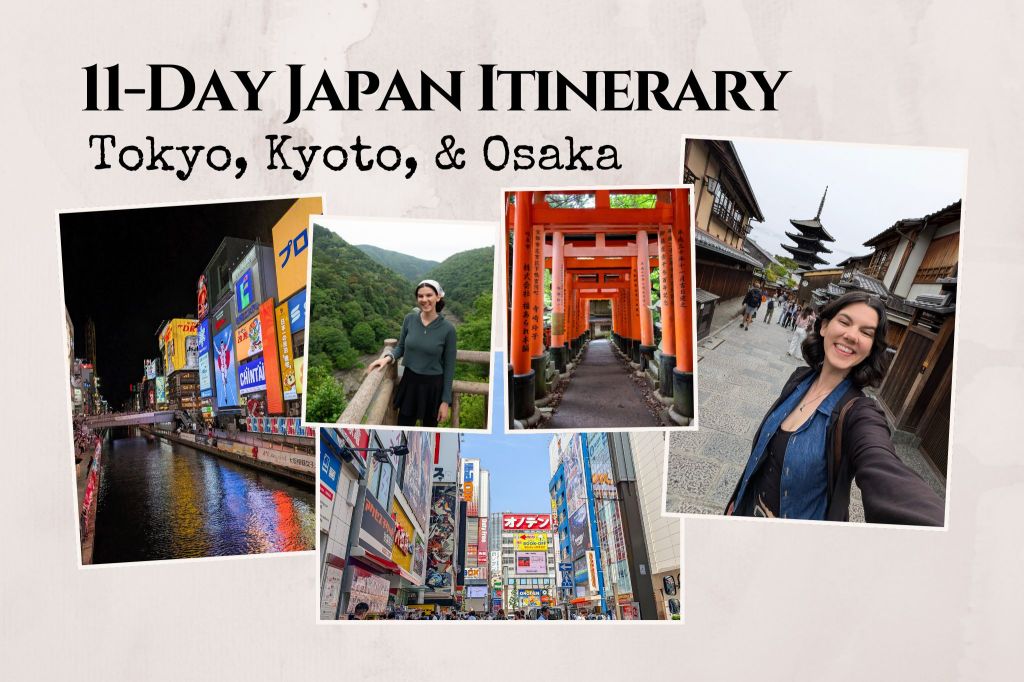
Welcome to my 11-day Japan itinerary for Tokyo, Kyoto, and Osaka! This outline is based on the itinerary I planned for a trip my partner and I took in May of 2025. After going on the trip and learning a few of our original plans were not the most logical, I slightly modified this itinerary to make the route and amount of activities a little more feasible.
I tend to jam-pack my itineraries and focus on historical sites, so of course feel free to adjust to your needs and preferences! Most location descriptions include history, visiting information, and my personal experiences to help provide well-rounded insight into each site. Keep in mind that I am not an expert on Japan and this itinerary is based on first-time experiences and impressions. Hopefully this provides some inspiration for your upcoming trip to Japan.
Following the day-by-day itinerary, I’ve included information on transit, safety, the best time to visit, as well as neighborhoods to stay in and the restaurants we ate at. And with that, let’s get into it!
- 11-Day Japan Itinerary
- Day 1: Tokyo – Shinjuku, Shibuya
- Day 2: Tokyo – Ueno Park, Asakusa, Tokyo Skytree
- Day 3: Tokyo – Ginza, teamLab Planets
- Day 4: Tokyo – Tokyo National Museum, Omoide Yokocho
- Day 5: Kyoto – Nishiki Market, Shopping
- Day 6: Kyoto – Arashiyama, Downtown Kyoto
- Day 7: Kyoto – Fushimi Inari, Kyoto Railway Museum
- Day 8: Kyoto – Yasaka Pagoda, Gion, Shopping
- Day 9: Nara, Osaka
- Day 10: Osaka – Food Tour, Osaka Castle, Aquarium
- Day 11: Osaka – Ichiran, Shopping, Fly Home
- Where to stay in Japan
- Restaurants we ate at
- Safety in Japan
- When to Visit
- Transportation
11-Day Japan Itinerary
Day 1: Tokyo – Shinjuku, Shibuya
1. Meiji Jingu
You are likely going to be jet lagged during the first few days of your trip, so I’d recommend enjoying a slow start. Meiji Jingu—a Shinto Shrine in Shibuya—is a quiet refuge surrounded by a dense forest in the heart of Tokyo, making it a perfect stop to walk around and wake up.

This sacred forest was planted in 1920 and remains an escape for people in the middle of the chaotic city. In the center you’ll find the Main Shrine where you can purchase omamori (good luck amulets), write prayers on wooden tablets, and admire the perfectly manicured foliage. Within Meiji Jingu you can also tour the Meiji Jingu Museum, which displays artifacts from the time of Emperor Meiji (1852-1912) and Empress Shōken (1849-1914).
Nearby you’ll see a wall of dozens of sake barrels. Emperor Meiji was significant to the industrial growth of Japan through his support for technological advancement. Every year, national sake producers offer sake barrels wrapped in straw to the emperor and empress, whose souls are enshrined in this sanctuary. The monument also pays homage to Japan’s successful sake industry which helps preserve Japan’s longstanding traditions and culture.
The entirety of Meiji Jingu is free and is open from sunrise to sunset (with the exception of the museum, which costs ¥1,000/$6.80 per adult and is open from 10 a.m. to 4:30 p.m.). We strolled the grounds for almost an hour and felt incredibly refreshed after our 14-hour flight.
2. Breakfast: bills Omotesandō
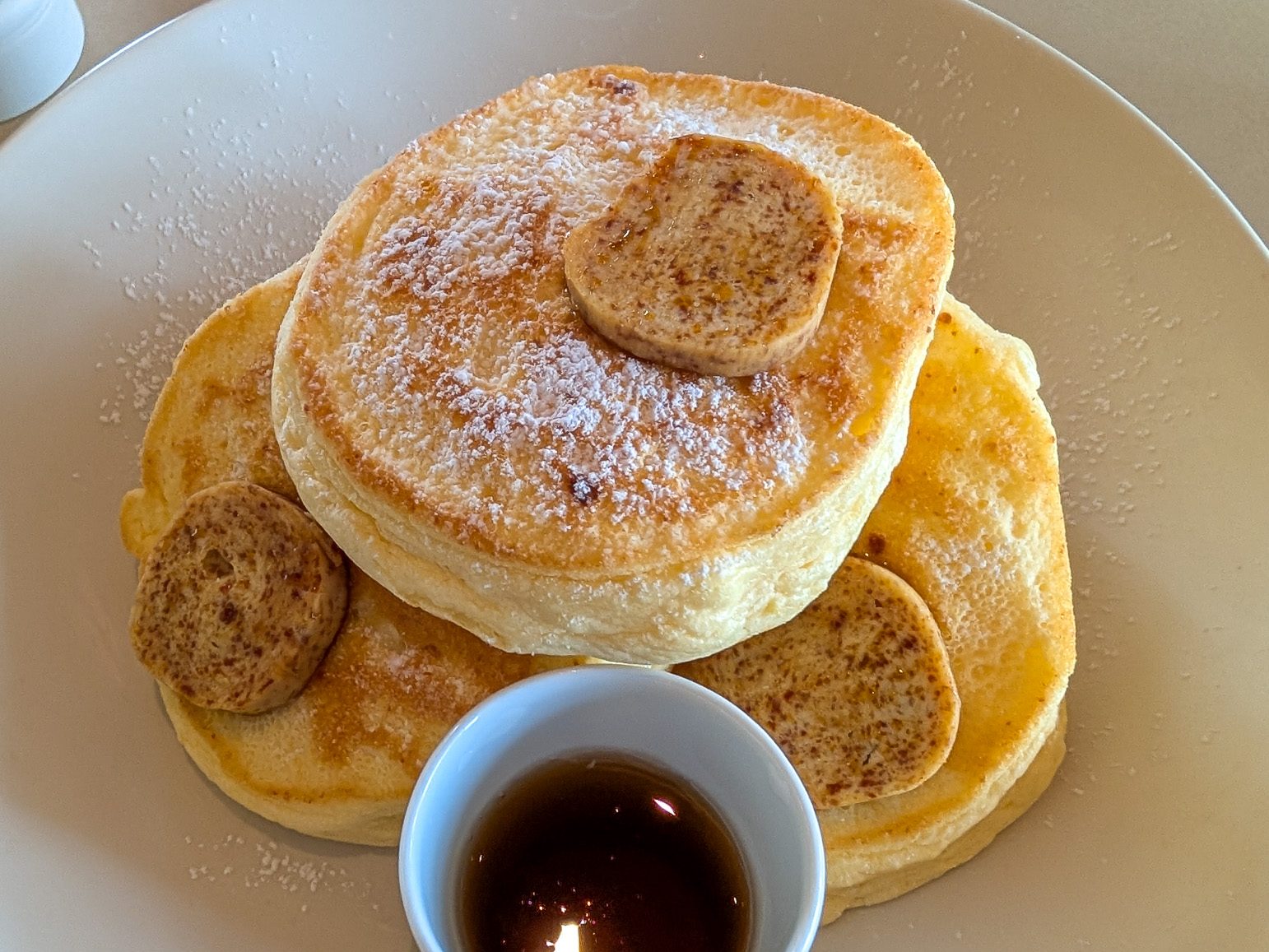
For breakfast, bills is a great option for a trendy meal. There are quite a few locations around the country, and there’s one about a 5-minute walk from the south entrance of Meiji Jingu and Harajuku Station. bills is actually an Australian restaurant, known for mouth-watering breakfast options like pillowy eggs and fluffy ricotta pancakes with honeycomb butter. The prices are a little on the pricey side in comparison to most breakfast restaurants, but bills is worth a try.
3. Shibuya
No trip to Tokyo is complete without visiting one of the most recognized places in all of Japan: Shibuya. This neighborhood is known for a myriad of things including iconic fashion and art, but it’s most commonly known for its massive pedestrian intersection:
Shibuya Scramble Crossing

Honestly, the Shibuya Crossing is not much to look at, but it’s something you have to check off your list if you’re visiting the area. This particular intersection is said to be the world’s busiest for pedestrian traffic—not to be confused with the largest, because it’s really not very big. All at once, walkers can cross to any side of the junction while traffic is stopped on all ends for about 45 seconds. Up to 3,000 people cross at a time during peak hours, which typically coincides with weekday rush hours. The experience is certainly more impressive if you are among a sea of thousands of people, however it’s up to you if you want to brave the crowds or appreciate a less-chaotic crossing at a slower time of day.
Shopping
Shibuya is also known to be a shopping haven, especially for many young people. These are the places we visited (a good portion of the stores here are also located elsewhere in Japan and/or the world):
- #C-pla – Gashapon paradise
- MUJI – Quality clothes, home goods, and stationery for decent prices
- GU – Casual clothing
- Shibuya Loft – General home goods, but we just went for stationery
- Mandarake Shibuya – Sooo many collectibles. Everything from anime figurines and Japanese toys to K-pop albums and paraphernalia
4. Lunch: Kokoro Tokyo Mazesoba
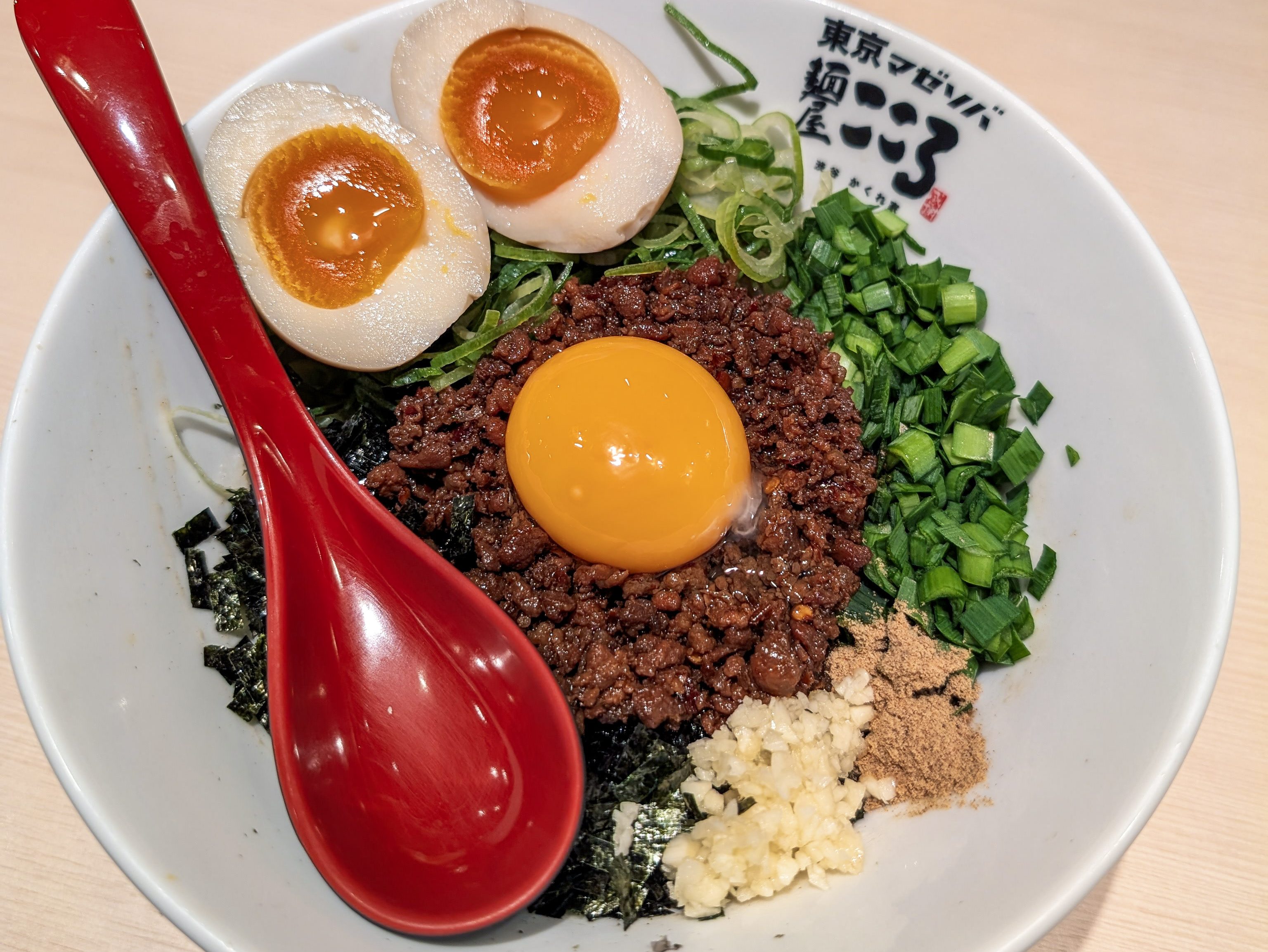
You can spend quite a few hours popping in and out of shops and taking in the lively, bustling atmosphere of Shibuya, but after a few hours we found ourselves hungry and low on energy. After a few minutes of walking around to find a restaurant, we happened upon Kokoro Tokyo Mazesoba. Mazesoba is a soupless noodle dish with sauce and toppings like meat, eggs, garlic, and veggies. It hit the spot after a day of exploring while jet lagged.
Honestly, that was all we did the first day. We checked in at our hotel around 3 p.m. and decided to “rest” for a couple hours, and before I knew it it was 2 a.m. and I was wide awake. Don’t be like me! Ideally, I should have stayed up until at least 10 p.m.
Day 2: Tokyo – Ueno Park, Asakusa, Tokyo Skytree
1. Walking Tour with Tokyo Localized
I always like to do a history-based tour on my first full day in a city to familiarize myself with a few neighborhoods and learn essential history, so at 10 a.m. we joined the 3-hour “Free Walking Tour of Tokyo” with Tokyo Localized. This was an excellent way to acquaint ourselves with some of the city’s popular areas and learn about the early history of Japan and Tokyo.
*Note: while tipping is not common in Japan, Tokyo Localized tours are tip-based. You should tip your guide around ¥1,500 per person. This doesn’t apply to paid tours unless otherwise stated.
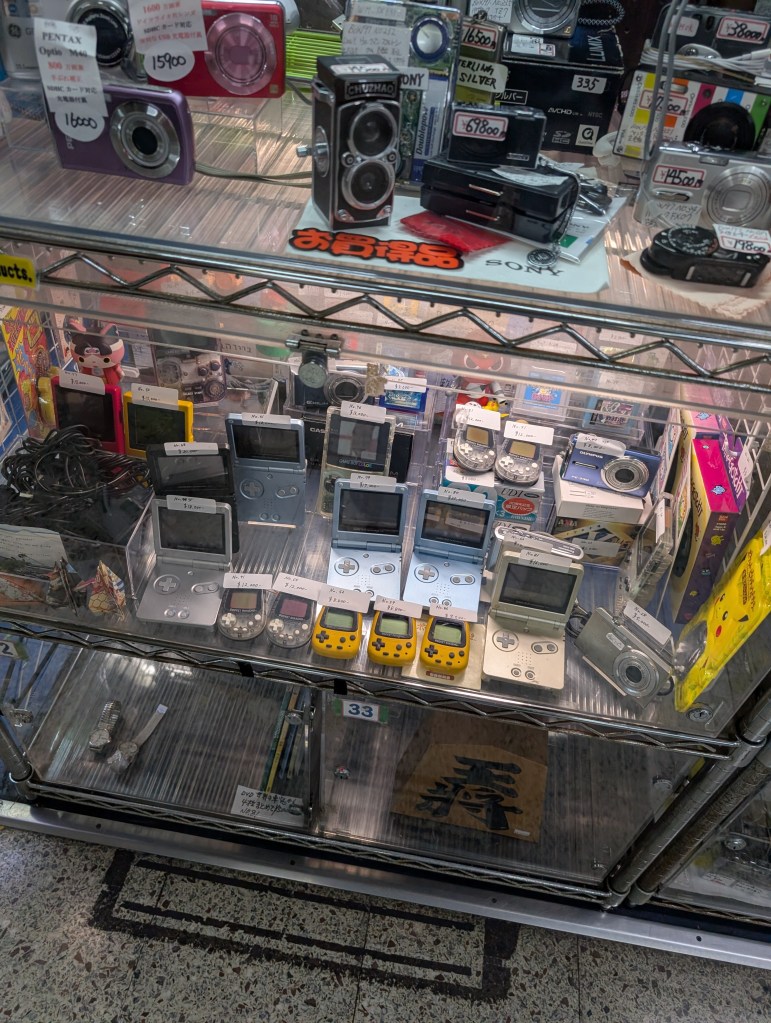
We met near Akihabara Station and our energetic guide, Hiroshi, took us through Akihabara—or Electric Town—which is known for its hundreds of shops full of anime, manga, and electronics. We wound through narrow passageways filled to the brim with electrical parts and “vintage” devices like Nintendo DSs and 3rd generation iPod Touches (I can’t believe my coveted childhood devices are considered vintage now…).


As we made our way north toward Ueno, our guide led us to a few shrines and taught us how to properly cleanse ourselves before entering, and detailed the history of samurai culture during the Edo period. Halfway through, we stopped for some vanilla ice cream which was a refreshing treat on a hot day. We also learned how to pray at shrines and about Japanese religions (apparently many practice a variety of religions, including Shinto and Buddhism, which are commonly practiced together).
Near the end, we nearly lost our guide navigating through the crowded Ameyoko Street, which is a bustling market street that sells a variety of items including food, clothes, accessories, and more. We parted ways in Ueno Park around 1:30 p.m. and then we were off to find some lunch.
2. Lunch: Ameyoko Street
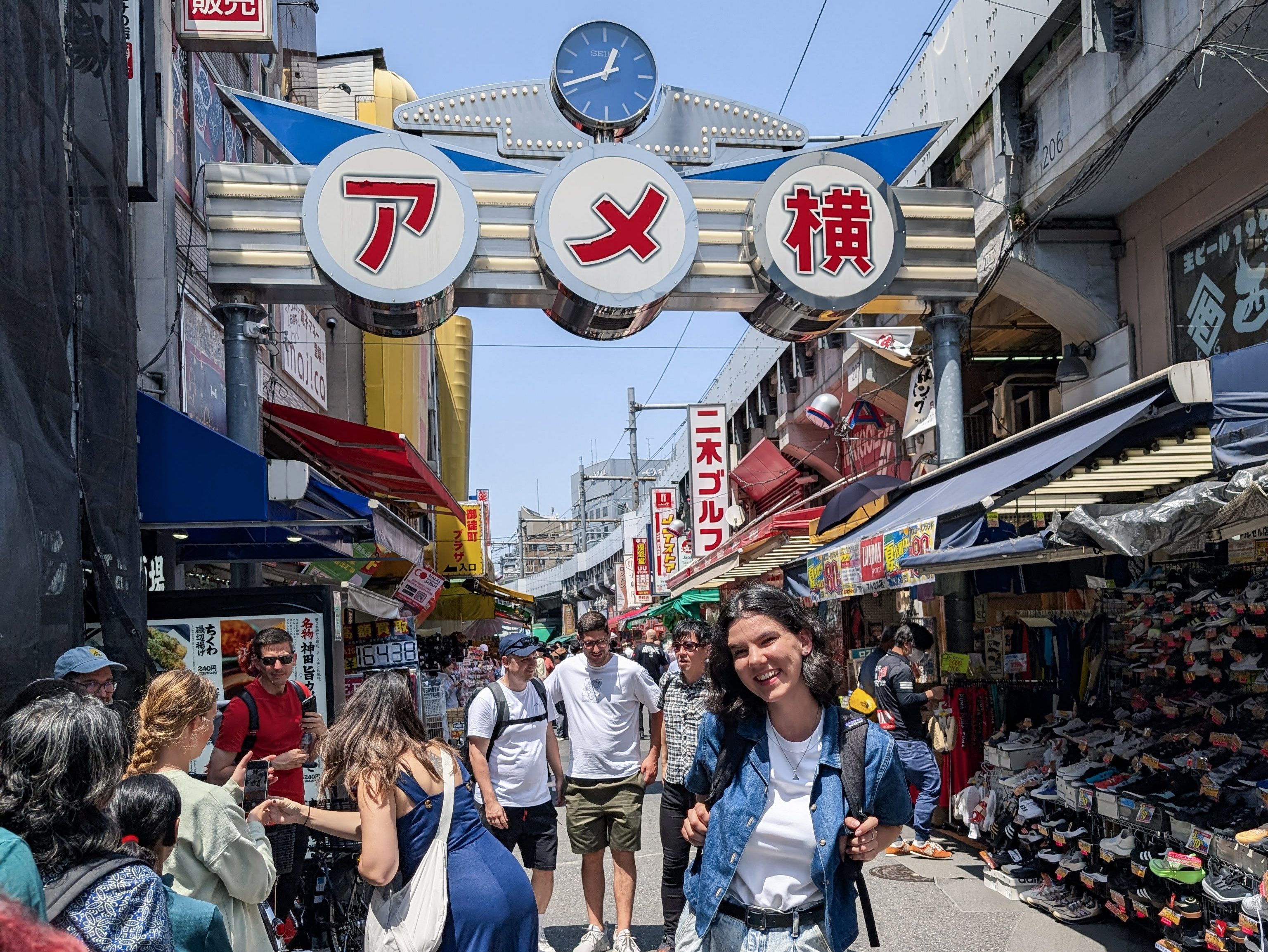
After walking through Ameyoko on the tour, we got pretty hungry looking at all of the food lining the street, so we opted to return there for lunch. There are dozens of restaurants along this road, but I was craving something with rice so we opted for a seafood rice bowl shop. You can’t really go wrong with any of the restaurants in the area though.
Ameyoko is a shortened nickname for “Ameya Yokocho”, or Candy Store Alley. This began as a black market following World War II, primarily selling scarce products like candies and surplus military garb. Today the 500-meter stretch is full of low-cost clothing shops, food stalls, and more. You can definitely find something to eat or buy here.
3. Asakusa
Asakusa is one of Tokyo’s oldest districts. Unfortunately, like the majority of Tokyo, the original structures in the area were destroyed during World War II, but the area was later rebuilt to preserve the historic nature.
Prior to the war, Asakusa used to be a major entertainment hub. Kabuki theatres and a red light district filled the area during the Edo Period, and later transitioned to modern forms of entertainment like cinemas. The entertainment reputation of the area fell apart following the war, but Asakusa was revitalized and has become a lively shopping and historical destination.
The main attraction in Asakusa is Sensō-ji, which was originally built in the 7th century. Technically this temple is the oldest in Tokyo, however the buildings were entirely reconstructed following the Tokyo bombings. The temple is free to enter.
Leading up to Sensō-ji is Namamise—a long-standing shopping arcade filled with treats and souvenirs. This is a great place to find traditional snacks like senbei (rice crackers) and ningyo-yaki (sponge cakes filled with sweet bean paste).

Despite being completely destroyed by bombings, Asakusa still has some of the oldest buildings in Tokyo, most of which were built in the mid-1900s immediately following the war. In fact, the area has one of the highest concentrations of buildings from the 50s and 60s in the city, and it is still the oldest geisha district in Tokyo.
4. Tokyo Skytree

Tokyo Skytree is approximately a 20-minute walk from Asakusa, which made it an ideal attraction to visit after a delicious katsu dinner at Asakusa Gyukatsu. Honestly, I personally wouldn’t recommend visiting Tokyo Skytree—at least not after dark. The viewing deck was crowded and overstimulating, which I expected but was not mentally prepared for. After a long day of walking around and garnering over 20,000 steps, this was not the ideal place to end an exhausting day.
However, the Skytree is still an interesting, record-breaking site to consider. For more information on Tokyo Skyree, check out this video.
Day 3: Tokyo – Ginza, teamLab Planets
1. Ginza
I’m not much of a shopper, but one of the things I was most excited about for Japan was perusing the stores—especially the stationery shops. I know clothing stores like MUJI and Uniqlo exist in the US, however Ginza holds the flagships. We couldn’t pass up the opportunity to visit these iconic, original stores.
MUJI Ginza
I was first introduced to MUJI in New York City, and I fell in love with everything about it. The simplicity, quality, and price of the clothes, home goods, and stationery is unmatched. It pains me that there is no MUJI in Chicago, so I took the opportunity of visiting the flagship to buy more of my favorite pens (the ink is so smooth and consistent, it dries quickly, and the colors are so vibrant), a small notebook, a goshuincho, and a few others goodies. Admittedly, we went to more than one MUJI during our trip, but this one was by far the biggest. This location is seven levels and includes a bakery and food products on the ground floor.
Itoya
Months before our trip, I had been going down a rabbit hole watching dozens of Japanese stationery hauls and journal spread vlogs. It became an obsession. I visited numerous stationery stores around Chicago, but import fees make products incredibly expensive in the U.S. So, I patiently waited for our trip to Japan to begin my stationery collection. And oh boy did I have a field day at Itoya (spending thousands of dollars to visit Japan to buy stationery at a lower price is prime girl math hahaha).
Ginza Itoya has 12 floors, each dedicated to different items—journals, pens, markers, lettersets, stamps, paper, stickers…you name it. I spent a little over $80 USD, and honestly I regret not buying more. I was so invested in closely investigating every single floor that I accidentally made myself motion sick by walking around while looking down in a hot, crowded store for over an hour. Oops.
Uniqlo Ginza Flagship Store
I didn’t actually buy anything at this Uniqlo (mainly because I was trying not to get sick after making myself nauseous in Itoya), but this place was huuuuge. If you’re set on visiting this specific location, I’d recommend visiting when they open at 11 because this place becomes very crowded by midday.
GINZA SIX
If you’re looking for luxury retail, GINZA SIX is the place to go. I didn’t buy anything here either, but we enjoyed lunch at Ginza Sanada SIX on the 13th floor after I found some motion sickness medication at a nearby pharmacy.
2. teamLab Planets
I tend to be hesitant about attractions that look “too good to be true” on social media, but teamLab Planets exceeded my expectations. Located southwest of downtown, teamLab Planets is a little far from prominent places of interest, but I found it worth the visit. The attraction is an interactive art museum with three immersive sections to explore: forest, water and garden.


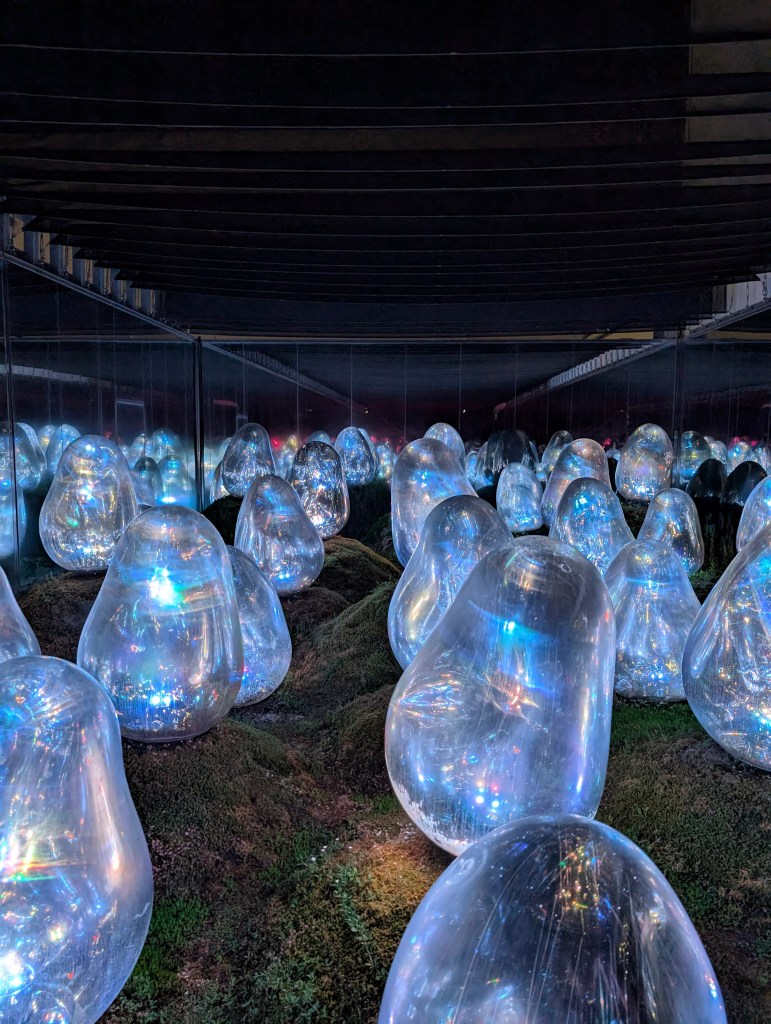

You can watch my full experience and review here, but in summary this place was so fun and made me feel like a kid again. Some people complain that this place is overcrowded and not worth the money, but to each their own. I had a blast and greatly wish I could experience it again for the first time. In contrast to other over-hyped attractions, I felt the $30 ticket was well worth the experience.
teamLab Planets has water features that require you to take your shoes off, but if you’re uncomfortable with that there’s a “dry” location in Tokyo called teamLab Borderless. Despite the lack of water, Borderless seems to provide a similar awing experience for all ages.
Day 4: Tokyo – Tokyo National Museum, Omoide Yokocho
1. Tokyo National Museum
The Tokyo National Museum stands on the northern end of Ueno Park. We actually visited this museum on Day 2 right after our lunch in Ameyoko since we were already in Ueno. However, I would not recommend trying to fit this museum into the Day 2 itinerary like we did because it was a lot to take in right after a 3-hour walking tour as it is the largest art museum in Japan.
Established in 1872, this museum displays and preserves artifacts from all around Asia. Some highlights include a robust collection of samurai armor and swords, painted folding screens, and haniwa, which are terracotta figures that were buried with the deceased. (Fun fact: if you’ve ever played animal crossing, the gyroids are based on haniwa!)
If historical art and artifacts aren’t your thing, Ueno Park also has a zoo and a natural history museum.
2. Akihabara
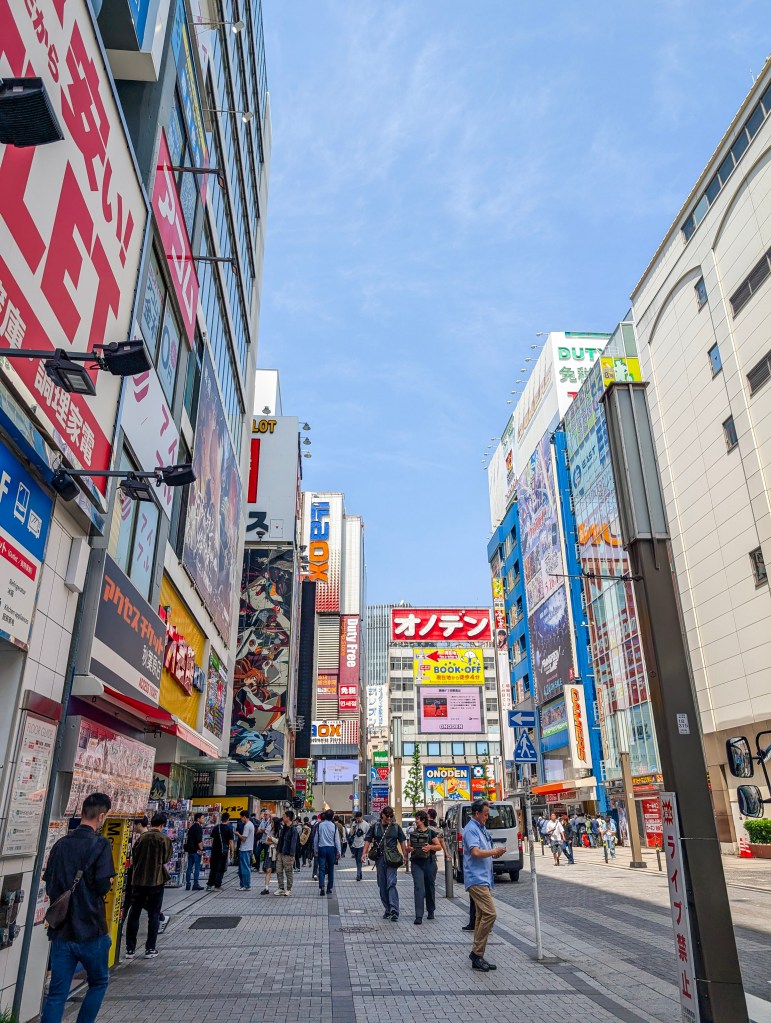
Since we didn’t have an opportunity to explore Akihabara before our walking tour, we opted to return and dedicate a couple hours to walking and shopping around. This neighborhood is known for its collection of anime shops and maid cafes, however there is so much more to the area. I took my time surveying floors of gashapon machines and procuring way too many little plastic toys that I greatly cherish while my boyfriend hunted for a new gundam. We also perused massive technology stores and dove back into the narrow electronic alleys. We honestly could have spent all day walking through every shop, but we had to stop ourselves.
3. Jimbocho
I can only sound out a few hiragana characters, so I cannot read Japanese to save my life. However, I wanted to stroll through Jimbocho—the city’s famous used-bookstore neighborhood—just to enjoy the ambiance of being surrounded by books (is there a better feeling?). We popped in and out of a few shops and didn’t stay in the area for very long, but I’m glad we stopped by.
4. Omoide Yokocho & Golden Gai
This iconic alley in Shinjuku is definitely a tourist destination, however I really enjoyed our time here. The narrow street is jam-packed with tiny izakayas—or bars—serving yakitori and drinks. Since it’s a hot tourist area, Omoide Yokocho is a great place to meet fellow travellers and chat for a few hours.

If you can’t find any bars with visible open seating, most have an upstairs you can squeeze into. After walking the length of the yokocho and back, my partner and I stopped at a random izakaya and shared a couple pork and chicken skewers, then went to Bar Albatross just down the alley.
Similarly, the Golden Gai is filled with hundreds of bars. I don’t really have one to recommend—just walk around until you find a location with decent prices, open seats, and a vibe you think you’ll enjoy.
Despite being touristy areas, we found Omoide Yokocho and Golden Gai to be great places to end our time in Tokyo with a fun night out.
Apparently this needs to be said, but please be respectful of the bars and staff. Don’t be obnoxiously loud, get obviously drunk, and don’t overstay your welcome.
Day 5: Kyoto – Nishiki Market, Shopping
1.Shinkansen to Kyoto
After a few days exploring Tokyo, it was off to Kyoto! We took a 9 a.m. train, however I’d recommend taking a train after rush hour (around 11 a.m.) or budget plenty of time to get to the station and take a taxi. Do not take the bus or train during rush hour. We learned that the hard way and nearly missed our train.
We booked our train tickets on Klook. Here’s a video on how to reserve your seat and space for your luggage, including a Klook discount code.
The bullet train from Tokyo to Kyoto takes roughly 2.5 hours, which is incredibly fast considering you’re traversing nearly 300 miles on land. It would take over 5 hours to drive that distance. They don’t call it a “bullet train” for nothing.
2. Nishiki Market

Upon arriving at Kyoto Station around 11:30 a.m., we took a bus to our accommodation and dropped our luggage off. We walked to Nishiki Market for lunch and, after walking past dozens of food options, we opted to get tempura at a sit-down restaurant. Our meal was relatively pricey since we were in tourist-central, but the food was delicious. After that we wanted to indulge in a few snacks, so we found a stall selling little glasses of sake near a few skewer stands. We sipped our sake at a table and enjoyed a juicy but overpriced wagyu skewer.
3. Shopping & Weekenders Coffee
I honestly didn’t plan a lot to do on our first day in Kyoto because we wanted to take it easy and orient ourselves with the city by foot. We walked along Shijo Street for a while—the main road through downtown Kyoto—and happened upon a Nintendo store. I had been searching for Animal Crossing merch the entire trip, and this was finally my opportunity to purchase some.
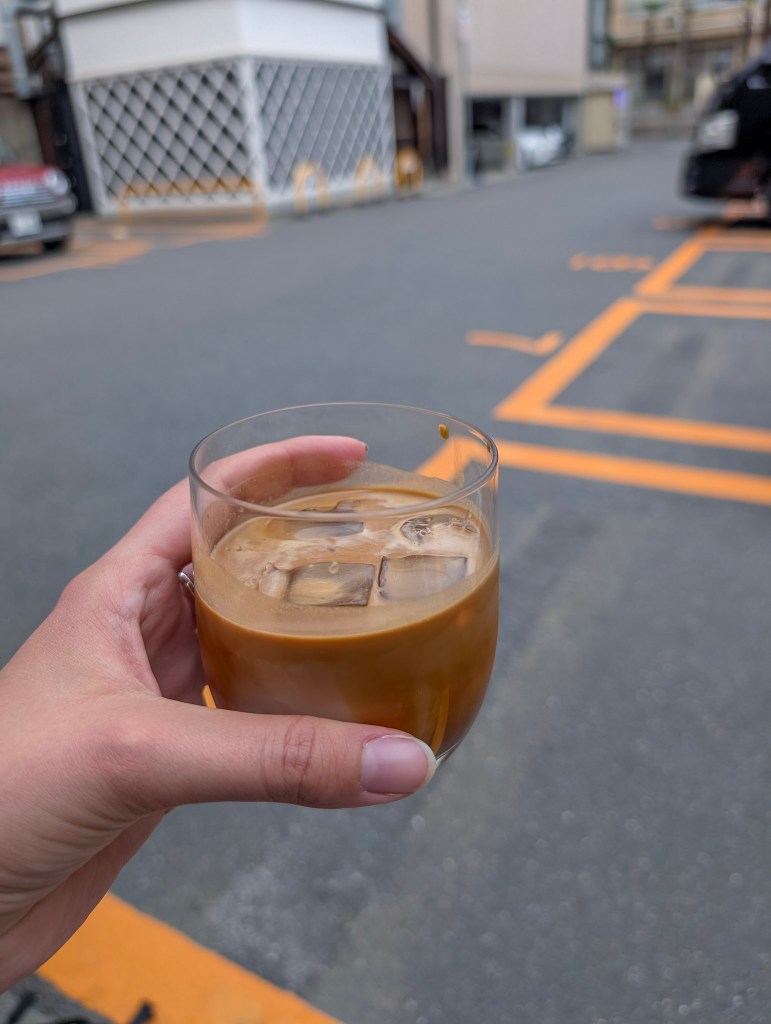
After our mini Nintendo shopping spree, I was craving a little pick-me-up, so we walked to Weekenders Coffee for a small latte. Tucked in a corner of a parking lot, this spot is unassuming but perfect for a quick drink.

On our walk back to our accommodation along Shijo Street, we stopped in a cafe/record store called PRONTO. We didn’t purchase any food or drinks here and I saw reviews were mixed, but the basement is filled with CDs and records which was fun to explore. I’m sure there are better record shops elsewhere in Kyoto, but this was a neat find along our route.
4. Dinner: Otonarisan
After a long rest, we attempted to find some late dinner. We searched through dozens of restaurants on Google Maps and chose a place that had great reviews and was a short walk away. However, when we arrived around 7 p.m. we were greeted by a sign saying the restaurant could not accommodate any more guests for the evening. That was our mistake. So, we retraced our steps toward our accommodation and chose a small udon restaurant that emitted a welcoming glow along a quiet, dark street called Otonarisan.
The two owners spoke little English and the menu was entirely in Japanese, so Google Translate was a big help. I chose the “mentaiko udon noodles with egg and thick sauce” topped with chicken tempura. With only two people preparing fresh food for a relatively full restaurant, we had to wait about 45 minutes for our meal, but it was so worth it. This was some of the best food I had in Japan.

With limited seating, these types of restaurants are the best places to meet others and strike up a conversation with other travellers while you wait. We met a solo traveller from France and had a long chat about our past and upcoming adventures. The intimacy of quiet restaurants like this in Japan is one of the things I greatly miss about the country.
Day 6: Kyoto – Arashiyama, Downtown Kyoto
1. Arashiyama Bamboo Forest
On the western side of Kyoto about a 30-40-minute bus ride from downtown, Arashiyama is a scenic historical district surrounded by nature and filled with distinctive sites.
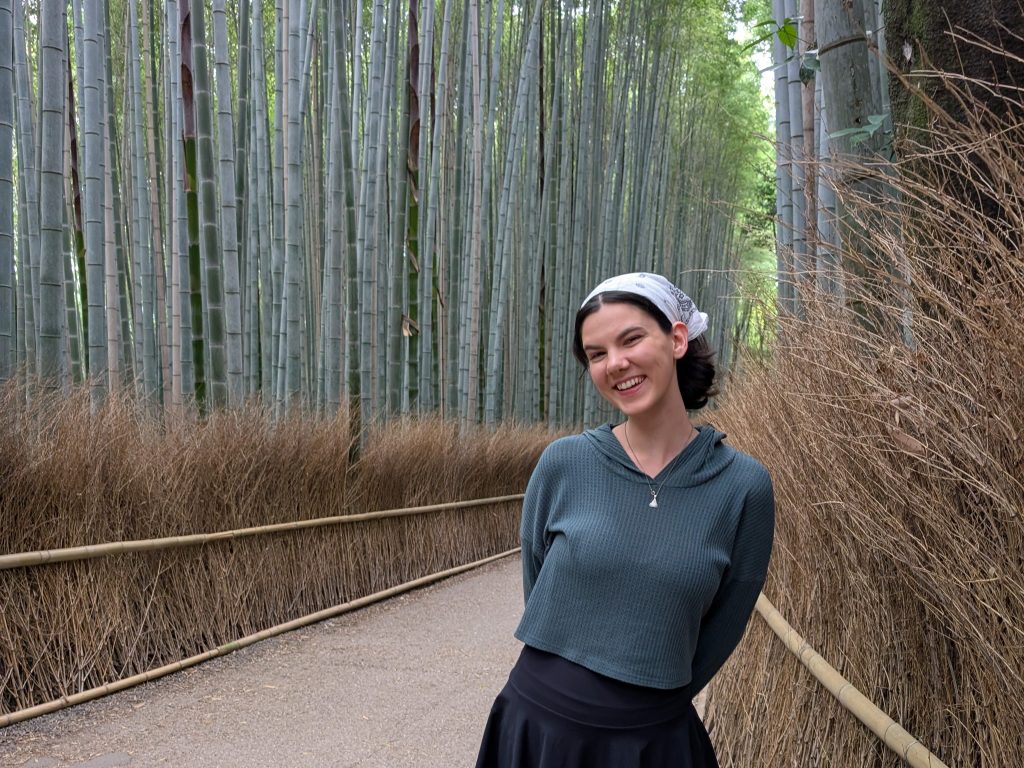
One of the most popular sites in Arashiyama is the Bamboo Grove where thousands of immense bamboo stalks tower over a narrow concrete path. I put this first on our list because I read about how crowded this area gets a few hours after sunrise, and no one was kidding. We arrived at the forest around 7 a.m. and there was already a significant crowd along the path. Though, we were still there early enough that we were able to capture a few photos without people in the background. We returned to the area around 10 a.m. and it was difficult to walk through with the amount of people.
The path is relatively short, so you don’t need to spend more than 20 minutes here. Be sure to continue along the paths outside of the grove to explore the lesser-visited scenic viewpoints.
2. Breakfast: Bread, Espresso & Arashiyama &
After your little jaunt through the bamboo forest, you’ll need to fuel up for the rest of the adventurous day ahead. Bread, Espresso & Arashiyama & opens at 8 a.m., and if you time your visit right you can get there as soon as the cafe opens to avoid a long wait.
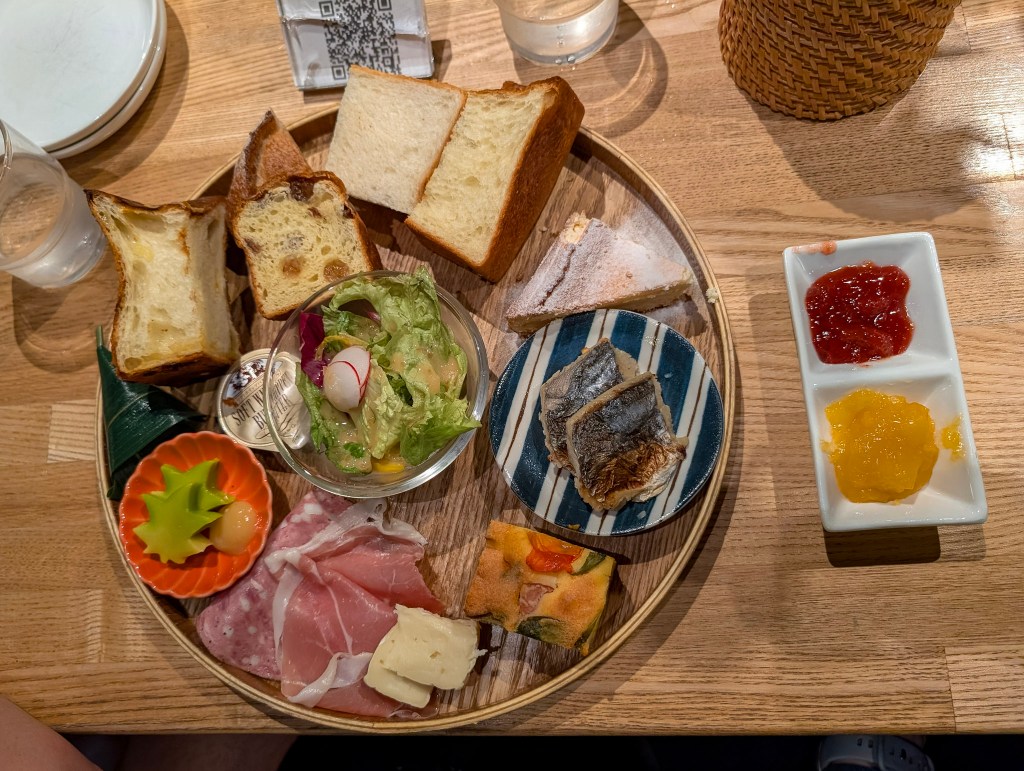
You need to take your shoes off to sit in the dining area, which features low tables and tatami mat floors. We opted to get a sample platter to share along with some coffee.
3. Tenryu-ji
Right around the corner from Bread, Espresso &, Tenryu-ji opens at 8:30 a.m. This is a somewhat small temple surrounded by lush green gardens. Tenryu-ji was established in 1339 by the shogun, Ashikaga Takauji, in memory of Emperor Go-Daigo who passed that same year. Unfortunately, the original structures were burned down in multiple fires throughout the centuries, and most of the current structures were built in the early 1900s.
There are small fees to enter both the temple and the gardens, but I would recommend touring both if you have the time. We encountered multiple large school and tour groups, however the majority of the garden was very peaceful away from the main structures at the time we visited. We spent about one hour here.
4. Arashiyama Monkey Park Iwatayama
Of all the things we experienced in Arashiyama, the Monkey Park was my absolute favorite.
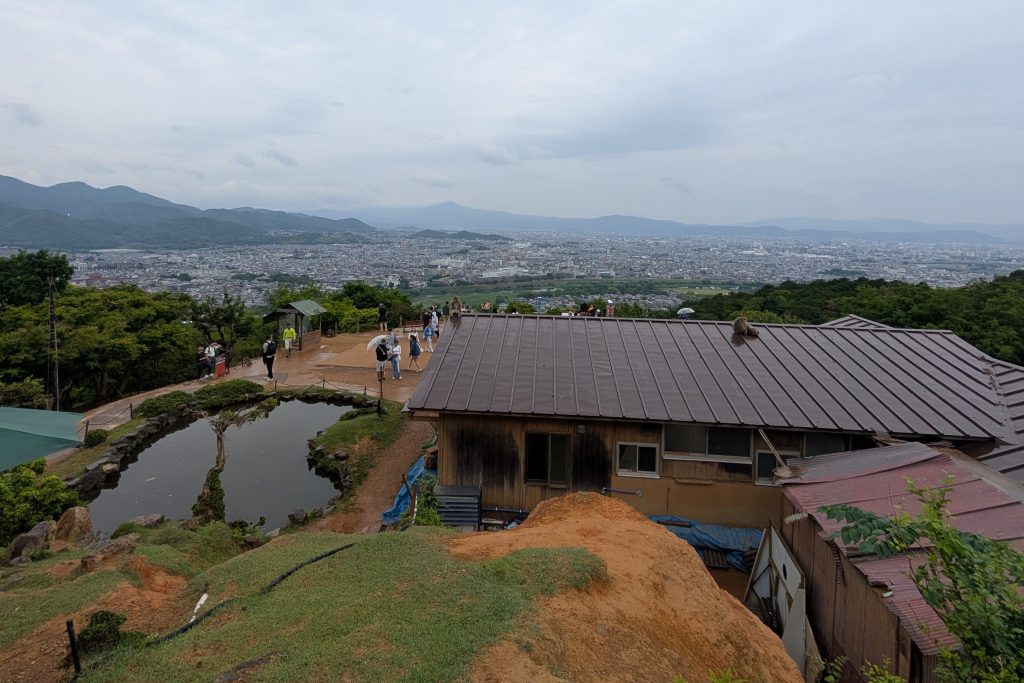
Arashiyama Monkey Park Iwatayama is home to approximately 120 wild Japanese macaque monkeys, or snow monkeys. They weigh 20-25 pounds and are under 2 feet tall, so they’re rather small. They’re not aggressive and are very used to being around humans. And yes, they are wild! The un-fenced 1.5-acre park was established in 1957, and many monkeys stayed in the area.
From the entrance, you have to hike about one mile up to the top of Mount Arashiyama to reach the monkeys. The climb is not very intense and it took us about 20 minutes. When you get to the top, there are monkeys roaming and lounging everywhere. They aren’t shy about getting close to you, but you’re not allowed to touch them. You also get stunning panoramic views over Kyoto and fun photo ops with a giant banana. If you’re lucky, you might even see some baby monkeys!

The park is open every day at 9 a.m. with the last entrance at 4pm, though it’s sometimes closed for holidays and bad weather, so be sure to check online before you visit. We arrived around 10:30am and spent an hour here. The entrance to the park is about a 15-minute walk from Tenryu-ji and the bamboo forest. As of May 2025, entry costs ¥550.
5. Golden Pavilion
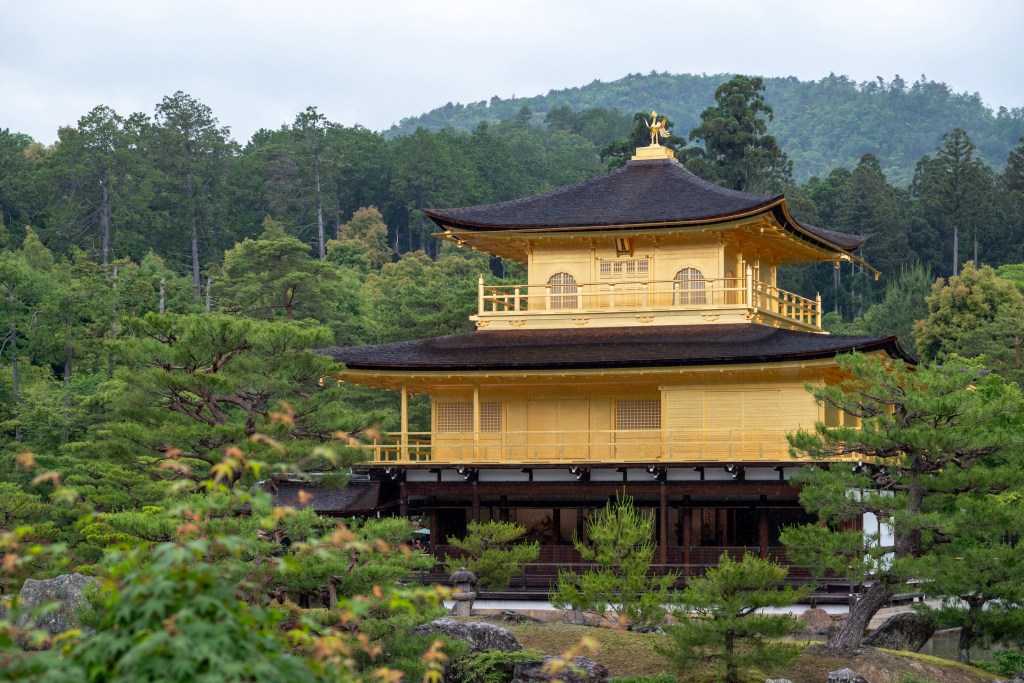
Following our escapades in Arashiyama we decided to go to Kinkaku-ji, famously known as the Golden Pavilion. However, to be completely truthful, I would not recommend visiting this temple mid-day during peak season considering the state of overtourism right now. Yes, a lot of famous sites are facing this right now, however I really felt the effects of it at the Golden Pavilion.
The temple itself is beautiful, but the design of the grounds funnels you along a one-way path, which gets incredibly congested. We only spent a half hour here and grabbed ramen at Tougenkyou Ramen around the corner from the entrance.
The site is open every day from 9am-5pm and costs ¥500 (~$3.40) to enter.
Read more about my experience at the Golden Pavilion here.
6. Dinner: FUL KYOTO

After a brief nap, we wanted drinks, a snack, and music. We came across FUL online and were intrigued by the cozy lush forest vibe and the publicized immersive music. Food and drinks here were a little more on the expensive side, and the meals appear to be small plates. We ended up only getting a bag of fries and a couple drinks and had a small 7-eleven dinner later.
7. Music Bar – P.M.Sounds


The music at FUL ended up being a little more low-key than what we were looking for, so we sought out a live music venue and happened upon P.M.Sounds right across the road. This was the perfect setting and exactly what we were looking for. This cozy basement pub features a small bar and a wall of records. It seems that on an average night the venue plays a range of records, including jazz and J-Pop. When we visited on a Saturday night, we happened to catch a live jazz band. We ordered a few more drinks and intently vibed to the music. This was honestly one of my favorite moments in Japan.
Day 7: Kyoto – Fushimi Inari, Kyoto Railway Museum
1. Fushimi Inari
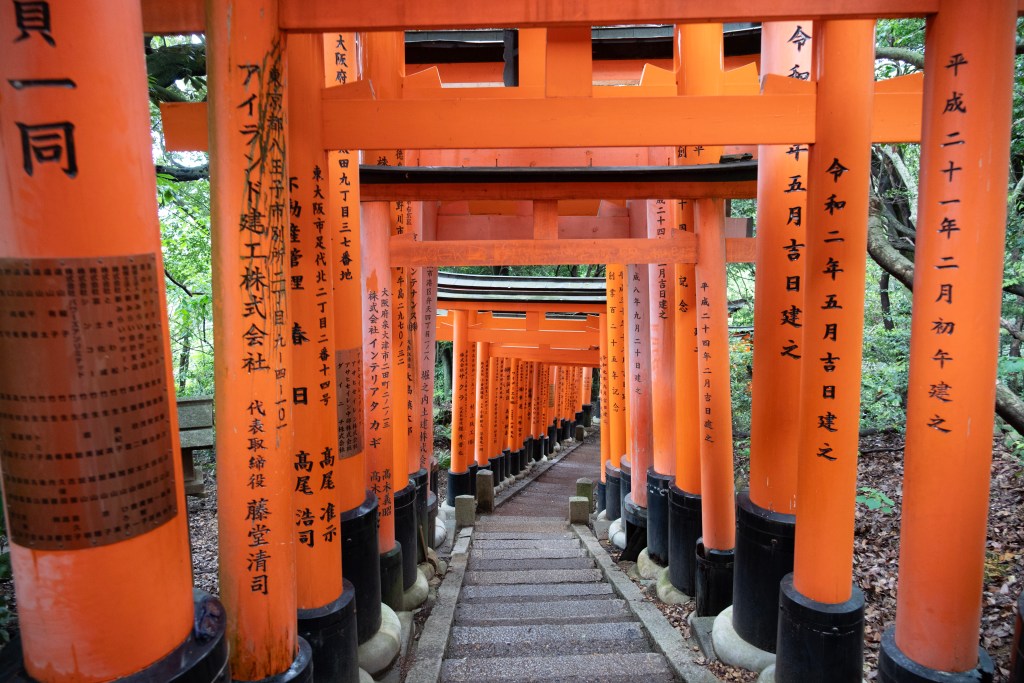
Fushimi Inari was one of the highlights of our entire trip. This iconic shrine is known for its thousands of vermillion torii gates lining a path up Mount Inari. We got to the site around 10:30 a.m. and thoroughly enjoyed our experience despite the crowds at the beginning. We ended up hiking all the way to the top of the mountain where the crowds thinned out considerably. The hike was about 5 km (3 miles) round trip, and we spent a little over 2 hours total at Fushimi Inari.
I’ve talked at length about my experience here on other platforms, so check out this video for the history, visiting information, and my full experience.
2. Kyoto Railway Museum
I’m not all that interested in trains, but the Kyoto Railway Museum is an underrated attraction that lets you take a peak at the history of Japan’s robust train system. I will warn that this seems to be a popular destination for families with children so there are many kids running around, but my partner and I still had a blast.
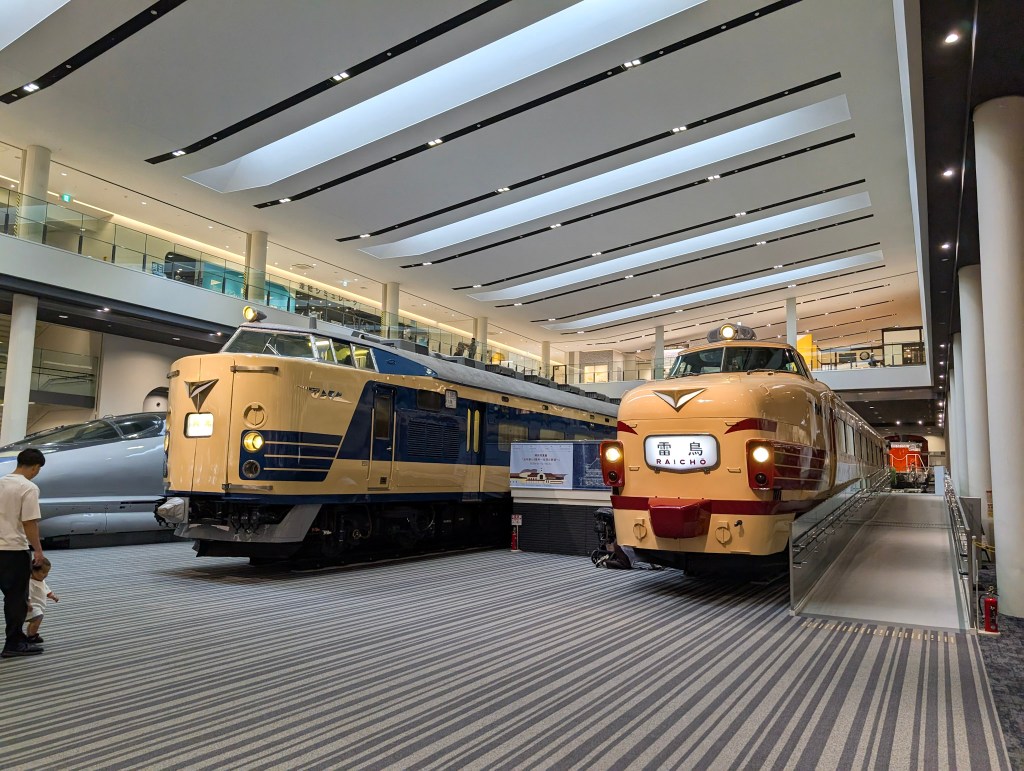
At this museum you’ll find train cars and locomotives from different eras—some of which you can enter—, train signals, and many interactive exhibits. I particularly enjoyed watching the miniature train simulation.
If you have an hour or so to spare, the Kyoto Railway Museum is worth a brief visit.
3. Sushi/Omakase: Kotohogi
I’m not much of a seafood person, but I really wanted to try quality sushi while in Japan. After searching for sushi restaurants near our accommodation, I found Kotohogi about a 10-minute walk away. The restaurant only seats about 7 people, so you have to place a reservation or check in ahead of time to see if there’s space available. I was able to DM them on Instagram and reserve two seats a few hours before our visit.
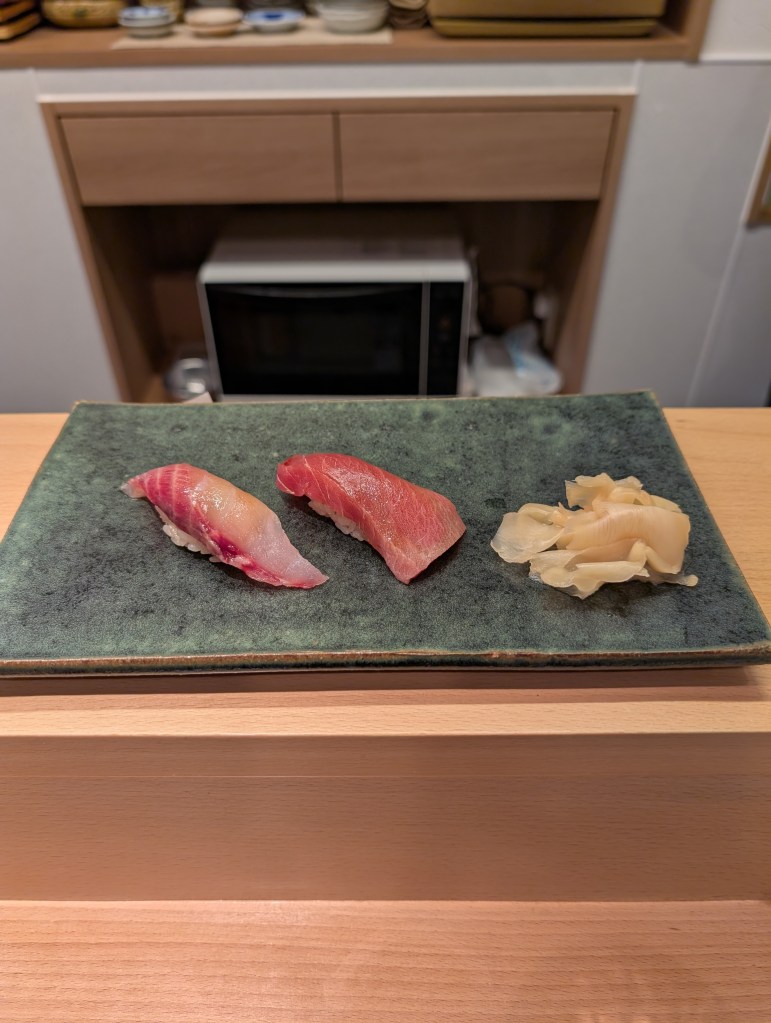
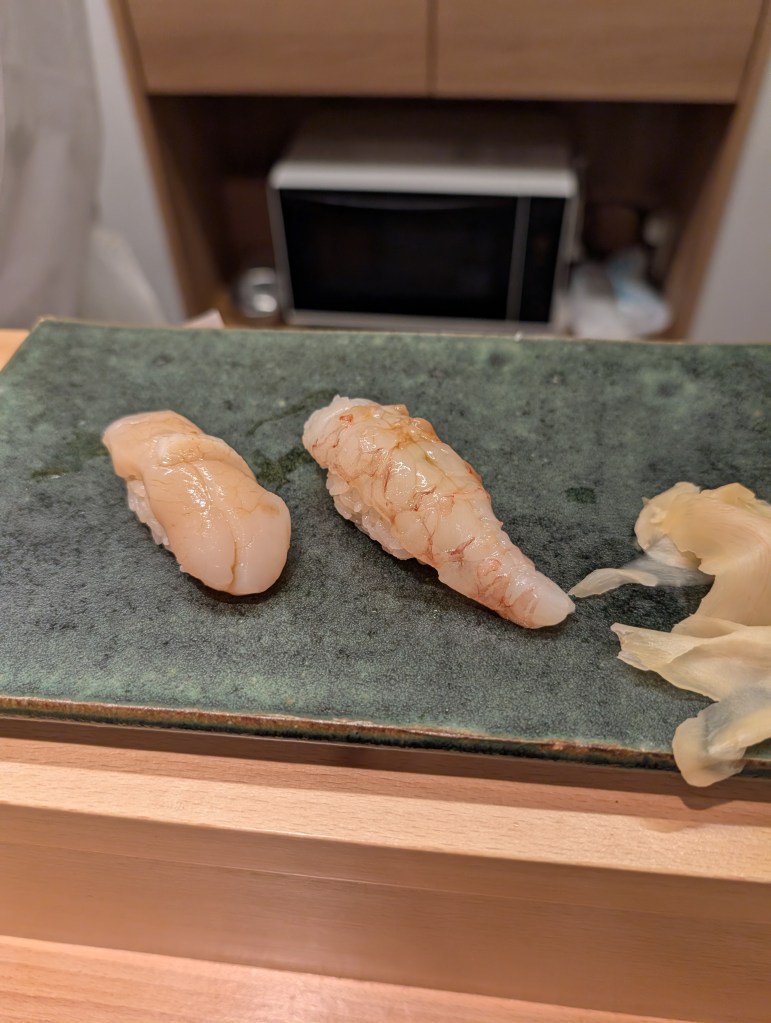
The owners speak little English and the menu is in Japanese, so we opted to get the omakase menu for around $50, which honestly is a great deal. For that price we received four small plates of different seafood and five pieces of sushi, which included small squids, sea urchin, and eel.





Day 8: Kyoto – Yasaka Pagoda, Gion, Shopping
1. Higashiyama District

On the eastern side of Kyoto, Higashiyama is a historic area that is known for one of the most recognized photo spots in all of Kyoto: Hōkan-ji—otherwise known as the Yasaka Pagoda—which was last reconstructed in 1440. Some people will wake up before the sun rises to snap this iconic shot before any of the businesses open, but I think it’s worth it to visit when you can peruse the shops. Though, expect thick crowds.
The narrow roads are lined with traditional wooden shops and include everything from hand-crafted gifts to specialty treats. There is even a Starbucks located within a 100-year old traditional house called a machiya, fitted with tatami mat floors in some of the seating areas. I try to avoid Starbucks as much as possible, but this setup is very unique, and it’s a great early-morning coffee option since many cafes in Japan don’t open until around 10 or 11 a.m.
Higashiyama is also near the highly popular Kyomizudera, however I’ve seen a lot of people talk about how unbearably busy it gets there, so we opted to skip that temple.
2.Gion – Chion-in
Located within Higashiyama, Gion is Kyoto’s famous geisha district. Historically, this area served as a rest stop for pilgrims travelling to the nearby shrines, like Yasaka-jinja and Kiyumizudera. As more travellers passed through, Gion evolved into Kyoto’s entertainment center. Today it retains its original flair, though with many more foreign tourists.
During the day you can enjoy perusing the many shops, but visit in the evening to attend a geisha performance and/or tea ceremony. Be sure to book your experience in advance as this is a popular activity. We visited during the morning so we didn’t attend a tea ceremony, so unfortunately I don’t have any to recommend.

Instead, we visited Chion-in in the eastern part of the district. This quiet temple is home to the largest bell in Japan. The grounds are so peaceful in comparison to the bustling streets of Gion nearby, and it includes two serene gardens you can enter for a small fee. This lesser-known temple ended up being one of my favorites in Kyoto.

For more information on Chion-in, check out this video.
3. Teramachi Street – Shopping Arcade
If you still haven’t gotten your fill of shopping, the area around Teramachi is filled with traditional shops, vintage boutiques, and more. We enjoyed checking out used clothing shops like Big Time Kyoto and JAM, and peeked in another stationery store called tag.
4. Kyoto Gyoen National Garden/Imperial Palace (closed Mondays!)
Kyoto Gyoen National Garden is a large, open park in the northern part of Kyoto. Honestly, there isn’t a lot to see in the garden itself, so the main draw is the Imperial Palace, which was closed the day we went (Monday). We decided to just walk around the spacious grounds of the garden for a while, but found it rather underwhelming. So, be sure not to visit on Mondays!
The Kyoto Imperial Palace was the home of the Japanese Emperor from 1337 until 1869 when the imperial capital moved to Tokyo. Now it is open to the public and you can take tours through the grounds.
Day 9: Nara, Osaka
1. Train to Nara
Learning from our rush hour fiasco in Tokyo, we took an Uber to Kyoto Station and booked an 11 a.m. JR train to Nara. The ride was about an hour, so we arrived in Nara at noon. Nara Station has a good amount of coin lockers to store luggage in, which we took advantage of.
2. Nara Park, Todai-ji

Of course, the reason most people visit Nara is to see the bowing sika deer. However, Nara Park has so much more to offer than just the deer park.
The sika deer have been in Nara for over 1,300 years and are regarded as messengers of the god of thunder, Takemikazuchi no Mikoto, so the people of Nara work to protect the animals and have built around them instead of forcing them out. More than 1,000 deer inhabit the park today.
You can buy a pack of 10 crackers from dozens of vendors throughout the park for ¥200. Over the past thousand years, the deer have learned to bow in order to receive a snack. But be careful! Some deer are not shy about headbutting or biting you to make sure they get a treat. Watch this video for more info!
Nara is also known for its mochi, specifically a shop called Nakatanidou. Unfortunately the shop is closed on Tuesdays, which happened to be the day we went. Instead, we found a small mochi stand near the temple Todai-ji.
Todai-ji has one of the largest bronze Buddha statues in Japan, standing at 15 meters (~50 feet) tall. Nearby you’ll find a pillar with a hole that is supposedly the same size as the Buddha’s nostril. It’s said that if you can crawl through the hole, you will be given enlightenment in your next life (we didn’t attempt this because there was a long line). Within the hall you’ll also find intricate, accurate models of previous constructions of the temple and grounds.

In total, we spent about 3.5 hours in Nara. You can definitely spend an entire day here if you’re able to visit the mochi shop and want to tour the art at the Nara National Museum. Nara is well worth a visit and was the perfect stop on our way from Kyoto to Osaka.
3. Train to Osaka
Satisfied with our deer-filled adventure, we hopped on a train to Osaka at 4 p.m. After another hour, we arrived in the city and made our way to our accommodation quite north of Dotonbori. We took a quick rest and then headed out to see Osaka’s main attraction.
4. Dotonbori

Dotonbori, Osaka’s glowing entertainment district, was very lively when we arrived around 7:30 p.m. We briefly perused a Don Quijote then sought out dinner. We debated trying Ichiran—a famous ramen restaurant found all throughout Japan—but the line was quite long and our stomachs were quite empty, so we wandered around until we found an okonomiyaki restaurant called Okonomiyaki Tombe. Most restaurants had a significant line and we waited about 20 minutes to get inside. This should be expected around dinnertime in a popular tourist area.
Following our meal, we took in the atmosphere and strolled along the canal until we saw a couple treats that caught our eye. Eventually we decided to grab a drink at a bar right across from the iconic Glico sign. By this point it was 10:30 p.m. and the character of the district was shifting to a more peaceful vibe as restaurants began to close and tourists funneled out. We got back to our accommodation around 11:30 p.m.
Day 10: Osaka – Food Tour, Osaka Castle, Aquarium
1. Walking Food Tour
I lead food tours in Chicago, and somehow I’d never been on a food tour anywhere else. So, since Osaka is considered “The Nation’s Kitchen”, I decided this would be an excellent opportunity to try a food tour. Unfortunately the tour I wanted to book was completely sold out a month in advance, and I was a little disappointed in the tour we did take.
We started by walking through a couple candy stores and we learned about the history of some of Japan’s popular candy/snack brands. There we received a small rice snack, then we got a few skewers and tried our hand at gambling on some smart ball (similar to pinball) machines. Luck was not in our favor, so we continued on through a giant fish/seafood market and sampled pufferfish (and survived!). Our last two foods were melon and takoyaki. So, we did try some unique things and we learned a lot, but for the price point ($80), the amount of food we had felt like too little. Though, I think the food options depended on the guide, so I wouldn’t completely count this tour out.
Either way, definitely do a food tour in Osaka. This is the tour I initially wanted to book.
2. Osaka Castle
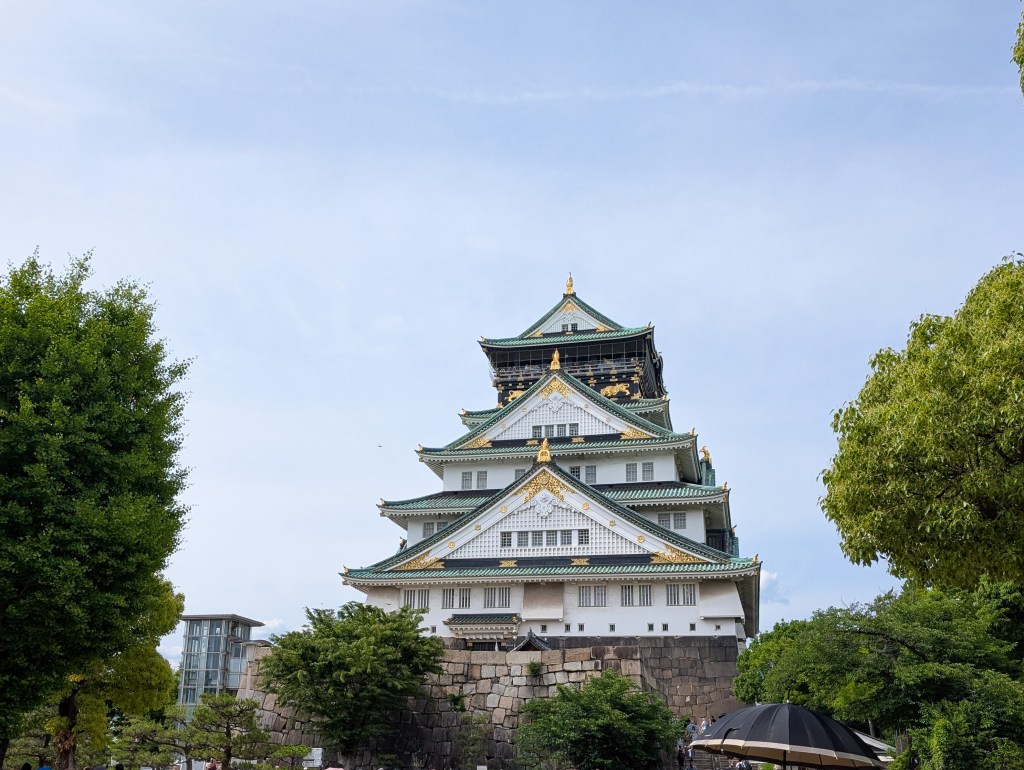
Of all the historic structures we saw in Japan, Osaka Castle was one of the most monumental. Completed in 1597, this castle has a lengthy history that is well detailed within the museum.
There was a long line to take the elevator up to the 5th floor of the exhibit, but we bypassed it pretty quickly by taking the stairs instead. I’d highly recommend taking the stairs if you’re able to avoid a long wait. After we explored the seven floors of the museum, we took in the views from the observation deck on top, which provides 360-degree panoramic views of Osaka. We spent about an hour total at the castle, which included the wait to get in.
3. Osaka Aquarium Kaiyukan
When the Kaiyukan Aquarium opened in 1990, it was the world’s largest aquarium.
Walking through this aquarium felt magical, almost like we were in the Animal Crossing New Horizons museum (iykyk). You start by taking an escalator up to the eighth floor, and you slowly make your way back down to ground level by touring through the various exhibits. My favorite part of the experience was the Pacific Ocean tank, which holds nearly 1.5 million gallons of water and houses a wide variety of animals, including manta rays, a sunfish, and two whale sharks. To contain that amount of water, the glass panels of the tank are 30-centimeters thick.
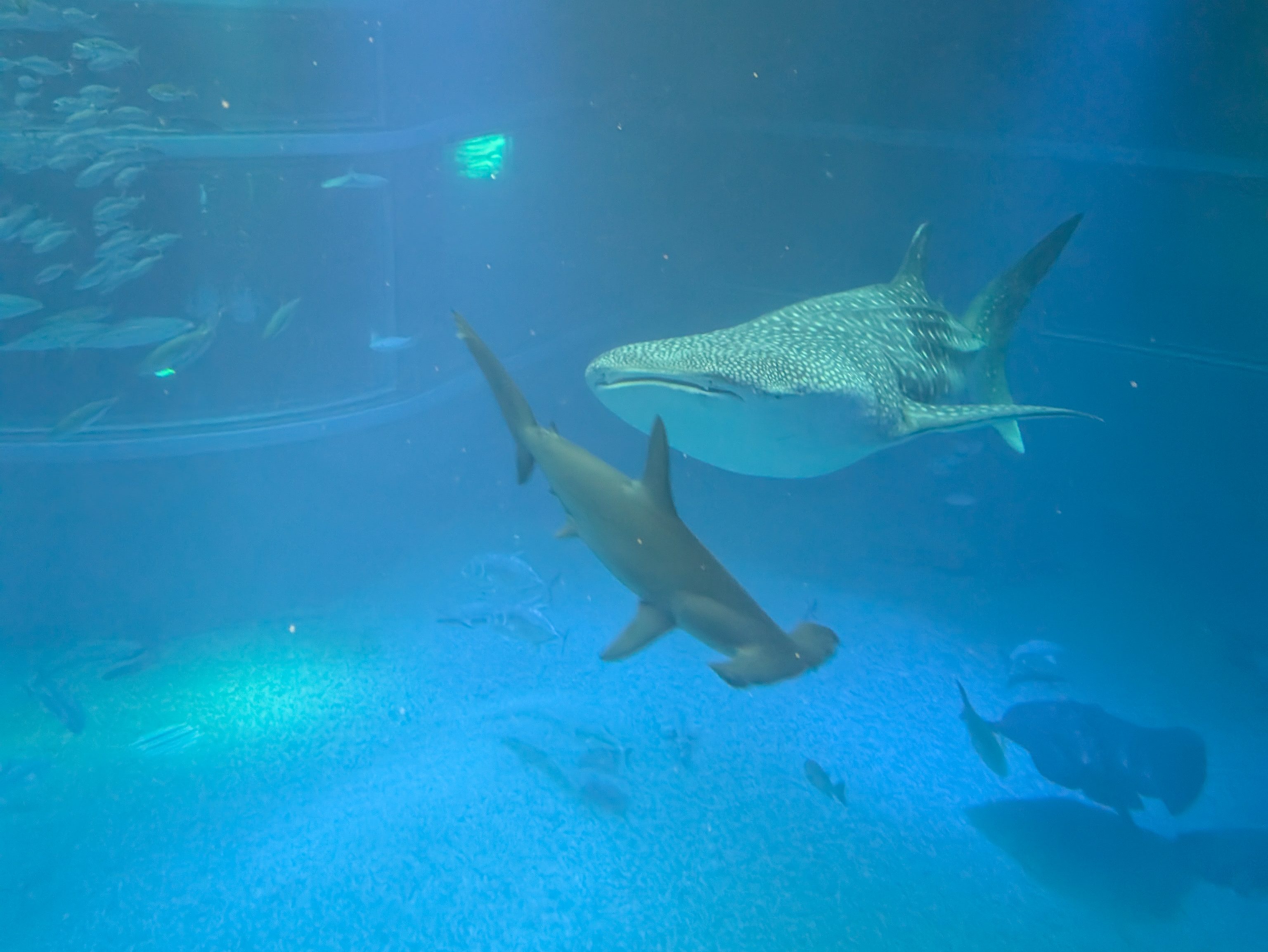
Many argue whale sharks and other creatures have a shorter lifespans in captivity, but keep in mind many of these animals were rescued and likely would have passed earlier if not for rehabilitation efforts.
For the majority of the aquarium, you walk along a path that winds around and down the massive Pacific Ocean tank. The dim blue lighting, ambient music, and slow pace of the majestic creatures makes the experience feel otherworldly. I was initially hesitant about visiting, but we ended up spending almost two hours at the aquarium. Highly recommend.
Day 11: Osaka – Ichiran, Shopping, Fly Home
And finally, the last day of our trip. Our flight wasn’t until the late afternoon, so we made the most of our remaining time in Osaka. We knew we were going to take a bus from Osaka Station to the airport in the afternoon, so we checked out of our accommodation just before 10 a.m. and dropped off our bags at a coin locker in the station.
1. Breakfast/Lunch: Ichiran
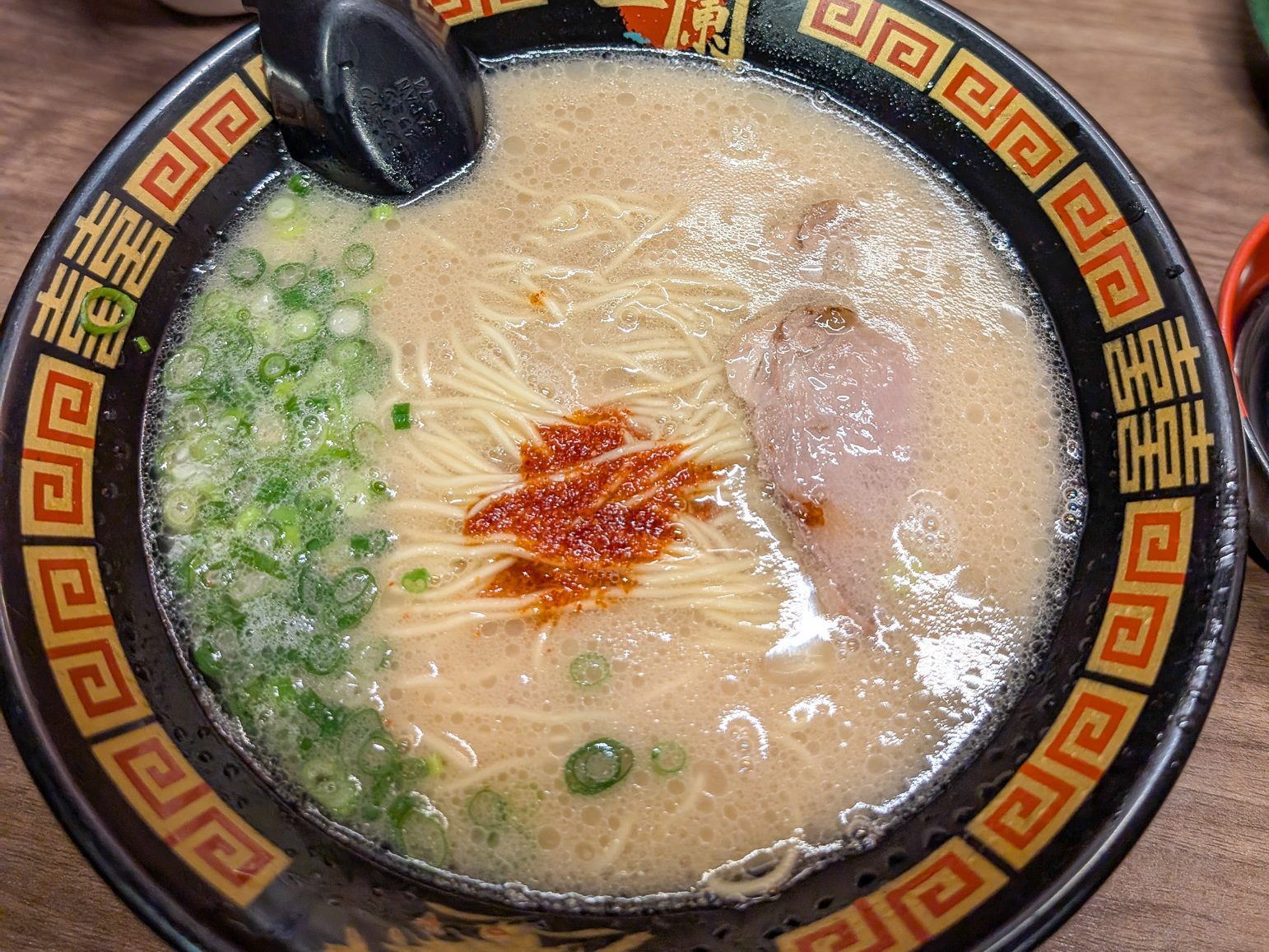
Since we weren’t able to get Ichiran for dinner while in Dotonbori, we opted to go to the one a short walk from Osaka Station for breakfast. This specific location opened at 10 a.m. and we got there at 10:15 and encountered no wait. The ramen was pretty good, but not something I would wait 50+ minutes for. When we left around 11 there was already a significant line forming.
See more of our Ichiran experience here.
2. Shopping
Since we didn’t buy anything at a Don Quijote the entire trip, we decided we had to grab a few goodies before we left the country. I purchased a few different flavors of Kit Kats and Pocky and found some other knick knacks to bring home.
Near Osaka Station there was also a Yodobashi Camera Multimedia, which contains floors upon floors of everything imaginable. Food, projectors, pianos, toys, you name it. I happened upon a gashapon section and tried to utilize some of my remaining yen before we eventually had to grab our luggage and head to the airport.
3. Bus to Kansai Airport
At Osaka Station we were able to purchase tickets for the next airport limousine bus for ¥1,800 (~$12.42) each. We left at 1:30 and the ride took about an hour.
Where to stay in Japan
Tokyo

- Shibuya – Shibuya is one of the most popular neighborhoods to visit in Tokyo, making this a great location to stay to be right in the heart of everything. Here you’ll be well connected to public transit to get you anywhere in the city. That being said, accommodations are typically more expensive here.
- Shinjuku – Similar to Shibuya, Shinjuku is a lively area in a convenient, central location. The neighborhood contains popular nightlife areas like Omoide Yokocho and Golden Gai, making it an ideal place to stay if you’re looking to connect with other travellers. We stayed at the Sotetsu Fresa Inn in Shinjuku and, while the room was small, it was very close to a train station and made it easy to get to the main attractions.
- Asakusa – This neighborhood is a little farther from most attractions, extending transit time between locations a decent amount, but it’s a quieter place to stay if you want to get away from the bustle of Shibuya or Shinjuku. It’s also one of the oldest parts of Tokyo, attracting many history lovers.
Kyoto

- Gion/Higashiyama – If you want to be in the heart of Kyoto’s historical attractions, Gion/Higashiyama is the best place to stay. Gion is the city’s ancient entertainment district, and the neighborhood contains a multitude of temples and shrines in addition to restaurants and shops.
- Downtown – Staying in downtown Kyoto puts you close to the city’s main shopping district along Shijo and Kawaramachi streets, as well as dining and nightlife. We stayed in the western part of downtown and found it to be a little far from the attractions we wanted to visit (about a 20-minute walk), but there were plenty of dining options a short walk away.
- Arashiyama – Arashiyama is quite far from downtown Kyoto, but it’s a great area to stay if you want to connect with nature and distance yourself from the city. Here you’ll be close to the bamboo forest, monkey park, and a few other popular attractions.
Osaka

- Namba – To be close to the main attractions, Namba is the most convenient place to stay. Here you’ll be near the city’s most popular areas including Dotonbori and Shinsaibashi, and you’ll have access to many public transportation lines.
- Umeda/Kita – Umeda is a little quieter than Namba, but it provides easy access to transit not just within the city, but across Japan if you’re interested in taking day trips. We stayed in this area and found it to be a bit far of a walk from the places we wanted to see, but everything was just a short train ride away.
Restaurants we ate at
I didn’t include most of the places we ate at in the itinerary because the majority of our choices were found on the go if not convenience store meals, but I wanted to list a few of them here in case you’re in search of food options. Click the links to see the location on Google Maps.
Tokyo
- Tully’s Coffee – Originally founded in Seattle, this coffee shop can be found all throughout Japan, and the chain is now owned by a Japanese company. Tully’s was our first stop after arriving in Japan for a quick snack and coffee since it was right across from our hotel.
- Kokoro Tokyo Mazesoba – Mazesoba is a soupless noodle dish with sauce and toppings like meat, eggs, garlic, and veggies. You can find this restaurant in a few places throughout Japan, but we went to the location in Shibuya.
- Ameyoko Street – This popular shopping street near Ueno Park is full of food stalls. We opted for a restaurant selling seafood rice bowls, but unfortunately I never caught the name of it.
- Asakusa Gyukatsu – This tonkatsu shop in Asakusa has two locations within a 2-minute walk of each other. The location along the main road appears to be busier than the other one, which is located on a side street (otherwise known as Asakusa Gyukatsu Sub-branch). I’d recommend going to the sub-branch location to avoid a wait.
- Maido Okini Higashishinjuku Shokudo – This buffet-style restaurant was right across the road from our hotel in Shinjuku, and while the food wasn’t legendary and some of it you had to microwave yourself, it was a convenient and quick breakfast option.
- Ginza Sanada SIX – Located on the 13th floor of Ginza SIX, this was a last-minute lunch find that was a little expensive because of the location, but the food was decent.
- bills Omotesando – bills is an Australian-based innovative breakfast chain known for its fluffy pancakes, pillowy eggs, and fusion foods. A little pricey, but absolutely delicious.
- Omoide Yokocho – This narrow street is jam-packed with tiny izakayas serving yakitori and drinks. We chose a random izakaya with two open seats and ate a couple pork and chicken skewers, then enjoyed a drink at Bar Albatross just down the alley.
Kyoto
- Nishiki Market – This popular market has a little bit of everything: tempura, skewers, sake, matcha, omelettes, and more. Prices are on the higher side, but it’s a fun (and massive!) place to explore and to grab a few snacks/treats.
- Weekender’s Coffee – Just a few blocks from the popular Kawaramachi shopping street, this small coffee shop hidden in the corner of a parking lot is an excellent place to grab a simple coffee and relax for a moment.
- Otonarisan – We happened upon this small udon restaurant just by walking around Kyoto’s side streets. The menu is only in Japanese and the owners speak little English, but Google Translate is a big help, and the food is so worth it. I chose the “mentaiko udon noodles with egg and thick sauce” topped with chicken tempura. We had to wait about 45 minutes for our food to be made, and it was one of my favorite meals in Japan.
- Bread, Espresso, & Arashiyama garden & – Bread, Espresso & locations can be found throughout Japan, but this location in Arashiyama was a great stop before our adventures around Arashiyama early in the morning. It’s not common for cafes in Japan to open before 10 a.m., and this chain opens at 8, making it a great early morning coffee stop. I’d recommend arriving as soon as the cafe opens to avoid waiting in line, as this place is pretty popular. The dining space features low tables and tatami mat floors, requiring you to take your shoes off to enter the area.
- Tougenkyou Ramen – Following our walk around the Golden Pavilion, we found this ramen spot right around the corner from the entrance. It was decent ramen for a decent price (and has excellent reviews!).
- FUL – If you’re looking for nice cocktails in a cozy space, FUL KYOTO’s atmosphere fits the bill. The space is decorated with lush greenery and is accentuated with dim, warm lighting. The food seems to be more “small plate”-focused and is a bit expensive, so we opted to just get a drink here.
- Nezameya –Before our adventure at Fushimi Inari, we found this restaurant around the corner from the train station. It has low ratings on Google, but I found the soba to be very tasty and filling before our trek.
- Everest Cafe – One evening, we were very tired and wanted a filling meal before bed, so we found an Indian restaurant called Everest Cafe near our accommodation. We enjoyed our fill of curry, corn soup, and naan.
- Kotohogi – If you’re looking for an intimate, well-priced sushi/omakase experience, Kotohogi is an excellent option. The space seats less than 10 people, so you have to place a reservation or check in ahead of time to see if there’s space available. I was able to DM the owners on Instagram and reserve two seats a few hours before our visit. The two owners (a husband and wife team) speak little English and the menu is in Japanese, so we opted to get the omakase menu for around $50, which honestly is a great deal. For that price we received four small plates of different seafood and five pieces of sushi, which included small squids, sea urchin, and eel. The others in the restaurant seemed to wonder what we were doing there, but the owners were very kind and helpful.
Osaka
- Okonomiyaki Tombe – Located near Dotonbori, this okonomiyaki restaurant was delicious. We visited around 8pm and had to wait about 20 minutes for a table, but that was a relatively short wait compared to other restaurants in the area.
- Ichiran – This is a very popular ramen restaurant found in Japan’s major cities, mainly because of its unique, introvert-friendly dining setup. The ramen was indeed delicious, but I didn’t find it any better or worse than other ramen we had in Japan. We went in the morning when this location opened to avoid a long wait.
Safety in Japan
Japan is an incredibly safe country. People often comment about how you can leave expensive belongings sitting out in public for a few hours and no one will take them (though I never tested this and didn’t want to risk it). I never felt unsafe walking around, including at night. However, that doesn’t mean there aren’t things to watch out for. Be aware of your surroundings at all times as you would anywhere else, and watch out for a couple common scams in the popular tourist/nightlife areas.
This isn’t necessarily a safety issue, but I’ve heard of encounters with foreign touts/solicitors trying to harass tourists to come into bars. The tourist would then be persuaded to purchase a couple drinks, and when the bill came it totaled to hundreds of dollars. When in doubt, just walk away and don’t trust anyone trying to coerce you into entering an establishment, especially at night.
When to Visit

Many visit Japan in late March/early April during cherry blossom season, and while the weather is said to be pleasant during that time, it is an incredibly crowded time of year to visit. Despite the beauty of the cherry blossoms, many have shared unpleasant experiences during this season due to the influx of tourists.
We visited shortly after cherry blossom season in late May and found Japan to be busy, but not terribly so. The temperature ranged from 60-80 degrees and the weather was relatively sunny, with only a couple rainy days sprinkled in. After hearing about the craziness of cherry blossom season, late May seemed like an ideal time to visit.
The summer months (June to August) are said to be incredibly hot and humid, so many would caution against a visit during that time. On the other hand, winter can be very cold and snowy, but this also results in fewer tourists if your goal is to visit during a less-crowded time.
Autumn (September to November) is considered an excellent time to visit for cooler weather, stunning fall colors, and mild weather. This is another popular time for many to visit, but seemingly less so than cherry blossom season.
Transportation
Japan’s public transit system is unmatched. Trains and buses are clean, frequent, and are almost always on time. And, thanks to the country’s rapid transit system, it’s incredibly convenient to travel between the major cities without a car.
Trains/Buses – IC Card
To pay for local trains and buses, you can purchase an IC card at any train station for ¥500 (~$3.45). There are a variety of IC cards, including PASMO, Suica, and ICOCA. The only difference in these cards is the region they are purchased in. You’ll find PASMO and Suica sold in Tokyo, and ICOCA in the Kansai region. However, you can use any of these major IC cards throughout the country. I received a PASMO card in Tokyo and had no issue using it in Kyoto and Osaka.
I ended up spending about ¥7,580 (~$52.30) total for fares over 11 days, so I’d recommend loading at least ¥5,000 on your IC card to start. If you load too much, you can always use your IC card at convenience stores.
To track how much money you have left on your card, you can download the Suikakeibo app and tap your phone against the card. This app also shows you your transaction history.
If you have an iPhone, you can download a digital IC card directly to your phone, so you don’t have to worry about a physical card. I’m not sure if this applies to all androids, but I have a Google Pixel and was unable to download a digital card.
Shinkansen
Shinkansen is the country’s rapid transit system. Japan’s bullet trains allow you to travel hundreds of miles in just a couple hours. For example, driving from Tokyo to Kyoto would take roughly 5-6 hours, however traversing the 300+ miles took us less than 2.5 hours on a bullet train.
You can reserve a seat on a Shinkansen on the JR website, or you can utilize a booking app like Klook, which is what we did. We also booked space for our luggage on the train since we decided not to ship it from place to place, however that is a convenient option if you’d rather travel without the hassle of lugging around bags.
Here is a short video explaining the booking process on Klook (plus a discount code!): Video
Taxi/Uber
If you need to get somewhere quickly or are travelling with luggage, taxis and Ubers are plentiful in the major cities. You can use the Uber or GO taxi apps. We learned this was the best transit option during morning rush hour when trains are incredibly packed.
Japan is certainly a hot spot for travellers right now, and for good reason. The country is full of stunning historical sites, tranquil nature, delicious food, and clean/convenient transit. With that being said, be respectful and kind so as not to contribute to the negative opinion towards tourists.
Hopefully this itinerary helps you plan out your trip to Japan and provides an accurate idea for what to expect at most of the popular attractions. Be patient, be kind, and have fun. Happy travelling!

 Happy Lil’ Traveller
Leave a comment